
Interpretability researcher @GoodfireAI.
San Francisco, CA
Joined February 2023
- Tweets39
- Following82
- Followers243
- Likes90

Pinned Tweet
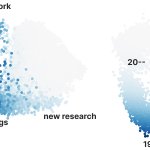
While most researchers interpret language and vision models, bio-models often have much more geometrically diverse internals. Here are some examples of the manifolds I’ve come across in ESM-C, a protein model! 🧵

tdooms retweeted

Excited to share this new result on EVEE, interp generated hypothesis actually reclassifying VUS. Want to share a bit about how this happened 🧵 (1/n)
We identified a gene variant behind hearing loss, a big step for interpretability in medicine.
In April, our interpretability system EVEE scored all 4.2M variants in ClinVar, the NIH's variant database. MEPE c.209_212del scored particularly high, so we built a case and had it successfully reclassified as "likely pathogenic."
~2M variants are still "uncertain," but we believe interpretability can help us understand many more!
tdooms retweeted

We built cybersecurity monitors for Kimi K3 and GLM 5.3 — more accurate, 50x faster, & 50x cheaper than an optimized LLM judge.
External red-teaming from @farairesearch found that our monitor greatly reduces universal jailbreaks. 🧵
turns out the cool shapes from inside protein models are useful outside of content farming.


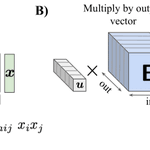
This is a simple linear projection of unfiltered activations extracted using a bilinear autoencoder. The two lobes correspond to similar annotation labels for the same bacterial membrane protein family. These models are full of such geometries.
I’ve been exploring these models using our new research platform Silico (now in open Beta). It makes longer-horizon research, especially interpretability, much easier. Here’s a report that highlights a few of them with different color overlays. share.goodfire.ai/a/shr_dc8b…
tdooms retweeted
3 months ago, we used interpretability to predict which of 4.2 million genetic variants cause disease.
Now, we've validated several of those predictions with real-world datasets, including a national biobank, clinical data, and RNA sequencing data.
4 examples: (1/6)
We achieved state-of-the-art performance in predicting which of 4.2 million genetic variants cause diseases by interpreting a genomics model, in a new preprint with @MayoClinic.
We're now releasing an open source database for all variants in the NIH's clinvar database. 🧵(1/8)

tdooms retweeted

Already gave this a rip for some VUS and Suspected Pathogenic variants that I have previously done deep analysis on, and can confirm that EVEE posits many of the same findings and conclusions that I have found in terms of prediction and suggested failure mechanism
Examples:
VUS (for which *I* am the only ClinVar entry) for one of my heterozygous mutations in DNAH5 that could play a ~small~ factor in the overall root cause of my PCD
My Variant of CLCN1 that gives me a rare muscular disorder (which makes me look like Wolverine without needing to go to the gym, so not all bad 🤷♂️)
EVEE is a nice tool for variant interpretation!


We achieved state-of-the-art performance in predicting which of 4.2 million genetic variants cause diseases by interpreting a genomics model, in a new preprint with @MayoClinic.
We're now releasing an open source database for all variants in the NIH's clinvar database. 🧵(1/8)
Interpreting DNA models just hits different. There's so much scientific knowledge waiting to be extracted.
Really proud to have been part of this research.
We achieved state-of-the-art performance in predicting which of 4.2 million genetic variants cause diseases by interpreting a genomics model, in a new preprint with @MayoClinic.
We're now releasing an open source database for all variants in the NIH's clinvar database. 🧵(1/8)
tdooms retweeted
New research: we propose *covariance pooling* as a better replacement for mean pooling that improves probing for sequence-level properties.
E.g., genomic model embeddings are often mean-pooled to understand genes - but that throws away all info about feature co-occurrence! (1/3)

tdooms retweeted
We've identified a novel class of biomarkers for Alzheimer's detection - using interpretability - with @PrimaMente.
How we did it, and how interpretability can power scientific discovery in the age of digital biology: (1/6)


More broadly, if we want compositional interpretations, where interactions and geometries are explicit, we need primitives with algebraic structure. Polynomials are the natural first step beyond linear.
If you're interested, come to our spotlight poster at the MI workshop at (Sunday 2:00 pm) where Ward Gauderis and I will both be there to explain this work!
Or read it: arxiv.org/abs/2510.16820
Or try the interactive visualisation: tdooms.github.io/demos/manif…
