

Hat die Weltgeschichte einen Sinn?
Berlin, Germany
Joined August 2013
- Tweets3.3K
- Following5.2K
- Followers601
- Likes252K






Teha Nicolai retweeted

It's funny how the commies who constantly tout the evils of private property and the moral urgency of redistribution always sprint straight for the monogrammed handbags the moment the alarm goes off.
Personally, I find it hard to summon much sympathy when luxury stores get smashed and looted. Why? Because it's the same industry that constantly embraces third-worldist leftism, sustainability theater, inclusion quotas, and progressive signaling.
Recall that Vogue endorses Democratic candidates and majority of high fashion designers snub Melania Trump. Campaigns push all kinds of norm-busting avant garde ideas including open borders and BLM-adjacent slogans, while relying on know-nothing woke celebrities to amplify their message.
These brands have spent decades cultivating an ideology to appeal to a consumer class (like Hasan Piker lol) that treats property as negotiable, heritage as contemptible, order as oppression, and hierarchy as something to be dismantled. So when the mob turns on the glass and marble of their own boutiques, this is simply known as being hoisted by their own petard.
The Limoges town hall, on the other hand, is different. Its destruction is the loss of something irreplaceable, and I mourn it

Teha Nicolai retweeted

Es ist - völlig unironisch - immer richtig, über Bildungsdefizite und Chancengleichheit zu sprechen.
Dazu würde auch gehören, was es in einer Einwanderungsgesellschaft anrichtet, wenn man Einwanderern bis in die dritte Generation beibringt, wie sehr der böse Westen und der üble Kapitalismus bis heute „ihre“ Länder ausplündern und kolonisieren.
Mit diesem Sickergift in der Birne wird halt zurückgeplündert.
Teha Nicolai retweeted
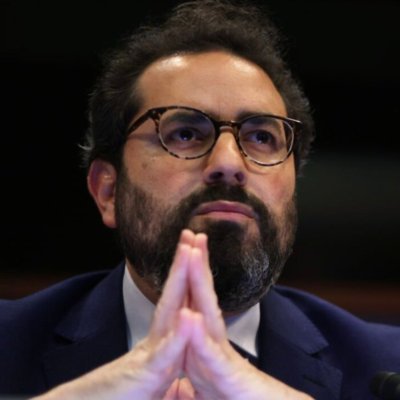
Youth in Turin take a stand for education rights and cost of living by looting and destroying bookstore.


Teha Nicolai retweeted

On my way to the office this morning, I passed a group of young people protesting, a Palestinian flag draped over their shoulders.
And I asked myself a question I can't shake: why does this generation always fall into the same trap? No matter the history. No matter the context. Even the ones from wealthy families, who went to the best schools, who were dealt every good card. Always the same trap.
I don't think it's stupidity. I think it's a mechanism. And a mechanism can be taken apart, piece by piece.
A. The observation: everything the state touches becomes unaffordable.
Look at economist Mark Perry's famous chart, the one people call "the chart of the century." It tracks US prices since 2000.
At the top, what explodes: hospital services, college tuition, textbooks, childcare, housing. Increases of +100%, +150%, up to +250%, far above general inflation.
At the bottom, what collapses: TVs, software, phones, toys, clothing. A TV today costs a fraction of what it did in 2000, for an infinitely better product.
Look at what separates the two groups. It isn't technology. It isn't complexity. It's one variable: how much the state is involved.
At the top, sectors that are subsidized, regulated, shielded from competition, where the state funds demand and blocks supply. At the bottom, sectors where companies fight every single morning to serve you better and cheaper.
B. The mechanism: why it's systematic.
When the state subsidizes demand without freeing supply, prices rise. Every time. Guaranteed student loans, and universities raise tuition. Housing aid plus blocked building permits, and rents skyrocket. Administered healthcare, and bureaucracy eats the budget before it ever reaches the patient.
In France it's even more vicious, because the price doesn't disappear: it hides. You never see the hospital bill, you pay it through payroll contributions. You never see the cost of school, you pay it through taxes. Public spending at 57% of GDP, one of the heaviest tax burdens in the world, more than €3.4 trillion in debt. And the result? Overflowing ERs, falling PISA scores, young people who can't afford to live in the city where they work.
The market didn't fail in these sectors. It was never allowed in.
C. Suffering demands a culprit.
A 22-year-old lives all of this in their bones. They can't find a place to live. Their degree either buries them in debt or opens no doors. The future feels blocked. That suffering is real, and I don't deny it for a second.
But human beings can't stand suffering without a culprit. They need a face. A scapegoat.
And this is where everything is decided: who taught them how to read the world?
D. Whoever tells the story picks the villain.
Schools are public. Universities are public. Culture runs on grants. Film goes through funding committees. Public broadcasting shapes the narratives. The people handing down the interpretive framework are, overwhelmingly, paid by the very system that creates the problem.
Do you really think that system is going to name itself as the culprit?
No. It names the capitalist. The boss. The landlord. "The rich." The multinational. The commercial West. Same role, same casting, every time.
E. One lens, a thousand causes.
And this brings me back to that flag. A generation taught to read every situation through a single lens, oppressor on one side, rich, Western, capitalist, oppressed on the other, will apply that lens everywhere. To housing. To climate. To conflicts on the other side of the world. The cause changes, the lens stays. That's why the trap is always the same: it's not the cause that draws them in, it's the way of thinking that was installed in them.
F. The perfect inversion.
Here's the irony. Capitalism is the force that drove down the price of almost everything it touched. The state is the force that blew up the price of almost everything it captured. And young people blame the first for the crimes of the second.
It's like blaming the firefighter for the fire because you saw him at the scene.
G. The ballot box confirms it.
In the US, a few weeks out from the midterms, a large share of urban young voters is getting ready to vote Democrat for more state, more spending, more regulation. New York elected a self-described socialist mayor, carried by young voters, on promises of rent freezes and city-run grocery stores. Rent freezes, the policy that has made housing scarcer everywhere it's been tried. The cure that worsens the disease.
In France, it's the same play in two acts. Part of the youth votes for the radical left, which promises more state. Another part votes for the center, which promises to "manage" the state well, and has dug the debt deeper than ever. Two different ballots, one shared assumption: the problem is the market, the solution is the state.
H. The way out.
These young people aren't stupid. They're right to be angry. They're just aiming at the wrong target.
The day they understand that their rent, their tuition and their hospital are expensive precisely because the state runs them, their anger will change direction. They'll stop protesting against those who create. They'll start protesting against those who capture.
That day, the greatest intellectual scam of our time will be over.


Teha Nicolai retweeted
I think AI is going to destroy all forms of fraud.
Not reduce it. Destroy it.
Today, fraud survives thanks to one thing: opacity. Thousands of spending lines nobody reads. Public contracts nobody cross-checks. Conflicts of interest buried in 400-page reports nobody opens. Fraudsters don't win because they're smart. They win because the system is too complex for humans to monitor.
AI changes that equation forever.
Tools like Palantir will make political fraud simply impossible. Every euro of public money traced. Every contract analyzed. Every inconsistency flagged in real time. What took a parliamentary inquiry ten years will take a model ten seconds.
And here's what happens next: the people themselves will demand it. Once citizens understand it's technically possible to follow every cent of their taxes, they won't accept being told no. Total transparency of public life will become a popular demand.
That's why I'm so hopeful.
Look at the chaos of the world right now. The mess, the distrust, the anger, the feeling that nothing works. So much of it is tied to fraud and the inefficiency of public policy. We pay more and more, we get less and less, and no one is ever accountable.
Now imagine three forces combined: the fight against fraud, the power of AI, and the end of mental communism, the idea that the state knows better than you what's good for you and answers to no one.
The result is a world that's far more just. Far more efficient. A world where power finally answers to the people.
We're at the dawn of it.
The coming years won't be the years of fearing AI. They'll be the years AI gives power back to the people.
I've never been more optimistic.
Teha Nicolai retweeted
Notre monde est cassé, mais j'ai jamais été aussi optimiste.
Je vais essayer d'expliquer pourquoi, parce que les deux idées vont ensemble.
Gramsci avait raison. Il avait compris dans sa cellule des années 30 que la révolution ne se ferait pas par les usines mais par la culture. Il ne s'agissait pas de prendre le pouvoir mais de prendre les esprits : l'école, l'université, les médias, la justice, l'édition, la culture. Tenir l'hégémonie culturelle, et le pouvoir politique finit toujours par suivre. Ce projet a réussi au-delà de tout ce qu'il pouvait imaginer. Cinquante ans de longue marche à travers les institutions, et on y est.
Je pense que les gens ne se rendent pas compte à quel point on vit dans un monde dysfonctionnel. Ils le voient par les effets. L'école qui n'apprend plus à lire. L'administration qui ne sert plus personne. La justice qui excuse. Le mérite devenu suspect. L'entrepreneur vu comme un prédateur, le fonctionnaire comme un saint. Un pays qui dépense plus que tout le monde et qui obtient moins que tout le monde. Tout le monde sent que quelque chose cloche. Presque personne ne fait le lien entre la cause et les effets.
La cause est pourtant claire. C'est le marxisme mental. Le communisme mental. Pas celui des chars et des goulags, celui qui s'est installé dans les têtes et qui s'est rendu invisible en changeant de nom.
Parce que le mensonge change de masque, mais c'est toujours le même mensonge. Hier, la lutte des classes. Puis le genre. Puis la race. Puis la justice sociale. Aujourd'hui le wokisme. Les mots changent, le logiciel reste identique : diviser l'humanité en groupes, désigner des oppresseurs et des opprimés, et traiter les gens non comme des individus mais comme des représentants de leur catégorie.
Le cœur du mensonge tient en une phrase : il remplace l'égalité des chances par l'égalité des résultats. L'égalité des chances, c'est la justice. L'égalité des résultats, c'est la négation de l'individu, de l'effort, du talent, de la liberté. Pour l'obtenir, il faut niveler. Et pour niveler, il faut un État qui décide à ta place, qui prend à celui qui fait pour donner à celui qui ne fait pas, et qui t'explique que c'est de la morale.
Le plus grave, ce n'est pas le mensonge. C'est le mensonge accepté. Soljenitsyne l'avait compris : un système tient tant que les gens acceptent de répéter ce qu'ils savent être faux. Tout le monde voit que l'empereur est nu, et tout le monde applaudit sa tenue.
Et puis arrive l'IA.
L'IA est en train d'oblitérer, un par un, à peu près tous les métiers cognitifs. C'est un accélérateur historique. Et comme tout accélérateur, elle fait remonter la boue. Quand une machine peut faire ton travail, la question n'est plus « as-tu le bon statut ? » ou « appartiens-tu au bon groupe ? ». La question devient : est-ce que tu crées quelque chose d'utile ? Le réel revient. Brutalement.
Regardez la réaction des mathématiciens.
Côté occidental : lettres ouvertes, déclarations sur le « défaut d'alignement » de l'IA, inquiétudes éthiques, coût écologique, plagiat, une association pour des mathématiques « humaines » dont une majorité refuse carrément d'utiliser l'IA. Une corporation qui se défend.
Côté chinois : Shing-Tung Yau, médaille Fields, fédère près de 1 000 mathématiciens pour construire leur propre modèle d'IA dédié aux maths, capable de générer des conjectures et de formaliser des preuves. Et ils créent déjà une revue pour fixer les standards de la recherche homme-machine.
D'un côté on écrit des pétitions. De l'autre on construit.
Pourquoi ? Parce que la Chine a été vaccinée. Elle a vécu le communisme réel, le maoïsme, la Révolution culturelle, les intellectuels envoyés aux champs, la famine. Elle sait dans sa chair ce que coûte le mensonge collectiviste. Depuis Deng, le rapport au travail, au mérite, à l'utilité, au fait de produire des choses qui marchent est redevenu fonctionnel. Brutal, mais fonctionnel.
Nous, on n'a jamais été vaccinés. On a eu le communisme doux, le communisme confortable, le communisme à crédit. Et ce qu'on vit en ce moment, partout en Occident, c'est la fin de notre période communiste. Les comptes publics qui craquent. Les institutions qui ne convainquent plus personne. Les récits qui s'effondrent au contact du réel. Les gens qui recommencent à dire tout haut ce qu'ils pensaient tout bas.
C'est pour ça que je suis optimiste.
Ce qui s'effondre, c'est ce qui devait s'effondrer. Et ce qui arrive est vertigineux. L'IA va soigner des maladies qu'on croyait incurables. Découvrir des médicaments en mois plutôt qu'en décennies. Donner à un gamin de Lorient ou de Lagos les mêmes outils qu'un chercheur du MIT. Mettre entre les mains d'un individu seul la puissance qu'il fallait hier à une entreprise entière.
C'est exactement l'inverse du collectivisme. C'est l'âge de l'individu augmenté. L'âge où l'égalité des chances devient enfin réelle, parce que les outils sont accessibles à tous, et où le résultat dépend de nouveau de ce que tu en fais.
Le réel ne négocie pas avec les idéologies. On a passé cinquante ans à le nier. Il revient. Et ceux qui construisent, qui croient que la vérité existe, que le mérite existe, que le travail utile a de la valeur, ont devant eux la plus grande opportunité de l'histoire humaine.
Notre monde est cassé. Tant mieux. On va pouvoir le reconstruire.
Au travail.
Teha Nicolai retweeted

Before “from the river to the sea” and wholesale rejectionism, top Arab leaders like Emir Feisal (son of the Sharif of Mecca, Arab Revolt leader) openly welcomed Jewish immigration.
Previously skeptical British delegate Philip Noel-Baker (later Nobel Peace Prize winner) said Feisal converted him at the 1919 Paris Peace Conference:
“Of course we want the Zionists to come into Palestine. They’ll bring vast sums of American and other capital … the greatest scientists in the world … the territory of Palestine, now so arid and so much of it a desert, will be transformed. It will become a garden. It will blossom like the rose. We shall borrow their experts. We shall work together.”
Three months later, Feisal wrote to American Zionist leader Felix Frankfurter:
“We feel that the Arabs and Jews are cousins in race … We Arabs, especially the educated among us, look with the deepest sympathy on the Zionist movement … We wish the Jews a most hearty welcome home … There is room in Syria for us both. Indeed I think that neither can be a real success without the other.”
Those are primary sources, not propaganda. The path to mutual benefit was on the table in 1919.
Teha Nicolai retweeted

Willi Münzenberg – The Man Who Wrote the NGO Playbook.
You have never heard of him. That was the point.
Gramsci explained why culture had to be conquered. Münzenberg showed how – and built the machine that still runs today.
1. Born in 1889 in Thuringia, the son of a poor innkeeper. During the First World War he met Lenin in Zurich. He became one of the founders of the German Communist Party and sat in the Reichstag. But his real talent was something else: he understood that most people will never join a revolution – and can still be made to work for one.
2. In 1921, famine struck Soviet Russia, and Lenin asked him to raise help from abroad. Münzenberg created Workers International Relief – and discovered that a humanitarian cause attracts people who would never join a communist party. The aid was real. So was the propaganda. The first modern NGO used as a front.
3. Then he built an empire. Newspapers, an illustrated magazine read by hundreds of thousands, publishing houses, book clubs, film studios. Germans called him the Red Millionaire. It was the media group of the Comintern – and almost nobody reading it knew.
4. His masterpiece was what he privately called the Innocents’ Clubs: committees for peace, against war, against fascism, against imperialism. Causes every decent person supports. Famous writers and scientists on the letterhead, congresses in grand halls – and a few communists in the back office deciding everything. The cause was the bait. The network was the catch.
5. When the Reichstag burned in 1933, he struck back with a book of accusations and a mock "counter-trial" in London, staged with eminent lawyers – and won world opinion before any real court had ruled. Trial by narrative. The template of every media tribunal since.
6. He didn’t need intellectuals to join the party. Only to lend their names. The fellow traveler – the professor, the actor, the novelist who signs the petition and never asks who drafted it – was his invention as much as anyone’s. Arthur Koestler worked for him in Paris and later described the whole system from the inside.
7. In the end he broke with Stalin, over the purges and then the Hitler–Stalin pact. In 1939 he published an open attack titled "The traitor, Stalin, is you." A year later, in France, he was found hanging from a tree in a forest. Suicide or murder – it was never solved. The machine outlived its builder.
Now look around. The "coalition" of NGOs. The open letter signed by a hundred celebrities on the same morning. The "civil society" platform funded by governments. The tribunal of public opinion that convicts before any court. The cause sounds always noble. The network is always the same.
Münzenberg would recognize all of it. He wrote the playbook.
Next time a hundred famous names sign the same letter on the same day, ask the one question nobody asks: who drafted it?


Antonio Gramsci – The Most Dangerous Intellectual of the Twentieth Century.
Not the most famous. Not the most read. The most dangerous and the most consequential – because he was the one who figured out why the revolution kept failing, and what to do instead. The man who invented the long march through the institutions.
Everything that followed — the Frankfurt School, the Fabian Society’s operational model, the WEF formation pipeline, the captured university, the HR department enforcing approved speech — is downstream of what he wrote in a prison cell in Mussolini’s Italy, in code, between 1929 and 1935.
1. His central question: why hasn’t it happened? The working class was supposed to rise. The contradictions of capitalism were supposed to produce the revolution. They hadn’t – not in the West. Gramsci’s answer was precise and devastating: because the ruling class does not maintain power through force alone. It maintains power through cultural hegemony – the control of the ideas, values, and frameworks through which people understand the world. The worker who accepts that the existing order is simply how things are will not revolt, regardless of his material conditions. The revolution requires cultural change first.
2. The instrument was the long march through the institutions. Not the barricade. The school, the university, the media, the judiciary, the civil service, the cultural establishment – every institution through which a civilization transmits its values to the next generation. Capture these, fill them with people who share the counter-hegemonic project, and the cultural assumptions that maintain the existing order gradually dissolve. No barricades. No visible moment of rupture. Just the slow replacement of one cultural hegemony with another.
3. The educational capture was the masterpiece. Control the curriculum and you control the categories of thought available to the next generation. Not by telling them what to conclude – by shaping what questions they think to ask, what they consider obvious and what they consider unthinkable. The generation educated after the long march does not need to be told what to think. It thinks what it was formed to think – and experiences that thinking as its own.
4. He also theorized the organic intellectual – the person who translates the theoretical framework into stories and assumptions that circulate through the culture without appearing ideological. The film that makes the existing order seem absurd. The journalist who frames every story within the approved assumptions. Gramsci understood that culture is politics by other means – and that the side that controls the culture wins, regardless of who wins the elections.
5. This is not a conspiracy theory. It is a published, documented, widely taught strategy that the left implemented consciously across the entire Western world. The 1968 generation put it into practice in the universities. They became the professors, the journalists, the civil servants, the judges, the HR directors of the decades that followed. The march took fifty years. It worked.
6. Mussolini’s prosecutor said at his trial: "We must stop this brain from functioning for twenty years." The brain did not stop. It produced thirty-three notebooks – smuggled out, published, and became the most widely read Marxist text in the Western academy after Marx himself. Gramsci died in 1937, six days after his release, at forty-six. He did not see the march he theorized. He did not need to.
7. Every captured institution, every transformed curriculum, every HR department enforcing approved speech, every content moderation policy suppressing the unauthorized voice – all running the program Antonio Gramsci designed in a prison cell, by a brain that was supposed to have been stopped. It wasn’t. And neither was the march.
Until now – because the distribution monopoly that made its outcomes enforceable is cracking. The counter-march has begun. It just doesn’t have a name yet.

Teha Nicolai retweeted
How Your Country Will Rot When You Elect Socialists.
A step-by-step guide. But first, look north – and then across the ocean.
Picture a young couple in Toronto. Two good jobs, no hope of ever buying a home. When she needs surgery, they wait – months. In 2022, a veteran and Paralympic athlete told Canada’s parliament that when she asked the government for a wheelchair ramp, a caseworker offered her assisted dying instead. When truckers protested, the government froze their bank accounts – a court later called that unreasonable. Canada wanted to be America with better manners. It became America’s poorer, sadder cousin.
Now picture a baker in Lyon. He gets up at four to bake, and spends his Fridays filling in forms written in a language only the administration speaks. Every year a new rule, a new tax, a new inspection. His son, an engineer, left for London. Half of what the country produces passes through the state, and the baker can’t remember the last time it gave anything back. Not even security – his shop window was smashed last week and his daughter doesn’t go out after 6 PM anymore.
That is where the road leads. Here is how you get there – meet the Millers. They don’t exist, but you know them.
Step 1 – Kindness. The candidate promises free childcare, frozen rents, free buses. Mrs. Miller votes for him. Who votes against kindness?
Step 2 – The faces. Look at who gets appointed. The young, photogenic spokeswoman, chosen because she looks good in the campaign photo – diversity of faces, uniformity of thought. The kindly old man who worries so much about your goods that soon you have few of them left... And behind them, the people who actually decide: the committee – appointed, never elected – filled with activists, each one certain he knows how the Millers should live.
Step 3 – The bill. First, the rich were supposed to pay. The factory owner moved to Texas, taking two hundred jobs with him. Then the property tax went up. Then the city borrowed – and the Millers’ grandchildren inherited the debt before they were born.
Step 4 – The rules. Their son wanted to build a small house on the family lot. Two years of permits, reviews and fees later, he gave up and moved away. Meanwhile, the landlord with frozen rents stopped fixing anything, and nobody built new apartments – why would they? Homes disappeared.
Step 5 – The state grocery store. To fight "greedy supermarkets," the city opened its own. It can’t go bankrupt, so it has no reason to stock what you want. Its subsidized prices drove the family grocer out of business. Then the shelves began to empty. Poland had these stores for forty years. In the end, the shelves held mostly vinegar only.
Step 6 – Disorder. The pharmacy on Main Street put the toothpaste behind glass. Then it closed. Shoplifting under a certain amount had stopped being prosecuted, so it stopped being punished, so it stopped being rare. The honest customers paid for the thieves – and then lost the shop.
Step 7 – Speech. Their daughter learned at college which words get you reported. Mr. Miller posted a joke and lost his account. Nobody was arrested. Nobody needed to be.
Step 8 – The wolf ticket. Then Mr. Miller spoke up at a school board meeting. A week later, someone called his employer. Then his bank closed his account – "reputational risk." Under communism, Poland called it the wolf ticket: no job, no university place, no future. Nobody goes to prison. You just can’t live.
Step 9 – Dependency. More neighbors now live on a program. At election time, the candidate promises to "protect your benefits." Nobody votes against their own check. The machine has built its own voters.
Step 10 – Shame, and the empty cradle. The school taught the Miller grandchildren that their country was a crime scene to be ashamed of. Their son, in a rented apartment with no house in sight, decided one child was enough. His daughter, grown up, decided none was.
The family ceased to exist – another civilization took their place.
And all of it happens behind a smokescreen. Every week a new outrage, a new enemy, a new crisis. Conflict and chaos – nurtured, encouraged. Divide people by race, by sex, by class, and they will never unite against the bill. The news is always about the battle, never about the budget. "You never want a serious crisis to go to waste," a White House chief of staff once said. They never do. While you watch the fire, the machine grows: one more agency, one more rule, one more committee.
Nobody in this story needs to be a villain, at least theoretically… The Millers are good people. Every step felt like progress. Every step looked kind, or fair, or safe.
That is how a country rots: not in a revolution, but one kind policy at a time – each one sending its bill to someone who isn’t in the room.
Look north. Look at France. You still have the choice.

And I am writing to you from Poland.
Don’t be stupid. Do not vote for socialism.
It’s the civilization, stupid.🗽
France is living the slow version of socialism. We lived the full one.
Our parents queued for meat with ration cards. Our passports were kept at the police station. Our neighbors were recruited to report on us. And one December morning in 1981, we woke up to tanks in the streets. That is not a theory where I live. It is our life story.
It was all supposed to be the way it is being sold to you now: fairness, justice, the people against the rich. It never stays there. It becomes a machine – more rules, more managers, more lies, more fear. Nobody votes for the queue. You vote for the promise, and the queue comes with it.
We spent forty-five years trying to get out of what some of you are about to vote into. When we finally did, in 1989, Poland became one of the great success stories of Europe – not because someone redistributed better, but because people were finally freer to build.
So let me say it plainly, as a friend: don’t be stupid. Do not vote for socialism.
And understand what is at stake. It is not only your taxes or your rent. Socialism takes the whole thing, slowly: the truth, because it needs lies to run; freedom, because it needs fear to hold; the family, because it wants the state to be your parent; and the future, because it spends your children’s money.
It is the system of the lie.
In 1992, Bill Clinton’s campaign lived by one line: "It’s the economy, stupid."
They were wrong. It’s the civilization, stupid. 🇺🇸🗽
{This is what a monthly ration card for meat and butter looks like under socialism – now it would probably be electronic}

Teha Nicolai retweeted

Yes. In December 1980, neo-Nazi Uwe Behrendt of the Wehrsportgruppe Hoffmann murdered Rabbi Shlomo Lewin and Frida Poeschke in Erlangen. Behrendt then fled to a PLO/Fatah training camp in Lebanon (Bir Hassan), where the group received shelter, weapons, accommodation, and documents from Fatah. He died there in 1981.
Teha Nicolai retweeted

Die @spdde marschiert zum Bebelplatz, paktiert mit Linksradikalen und entmenschlicht die Union. Rot-Rot-Grün formiert sich zum letzten Gefecht – doch die @CDU hört die Signale nicht. Das ist Stockholm-Syndrom im Endstadium. Von @KrischkeBen cicero.de/innenpolitik/stock…

Teha Nicolai retweeted

Diocletian issued the Edict on Maximum Prices in 301 AD and immediately made criminals out of half the Roman Empire.
The edict fixed maximum prices on +-1,000 goods and services, from wheat and wine to haircuts and legal fees. Violators faced death. The emperor genuinely believed that merchants were gouging war-weary citizens, and that a sufficiently stern imperial decree could override the laws of supply and demand. Supply and demand cannot be overridden by decree.
Prices carry information. When Diocletian debased the silver denarius to fund his military campaigns, prices rose because the currency was worth less, not because merchants were conspiring against the common Roman. The edict attacked the symptom while the debasement continued. Sellers faced a choice: sell at a loss or don't sell at all. Rational people chose the latter. Goods vanished from markets. Farmers slaughtered livestock rather than sell meat at mandated prices that fell below their production costs. The historian Lactantius wrote that the resulting shortages and chaos exceeded the original problem the edict claimed to solve.
Black markets appeared within weeks. Trade moved underground, to back rooms and private arrangements where actual scarcity and actual demand set prices honestly. Enforcement proved impossible because the incentive to trade privately outweighed the risk of punishment for most participants. The state had simply added transaction costs and danger to commerce it could never actually stop.
Diocletian repealed portions of the edict within a few years, though the broader monetary rot continued until the Western Empire's collapse. You cannot decree prosperity into existence by threatening the people producing it.
Today, 1700 years later, politicians still repeat this lesson. Some people simply will never learn.

Teha Nicolai retweeted
A lot of uneducated people fall into this capitalism vs public trap. So let me explain why the "public" side of this debate comes down to one thing: it doesn't work.
And it's not because the State is evil. It's because the State is made of people. Same people as everywhere else. Same incentives, same laziness, same temptations. The only difference is whose money they're spending.
Milton Friedman nailed it. There are four ways to spend money. Your money on yourself: you watch the price and the quality. Your money on someone else: you watch the price, less the quality. Someone else's money on yourself: you stop caring about the price. Someone else's money on someone else: you care about neither. Every public budget on earth lives in that fourth box.
Now let me explain it like you're 8. Picture a schoolyard. 100 kids, Pokémon cards handed out at random. Nobody plans anything. Kids trade, collectors sort, good players accumulate. Very quickly every card ends up with the kid who values it most. Then the teacher walks in, decides it's unfair, confiscates everything and redistributes it herself. Problem: she has no idea who wants what. She can't. Nobody can. Trades stop, good players quit, and somehow the kids sitting closest to her desk end up with all the rare cards.
That last part is the one everyone forgets. When money flows from a central desk instead of voluntary trade, the winners are the people who know the desk best. Lobbyists, connected contractors, consultants billing 10x. California high-speed rail: budget tripled, still no train. That's not a bug, it's what happens every single time someone spends money that isn't theirs, on people they'll never meet, with zero consequences if they fail.
And here's the irony in your take. The capitalists who love public infrastructure the most are the cronies who win the contracts. That's not the free market. That's the exact opposite of it.
The free market is the only system where bad allocators lose their money and good allocators get more to allocate. Profit is the signal. Losses are the correction. The State has neither. A failing company goes bankrupt. A failing ministry gets a bigger budget next year.
So if you actually care about the common good, you should want more free market, not less. Freedom means the freedom to build, to trade, to keep what you create. It does not mean the freedom to hand other people's money to people who've proven they don't know how to invest it.
The question was never capitalism vs public. It's who allocates the next dollar best. 200 years of data, same answer every time.

Teha Nicolai retweeted
Mélenchon a présenté le schéma qui doit sauver la France. Je l'ai regardé de près. C'est une machine à mouvement perpétuel, et l'histoire a déjà testé cette machine plusieurs fois. Je vais vous montrer comment ça finit à chaque fois.
Regardez les chiffres sur son écran. À gauche, 250 milliards de dépenses par an. À droite, 267 milliards de recettes. Autrement dit, chaque euro dépensé par l'État reviendrait tout seul, avec 7 % de bonus. Si c'était vrai, aucun pays au monde n'aurait de dette. Il suffirait de dépenser plus pour s'enrichir.
D'abord, ce qu'il oublie sur l'économie. La richesse ne naît pas de la dépense. Elle naît de la production : quelqu'un fabrique quelque chose que quelqu'un d'autre veut acheter, à un prix qui couvre ses coûts. L'argent n'est qu'un ticket qui donne droit à une part de cette production. Distribuer plus de tickets sans produire plus ne crée rien, ça fait juste monter les prix.
Son « cercle vertueux » suppose que l'argent distribué est dépensé en France, chez des entreprises françaises, qui embauchent en France. En réalité, une grosse partie part en importations : téléphones, voitures, vêtements, énergie. L'argent sort du cercle. Le déficit commercial explose, la dette aussi.
Et la France ne part pas de zéro. Dépenses publiques parmi les plus élevées du monde développé, plus de 3 300 milliards de dette, des taux d'intérêt qui coûtent déjà des dizaines de milliards par an. Ajouter 250 milliards par an, c'est demander aux marchés de prêter encore plus à un pays qui annonce qu'il ne compte pas rembourser par la croissance réelle.
On a déjà vu ce film en France. 1981 : Mitterrand lance une relance massive, nationalisations, embauches publiques, hausse des minima. Résultat : inflation à deux chiffres, trois dévaluations du franc en dix-huit mois, et en 1983 le tournant de la rigueur. Deux ans pour revenir en arrière. Et à l'époque, on avait encore notre propre monnaie pour amortir le choc.
Le Chili d'Allende, 1970-1973 : hausse des salaires, nationalisations, contrôle des prix. En trois ans, l'inflation dépasse les 500 %, les rayons se vident, les files d'attente deviennent la norme.
Le Venezuela, le modèle que Mélenchon a ouvertement salué à la mort de Chávez en 2013. Le pays avec les plus grandes réserves de pétrole du monde. Redistribution massive, contrôle des prix, expropriations. Résultat : hyperinflation à des dizaines de milliers de pour cent, pénuries de nourriture et de médicaments, et plus de sept millions de Vénézuéliens partis. Un quart de la population.
Voilà la mécanique, toujours la même. Les dépenses explosent, les prix montent. Le gouvernement accuse les « spéculateurs » et bloque les prix. Les producteurs arrêtent de produire à perte. Les rayons se vident. On rationne. On contrôle les entreprises, puis les mouvements de capitaux, puis les gens qui veulent partir. Et ceux qui protestent deviennent des ennemis du peuple.
Poussée jusqu'au bout, cette logique a produit les pires catastrophes du XXe siècle. La collectivisation soviétique et la famine en Ukraine : des millions de morts. Le Grand Bond en avant de Mao : des dizaines de millions de morts de faim. Le Cambodge des Khmers rouges : près d'un quart de la population. Personne n'a commencé par un massacre. Tout le monde a commencé par un schéma au tableau qui promettait que l'État pouvait remplacer la production par la volonté.
Je ne dis pas que Mélenchon veut ça. Je dis qu'il connaît cette histoire mieux que quiconque, et qu'il présente quand même un schéma où l'argent se multiplie tout seul. Soit il n'y croit pas, et il ment aux plus fragiles. Soit il y croit, et c'est encore plus inquiétant.
La seule chose qui a jamais sorti un peuple de la pauvreté, c'est produire plus et mieux. Pas dépenser plus. Les pays qui l'ont compris se sont enrichis. Ceux qui ont cru au cercle vertueux ont fini par fermer leurs frontières pour empêcher leurs citoyens de fuir.

Teha Nicolai retweeted

Glückwunsch an Robert E. Hall zum Wirtschaftsnobelpreis! Zusammen mit Alvin Rabushka hat er die Flat Tax entwickelt: ein Steuersatz, kaum Ausnahmen, die Steuererklärung passt auf eine Postkarte. Osteuropa hat es vorgemacht. Deutschland traut sich bis heute nicht.
Teha Nicolai retweeted

“A man’s admiration for absolute government is proportionate to the contempt he feels for those around him.”
— Alexis de Tocqueville

Teha Nicolai retweeted

Das Zeitalter des Populismus ist mangels Überlebenden der Diktaturen des 20. Jahrhunderts wieder mal angebrochen - diesmal in 4K und in Echtzeit. Und wieder verspricht er den sauberen, grünen, reinen mächtigen Staats des Überflusses und der Wirklichkeit gewordenen Science-Fiction.
Es wird wieder böse enden.

Nous allons fonder la 6e République, celle du pouvoir populaire, avec le référendum citoyen et le référendum révocatoire pour mettre dehors ceux dont on ne veut plus.
Nous allons avancer aux frontières de l'humanité, en mer, dans l'espace, dans le numérique et dans la compréhension de la santé humaine.
Nous allons commencer à créer l'état écologique avec les écorégions.
Nous allons fonder un nouvel état social avec la sécurité sociale intégrale. Nous allons fonder la société de l'entraide.
Par-dessus tout, nous allons réussir la nouvelle France, celle de tous nos enfants, sans exception, quels que soient leurs ancêtres, leur religion ou leur couleur de peau. Vive la France une et indivisible !