





Widge retweeted

On July 7th, Brad Gerstner told every American family to put their money in the stock market at the top of the AI bubble.
Meanwhile, he was selling...

Widge retweeted

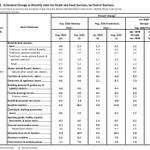
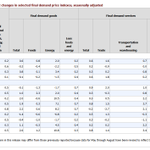
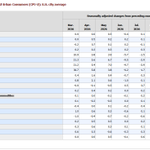
Fuel oil is up 15.3% month-over-month, and gasoline is up 9.1%. At some point, the things we "have to have" will get so expensive that the things we "want to have" may actually start to go down because nobody has enough money left over.
Full report: peakprosperity.pulse.ly/wo6b…
I can only hope that Youtube is using AI to send emails... because that's the worst sales pitch since that mayor tried to lure people into being lab rats by shoving french fries into his face hole...

Widge retweeted

Pending Sales down -11.3% YoY
Redfin reporting most cancelled sales since Covid at 14.5%
Builder results in 7 days, but sentiment at 2012 levels
As foreclosures (forced sales) ramp and elective sales retreat the nat'l median home sales price will come under add'l pressure
⏰


I'm of the opinion that some type of mass adoption of AI and robots are more likely to explode the debt...and while people want to compare this move to the Tech Boom of the late 90s, take a look at what has happened to debt and labor participation in the ensuing 30 years.

“Musk cited the political establishment’s lack of will as the main reason for the difficulty in reducing the fiscal deficit. He argued, “No one in the White House, Senate, House, or judiciary has the will to cut spending,” and claimed that except for a few like Republican Senator Rand Paul, there are virtually no politicians willing to reduce government spending.
chosun.com/english/industry-…

Widge retweeted

The Trump corruption issue is like the Biden cognitive decline issue in one key sense: Everyone around the president or even supporting him professionally from afar should be asked about it, and their lies/claims of ignorance should be hung around their necks like dumbbells.


Widge retweeted

Also, 25% of the boomers are already dead…3 million were deployed in Southeast Asia and 60,000 were killed in action…

I’m not a boomer but I do like to defend the bullied. The work ethic of the boomer generation was amazing. Coupled with the technologies they created, they became the most productive generation we’ve ever had. Much of our standard of living is due to the selflessness and determination of that generation. No one grew up pampered in 1950’s and 60’s…we should have a boomer appreciation holiday…
These are the Boomers that you hate on.
Those that didn't get get drafted for military service worked in factories that you probably wouldn't want to step foot in, much less spend 30+ years surviving.
Extraordinarily few of them became wealthy... and most of them are dead.




Spot on.

When the Cost of Policy Reaches the Street
I live in Milan. It is not a city accustomed to riots.
This weekend, the center of the city filled with smoke, shattered glass and police in riot gear. The images looked sudden. The crisis was not.
What happened in Milan was the moment when years of distant political decisions finally arrived in the street. And it is a cocktail that is mixed and ready to explode in cities across the US and Europe.
The demonstration began around legitimate concerns about wages, housing, public services and the rising cost of living. Most of the people participated peacefully. But then, masked groups broke away, attacked police and damaged property and looted stores.
The violence does not explain the pressure that produced it.
That pressure begins outside Italy and applies across the western world.
War, corruption and economic failure have displaced people across North Africa and the Middle East. (And South America) Many travel north because they cannot find security or economic opportunity at home.
Europe has mistakenly allowed large numbers of people to enter without building the institutions required to integrate them. Governments rarely establish or enforce clear expectations for employment, legal conduct and civic participation.
The immigrant is admitted but not incorporated.
The host community is ordered to absorb the consequences without being permitted to discuss the cost.
This is often defended as compassion. It is not.
Immigration without integration is abandonment twice over. It abandons the immigrant to the margins of society, and it abandons the host community to absorb social and economic costs its government refuses to acknowledge.
Those costs are not distributed equally.
The wealthy experience immigration as a source of inexpensive labor. The professional class often experiences it as an abstract political question. Immigrants and working-class citizens experience it in the same housing market, the same schools, the same public services and the same competition for low-wage work.
They are then encouraged to blame one another.
The people who designed the policy remain insulated from its consequences.
The same transfer has occurred through monetary policy.
Since the financial crisis, I have watched governments and central banks respond to instability by creating money, supporting financial assets and protecting large institutions from losses.
The losses did not disappear. They were transferred.
People who owned stocks, property and businesses benefited as asset values rose. People who depended primarily on wages confronted higher prices for housing, food and energy.
Inflation is not just an economic statistic. It is a system for distributing the cost of government policy.
For people with substantial assets, inflation can be profitable. For the upper middle class, it is an inconvenience. For people living on wages, pensions or public assistance, it is destructive to the point it will send people to riot.
It is a stealth currency collapse that targets the most vulnerable.
The war with Iran increased the pressure. Energy and fertilizer prices rose. Those increases moved through transportation, agriculture and food production until they reached the household.
The officials making those decisions did not have to choose between paying an energy bill and buying groceries. Other people did.
Each policy has been considered separately. Immigration is discussed as a humanitarian and cultural issue. Monetary policy is discussed as a technical financial matter. War is discussed as national security. Housing is treated as a local problem.
Actual people experience all of them at the same time.
That is the convergence we saw in Milan this weekend.
Social order depends on more than policing. It depends on the belief that the rules are fair, that work will be rewarded and that government can respond when conditions deteriorate.
When those beliefs disappear, public order becomes harder to maintain.
None of this justifies attacking police, burning property or looting stores. Those acts usually damage the same communities already carrying the greatest burden. The people responsible should be held accountable.
But accountability cannot stop with the people in the street.
It must extend to the political leaders who accepted immigration without integration or respect for the existing community, financed prosperity through monetary expansion, pursued wars without accounting for their domestic cost and protected concentrated wealth while the price of basic life increased.
The people who make policy must no longer be insulated from its consequences.
Milan will repair the damage. The broken glass will be replaced and the streets will reopen.
The underlying pressure remains.
A society cannot displace people through war, admit them without a plan, inflate the cost of essential goods, protect concentrated wealth and then demand social peace from the people required to absorb the consequences.
The violence arrived in Milan this weekend.
The policies arrived years ago.
Subscribe to Dylan Ratigan at dylanratigan.substack.com/

ALT Street unrest in central Milan, with masked groups and overturned scooters and trash bins, shown in a Corriere Milano news post.
It's not my place to know how people afford things... but I don't know how people afford things.

BREAKING: A record 21.2% of new-car buyers now pay $1,000 or more a month, up from 19.1% a year ago, per CNBC
69% of them took loans of six years or longer to make it work.