

She/her. Freelance writer and editor. Author of Lambflesh. Work with me on your next project: https://xitter.cf/t.co/b0epJZF5GG
- Tweets32K
- Following4.5K
- Followers1.9K
- Likes204K





ALT The cover of issue 52 of LCRW. Two figures stand against a tan background. One is a capybara-esque figure with cacti sprouting from its back and neck. The other is a more humanoid figure with a skull-like face and cacti antlers.

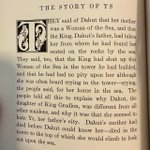
ALT She missed her hands the most. The weight of them at the ends of her wrists- gripping, grasping stroking, clawing, pointing, poking. One hand trailing over the edge of the dented peddle boat, the lake a cool ripple beneath her sweaty palm. She'd always wished (secretly, guiltily) for the water to close over wrist, then elbow, then shoulder-neck- head, pulling her under, swallowing her up. The lake was the first and best thing she ever loved. She couldn't love something without wanting to become it. Or be consumed by it. It wasn't her fault, Morgan said once. It was fate. A genetic flaw. "Which one?" Caer had asked. Morgan's smile turned bitter. "What's the difference?" she said It was the oldest story in the world, after all Caer wanted to be something else, something other. Then she was, and she wanted her beginning back again, unchanged.


ALT A graphic of a calendar page in blue and white. Top text reads: Submissions Open! Beneath a logo of a dragon, text reads: Hope Springs Creative Publishing With Purpose Below that text reads: November 1st-January 1st


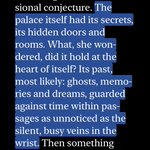
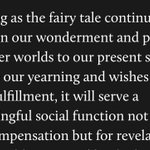
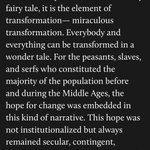
ALT All stories are a response to the world in some way, but fantasy is very often a response to landscape. In an essay written in the 1940s, CS Lewis wrote: "I have seen landscapes (notably in the Mourne Mountains) which, under a particular light, made me feel that at any moment a giant might raise his head over the next ridge. Nature has that in her which compels us to invent giants: and only giants will do."

ALT There is a danger associated with growing up, of putting aside children's books. We must be careful lest all we are left with is a world that is very much not alive, a natural world that is mere piles of stuff - stuff that people can use or not use, preserve or destroy, just as they want. When Lewis wrote about giants rising from the mountains of Mourne, it was a Romantic idea. There was nothing very practical about it. We weren't yet aware of climate change; the natural world was not yet in crisis; species were not going extinct at the rate they are today. Now we need an idea of the natural world as something that has value and life of its own, quite independent of us. This would have been so obvious to people in the past that it would not have been worth stating, but 200 years after the Industrial Revolution our sight has become a little clouded.

ALT Like children's literature, fantasy is ideally placed to give the world a face. Some of its personages began as spirits of place, related to dryads and naiads, the personification of trees and streams. The genre abounds with liminal creatures, halfway between the natural world and the world of men. Fantasy writing does not only endow the non-human world with life - though it might be more accurate to say that it acknowledges the life that is already there - it also provides the non-human world with a voice.

ALT Magic in Clarke’s novel is synonymous or inseparable from the living force of the natural world. It doesn’t seek to refuse reality or deny history. Instead magic functions as a radical rejection of stasis and separateness, a dissolving of borders not just on the level of nations but on the level of individual consciousness. When Drawlight is swallowed up by the enchanted wood, Clarke writes: “The trees, the stones and the earth had taken him inside themselves, but in their shape it was possible still to discern something of the man he had once been.” This is the darker side of Clarke’s vision of interlinkedness, an eco-consciousness that is all-consuming, vengeful even, rather than benevolent. But even this ambiguous force carries with it a kind of hope: Drawlight’s devouring represents a world where humans function as part of nature rather than stand outside of it. He is able to live “inside” the world while still retaining “something of the man he had once been.” In her depiction of

ALT All stories are a response to the world in some way, but fantasy is very often a response to landscape. In an essay written in the 1940s, CS Lewis wrote: "I have seen landscapes (notably in the Mourne Mountains) which, under a particular light, made me feel that at any moment a giant might raise his head over the next ridge. Nature has that in her which compels us to invent giants: and only giants will do."
ALT There is a danger associated with growing up, of putting aside children's books. We must be careful lest all we are left with is a world that is very much not alive, a natural world that is mere piles of stuff - stuff that people can use or not use, preserve or destroy, just as they want. When Lewis wrote about giants rising from the mountains of Mourne, it was a Romantic idea. There was nothing very practical about it. We weren't yet aware of climate change; the natural world was not yet in crisis; species were not going extinct at the rate they are today. Now we need an idea of the natural world as something that has value and life of its own, quite independent of us. This would have been so obvious to people in the past that it would not have been worth stating, but 200 years after the Industrial Revolution our sight has become a little clouded.
ALT Like children's literature, fantasy is ideally placed to give the world a face. Some of its personages began as spirits of place, related to dryads and naiads, the personification of trees and streams. The genre abounds with liminal creatures, halfway between the natural world and the world of men. Fantasy writing does not only endow the non-human world with life - though it might be more accurate to say that it acknowledges the life that is already there - it also provides the non-human world with a voice.
ALT Magic in Clarke’s novel is synonymous or inseparable from the living force of the natural world. It doesn’t seek to refuse reality or deny history. Instead magic functions as a radical rejection of stasis and separateness, a dissolving of borders not just on the level of nations but on the level of individual consciousness. When Drawlight is swallowed up by the enchanted wood, Clarke writes: “The trees, the stones and the earth had taken him inside themselves, but in their shape it was possible still to discern something of the man he had once been.” This is the darker side of Clarke’s vision of interlinkedness, an eco-consciousness that is all-consuming, vengeful even, rather than benevolent. But even this ambiguous force carries with it a kind of hope: Drawlight’s devouring represents a world where humans function as part of nature rather than stand outside of it. He is able to live “inside” the world while still retaining “something of the man he had once been.” In her depiction of


ALT A graphic of a calendar page in blue and white. Top text reads: Submissions Open! Beneath a logo of a dragon, text reads: Hope Springs Creative Publishing With Purpose Below that text reads: November 1st-January 1st