

Vancouver based freelance journalist and author focusing on the history, politics and future of British Columbia's natural heritage. #bcpoli
Vancouver, BC
Joined June 2011
- Tweets399
- Following78
- Followers2.4K
- Likes451






Mark Hume retweeted

Canadian provinces are examining limits on access to provincial natural resources, (including fishing salmon) for U.S. citizens in response to U.S. tariffs.
Is there a link between wealthy elites who hunt Canadian wildlife and fund @DonaldTrump campaigns?
#Canada #USA

ALT Photo credit: Atlantic Salmon Federation (Director Alex Taylor)
Proud to be Canadian. cbc.ca/news/canada/canada-us…
Mark Hume retweeted

John Turner correctly warned Canadians about the consequences of free trade with the U.S.
His concerns were rejected by Canadian voters at the time, and his political career never recovered.
Turner might be the most vindicated Canadian PM of all time.
People like to trash mainstream media but when it comes to telling big stories nobody does it better. That’s why The Globe & Mail is worth subscribing to. Invest in knowledge about Canada. theglobeandmail.com/canada/a…

2
104
Mark Hume retweeted

The re-election of @KenSimCity for four more years will be a huge gift to developers and the police and an end to the city's few remaining socially progressive policies...but opposition is so ineffectual and all over the map, he's looming as a certain winner #vanpoli


This is the President America wants…but the President they’ve got hides in a catering container & lets friends, colleagues and the press take off on Air Force One under threat of attack.

2
84


Mark Hume retweeted

Our latest in the @nationalpost with @GeoffRuss3 shows the sovereignty risk facing BC:
"The provincial government, accountable to all British Columbians, has become a desk clerk that issues paperwork, for which it does not possess the final sign-off."
nationalpost.com/opinion/opi…

What a great opportunity for the football world to get rid of FIFA.
Just walk away and start a new World Cup, without graft, greed and manipulation. cbc.ca/sports/soccer/uefa-me…

Mark Hume retweeted

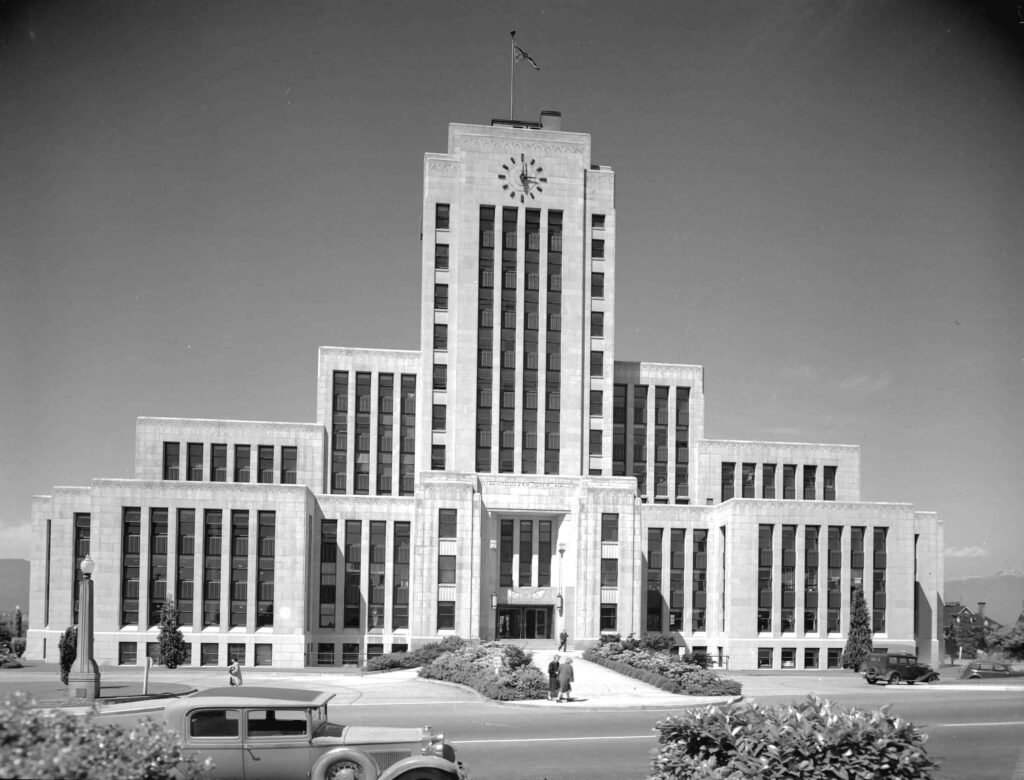
Happy to hear that the Vancouver city Council voted down the ill conceived so-called villages plan. The villages plan was driven by absurd notions, primarily the notion that the impediment to affordable housing is regressive zoning. . Not at all true.
Zoning is the key implementation tool necessary for city planning. Planning can be in the public’s interest or against it. The villages plan is an example of the later.
Mark Hume retweeted

Bulk liquids aren't permitted at Roberts Bank. How does that impact the plan for a $44-billion oil terminal and #pipeline? In the 1970s, a federal panel concluded that the shipment of bulk liquids would pose “unacceptable risks" to the #RobertsBank ecosystem. vancouversun.com/news/bulk-l…

Mark Hume retweeted

SPEAKER #92 - On Vancouver's "Villages Plan"
Below is the 5-minute presentation to @CityofVancouver council on Wed. by @UBC education prof. emeritus Anthony Clarke.
A highlight:
"I respectively ask Council to reject the SEDUCTIVE SIMPLICITY of the Villages Plan. As presented the One-Size-Fits-All algorithm is a fiction. It does not represent the reality of Vancouver nor is it based on modern and sound urban planning principles."
#vanre #vanpoli
Mayor (Chair) and Members of Council,
Good morning!
My name is Anthony Clarke. I am a recently retired academic from UBC. I live just off 33rd Avenue between Fraser and Knight in East Vancouver. I spent the first 30 years of my life in the city of Melbourne and have now lived in Vancouver for over 30 years.
For reasons that I will explain shortly, I oppose the Villages Plan.
I am fortunate in that nearly every year I return to Melbourne to visit family and friends.
I am the envy of my family and friends because I get to live in two cities—Vancouver and Melbourne—that are consistently ranked every year in the top 10 list of most liveable cities in the world.
Why are they in the top 10?
In the past eight hours of this hearing, the factors listed by those who have encouraged the Council to re-think the Villages Plan are the same criteria used to judge Vancouver’s place in that top ten list.
So congratulations, what you have been doing and what you continue to do is already an extraordinary success. When you make a decision about the proposed Villages Plan, I urge you not to throw out the baby with the bathwater.
Today, I would like to present a new way of thinking about the Villages Plan.
It has to do with the way we think about phenomena in the world.
For the purposes of this hearing, I suggest that there are two broad categories of phenomena in the world; Simple phenomena and Complex phenomena.
Simple phenomena have very few variables and we can isolate and study them independently.
On the other hand, complex phenomena have many variables that interact with each other and can only be studied through their interaction.
Like you, after listening to all the speakers over the past 8 hours, I noticed a curious feature emerging. For the majority of those speaking in favour of this Plan, they typically cite a single factor when presenting their case. Whereas the majority of those speaking in opposition to the plan refer to multiple factors in supporting their case.
This curiosity prompted me to look into the theories underpinning urban planning to better understand why this might be so.
What you will find is that complexity theory (or complexity science) underpins most, if not all, current theories on urban planning. Why? Because urban planning is a complex phenomenon.
Therefore it is curious that the Villages Plan opts for a One-Size-Fits-All approach which is to be applied across 17 different and distinct communities.
The problem with a One-Size-Fits-All approach to urban planning is that it is an algorithmic approach to problem solving.
Algorithms are great for simple, technical, and precise problems. Algorithms are wonderful for simple phenomena. But urban planning is a complex phenomenon.
The question then becomes, how did the staff who presented the Plan to Council manage to reduce it to a One-Size-Fits-All algorithm?
The only way they could do this is by removing enough variables from the system, so that it no longer looks complex but is rendered as a relatively simple phenomenon. And that is what I believe has happened here.
As I listened to the presenters of the plan at the beginning of the first meeting, I was struck by how they constantly qualified their response to your questions about the absence of key variables by using modifiers like: We could consider that in the future; We might have some flexibility later; That might be an amendment down the track, We will get back to you on that, etc.
Others who have spoken in opposition to the Plan have also pointed out these missing variables.
In essence, by deliberately stripping out key variables from the context of the problem you are trying to solve (and rendering it as a simple phenomenon) doesn’t change the reality of the complexity you are faced with. It only means that the simplistic solution you devise (in this case, One-Size-Fits-All algorithm) is not only misguided but imperils the very things that you argue are most desirable and needed in the city.
Two Points In Conclusion
I respectively ask Council to reject the seductive simplicity of the Villages Plan. As presented the One-Size-Fits-All algorithm is a fiction. It does not represent the reality of Vancouver nor is it based on modern and sound urban planning principles. Our neighbourhoods and communities are complex systems and that is their strength.
I ask that you request your staff to present you with an alternative plan for the growth and development of Vancouver that incorporates the principles of complexity and ensures that Vancouver stays in the top 10 list of most liveable cities in the world.
Thank you for the opportunity to speak at this hearing.

He’s been collecting guns for 50 years & has 439 of them. Police say 3 were ‘illegally transferred’, which means what? Improper paper work? So 436 right, 3 wrong. And for this they seize his full collection & put him in jail for two days? Strange case. cbc.ca/news/canada/manitoba/…

2
54
PM Carney likes to talk of nation building and keeping Canada strong. But does that mean more than just mines and pipelines?
A Canadian rail line through B.C. to Alaska, run by a Canadian company, isn’t too big a dream is it? cbc.ca/news/canada/british-c…

1
111
Mark Hume retweeted
Deep in the BC Interior American billionaires have been buying up swathes of farmland.
Attention has concentrated on the small community of Dunster in the Robson Valley, where US businessmen Mark Walter and Robert “Bobby” Patton Jr (co-owners of the LA Dodgers) have reportedly bought nearly 4,000 acres.
Many of the parcels bought up now have gates and "no trespassing" signs. Locals have observed a population decline, arguing the land buy-up is dispossessing their community and keeping young families from taking root.
This is just one of many examples. Stan Kroenke, the owner of the NHL Colorado Avalanche, has bought up BC ranches including Alkali Lake, Riske Creek, Gang, and the historic Douglas Lake ranch (the largest working cattle ranch in Canada).
BC is one of a handful of provinces with no restrictions on foreign or corporate farmland ownership. Calls are now growing for this to change.
One potential model is Quebec, which last year passed a bill that restricts foreign ownership of farmland to four hectares and lets municipalities tax farmland that is not being farmed.
Who is Canada's farmland for? Canadian families or wealthy American businessmen, foreign interests, and corporations?

Mark Hume retweeted
Subject:
Serious Concerns with Vancouver’s Villages Plan.
Dear Mayor and Council,
I write to challenge key elements of the Villages Plan.
Combined with the Official Development Plan and Broadway Plan, the City envisions a fully built-out future that adds around 1.4 million people to our city of 670,000.
This massive oversupply is promoted as the path to housing affordability. Yet there is no historical evidence to support this claim.
Vancouver has tripled its housing stock since the 1960s - more than any other major North American centre city - yet our prices remain North America's highest, not the lowest. If adding hundreds of thousands of units truly lowered prices, we would already see it.
The market, driven by globe-wide speculative inflation has failed us. Our plans are feeding this speculative beast rather than taming it.
True affordability requires mandating that new housing be affordable to average wage earners, primarily through non-market housing development.
I urge you to revise these plans accordingly, deeply involving residents from every corner of the city, to arrive at sustainable, equitable, and affordable housing growth.
Thank you,
UBC Professor Emeritus
Patrick M. Condon

The City of Vancouver’s so called “Villages Plan” is a shocking abuse of power by a Mayor & council who must be voted out of office. Time for a clean sweep at city hall. dunbarnews.ca/families-shock…
The amount of damage done by the logging industry is staggering. And the cycle will be repeated until people start electing governments that actually care about the environment. ualberta.ca/en/folio/2026/06…


This is where Canada plans to put its new terminal for massive oil tankers. In the middle of vital bird habitat, on the doorstep of the country’s most productive salmon river. And they justify it by saying there’ll be an oil spill clean up fund. maps.app.goo.gl/c2qMoftxM4Hi…
