

currently: head of bd @succinctlabs previously: revenue @uniswap
San Francisco, CA
Joined February 2014
- Tweets510
- Following1.1K
- Followers1.6K
- Likes3K







Edward Li retweeted

Some highlights for Succinct in 2026:
→ Base, Arbitrum, and Optimism using OP-Succinct. Bringing TVS up to ~$13B
→ Flock gets integrated into Ethereum's LeanVM roadmap
→ Google uses SP1 in their quantum vulnerabilities paper
→ Anthropic taps Succinct cryptographer to release FlashProve
→ SP1 Hybercube launch with plans to release a quantum-resistant SP1

Huge congrats to Succinct’s Rahul Dalal, one of the cryptographers behind FlashProve, @AnthropicAI’s provable inference system built on zkSNARKs.
Why: Today, AI runs on a “just trust me” model. Users can’t verify that a response came from the model they chose, or that an attacker didn’t tamper with it along the way. As AI takes on higher-stakes work, that create tension for users, labs, and regulators alike.
What: Researchers from Anthropic, EPFL, MIT, and @SuccinctLabs built FlashProve, a system that lets a model provider commit to a specific model and then prove each response was produced by it, without revealing the weights. Under the hood, it uses zkSNARKs, the same cryptographic technology Succinct uses to secure $13.5B in deposits on Ethereum L2s.
So What: FlashProve proved Llama 4 Maverick, a 400B-parameter LLM, at 110 tokens/sec on a single H100 GPU, with ~19 MB proofs. That puts proving at roughly 70 to 95x the cost of running the model. The previous standard for the same model was ~0.02 tokens/sec.
What’s Next: FlashProve is still a research prototype, but it’s a step change toward the question we asked with Flock earlier this year: how close can proving get to computing? The closer it gets, the less reason there is to release any output without a proof attached.
Congrats again to Rahul and the FlashProve team, and great to see @Starknet, @Mantle_Official (proven by Succinct), and several zkML projects cited.

Very proud of Rahul and his collaborators at @AnthropicAI, @Starknet, and others.
Cryptography is the answer to many of AI's greatest challenges!
Huge congrats to Succinct’s Rahul Dalal, one of the cryptographers behind FlashProve, @AnthropicAI’s provable inference system built on zkSNARKs.
Why: Today, AI runs on a “just trust me” model. Users can’t verify that a response came from the model they chose, or that an attacker didn’t tamper with it along the way. As AI takes on higher-stakes work, that create tension for users, labs, and regulators alike.
What: Researchers from Anthropic, EPFL, MIT, and @SuccinctLabs built FlashProve, a system that lets a model provider commit to a specific model and then prove each response was produced by it, without revealing the weights. Under the hood, it uses zkSNARKs, the same cryptographic technology Succinct uses to secure $13.5B in deposits on Ethereum L2s.
So What: FlashProve proved Llama 4 Maverick, a 400B-parameter LLM, at 110 tokens/sec on a single H100 GPU, with ~19 MB proofs. That puts proving at roughly 70 to 95x the cost of running the model. The previous standard for the same model was ~0.02 tokens/sec.
What’s Next: FlashProve is still a research prototype, but it’s a step change toward the question we asked with Flock earlier this year: how close can proving get to computing? The closer it gets, the less reason there is to release any output without a proof attached.
Congrats again to Rahul and the FlashProve team, and great to see @Starknet, @Mantle_Official (proven by Succinct), and several zkML projects cited.
9
144
Edward Li retweeted

Introducing the definitive guide to ZK in 2026.
The year’s biggest questions pointed to ZK: Can we trust AI? Will quantum break encryption? Can private money live on public rails? How do we know what’s real online?
Read how in the 2026 ZK Industry Report with @zeroknowledgefm.


One of the biggest barriers for ZK is ease of adoption.
With our new @Chainlink CCV module, we have a plug-and-play solution that allows institutions to add ZK into an architecture they already trust: CCIP.
If you are an CCIP issuer or protocol, reach out to us!
2
6
422
Some unsolicited thoughts on Muse and Instinct.
Both products are awesome. By far the best attempts at personal AI that I've seen! Hats off to @alexandr_wang and @noahrshinn.
In my view, the standalone Muse app is a way better experience than the iMessage UI. Instinct's text format is novel for a while, but managing iMessage threads becomes a pain.
My hot take is that the safety controls on Muse are overengineered. I asked it to look up an old classmate's (public) activity and it simply refused on privacy grounds. I understand why Muse leaned in this direction (lots of legal + reputational risk if it's used badly), but IMO it nerfs their social graph advantage.
For Instinct, attacking this kind of gray area is a way to succeed as an underdog. I just want my agent to be maximally useful!
2
5
407
I'm reminded of the content moderation debates from ~5 years ago. Thread below captures Apple's intentional choice to *not* wade into these areas, zigging where Meta zagged.
A bad outcome for Muse could be a repeat of this!
xitter.cf/TechEmails/status/2096…


112

One step closer toward ZK for institutions ...
⏰⏰⏰

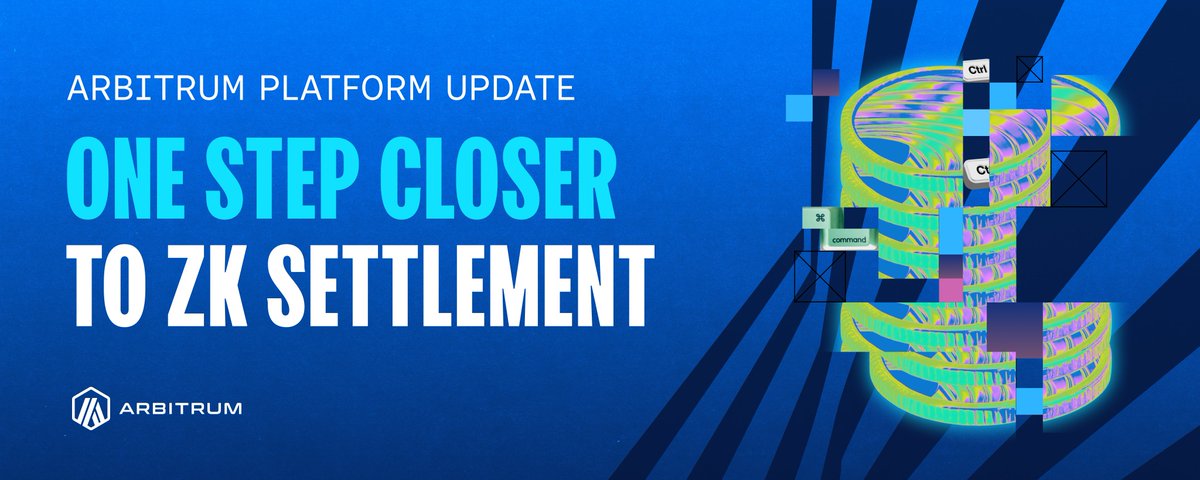
ZK Settlement is coming to Arbitrum
- This paves the way for private Arbitrum chains
- Allows for Faster @Ethereum withdrawals (from days to hours)
Thanks to @SuccinctLabs and @Offchain, Arbitrum chains will be able to implement this new technology soon
6
194
love that they doing a public sale
this could be a super interesting media property for a lot of different teams. looks like the Farcaster app still has 10K WAUs, and i imagine that these users are tech types that are quite valuable to B2B teams

update on @farcaster_xyz, @clanker_world and @neynarxyz
we’ve started a process to look for a new home / team to run the products going forward.
earlier this year, this seemed to be a good fit for our team: it was a developer-first network, and we'd been serving developers from the start. There’s been a lot of change since then and we’re not the right fit for what’s needed next.
talking to a few teams we think could be a good fit for running decentralized social apps and related developer products. If you’ve thoughts / are interested, reach out.
our company will return its balance sheet (most of it remains) and team members will move on to something new.
this is not a decision we made lightly. I’m optimistic that with this next iteration, Farcaster will find its long term fit.
it’s loved enough that it’s unlikely to simply perish - thanks to all of you, and lindy-ness.
3
306
I must be having a fever dream

Wild that Corgi the insurer is in the ETF business.
ETFs are mostly distribution + branding so if you can manufacture them cheaply, I get launching a ton and seeing what sticks. And they really are spraying, here are some of them:
$BREW Coffee/Energy Drinks: $669K AUM
$NYNY NYC Companies: $695k
$GLAM Beauty: $990K
$LATR BNPL: $990K
$ODDZ Gambling: $1.1M
$EYES Surveillance: $1.3M
$WR US War Machine: $1.4M
$STYL Lifestyle Brands: $397K
Those combine for $25k in gross fees.
But they have a hit, semiconductor photonics $EUV. It’s $506M of the total $914M Corgi AUM and generates ~$1.8M/yr in gross fees.
My favorite Corgi ETF is $FDRX. The thesis is that founder-led companies like Nvidia, Meta, Tesla, Palantir, Shopify and Salesforce outperform because founders think and invest for the long term. Great! But this is a 2x leveraged ETF that resets every day, designed for short-term trading… so the whole thing is very very stupid.
If a founder index goes +10% today, $FDRX goes +20%. If it then goes -9.09% the next day, you’d be flat on an index but $FDRX is down -18.2% and you’d be down ~1.8% before fees. The fund is down 7% since inception earlier this year.
Of course this stupid fund is actually one of the most lucrative for Corgi. It only has $10M AUM but charges 1.08% fees and is their #3 ETF in fee generation.
All that being said, IMO launching a bunch of ETFs cheaply and seeing what sticks is a reasonable strategy if your costs are near zero.
Still not sure what any of this has to do with the core insurance biz!
Feels like this Corgi 🐕 is biting off a lot at once!
163
Really proud of @tamirhemo and @ronrothblum and the entire cryptography team for their contributions to PQ Ethereum.
Excited to bring our expertise to other chains!

Goodbye, Poseidon!
An epic 8-year, 8-figure rabbit hole in post-quantum cryptography reaches its dream conclusion. The Ethereum Foundation is abandoning Poseidon for L1, pivoting to SHA or BLAKE. This milestone unlocks ultimate security for lean Ethereum and foreshadows a golden era of hash-based cryptography.
Since 2018, the Ethereum Foundation has invested in magic cryptographic bricks, so-called "SNARK-friendly hashes". In 2019, Poseidon was born. It held strong and became the dominant SNARK-friendly hash, securing billions via zkrollups and zkVMs.
In a stunning reversal, breakthrough SNARK designs show that SNARK-friendly hashes aren't necessary after all. Off-the-shelf traditional hash functions like SHA2 and BLAKE2s can now match Poseidon in a SNARK. In hindsight the key was not SNARK-friendly hashes, but hash-friendly SNARKs.
The secret is doing maths over the smallest prime number: 2. So-called "binary fields" natively speak the language of bits, aligning with the boolean operations inside traditional hashes. This is a stark departure from "prime fields", where awkward large-prime arithmetic makes bit manipulation painfully expensive.
We're talking sci-fi cryptography. 1M traditional hash calls proven per second, on a laptop. Just 100x overhead vs native CPU boolean compute. Nobody predicted such performance, not even the handful of binary-field visionaries. Hat tip to the research geniuses: Jim and Ben with Binius in 2023; Ron, Benedikt and William with Flock in June.
With SHA2, the lean aesthetic of minimal assumptions reaches its climax. The EF's principled stance on pure hash-based cryptography has aged like fine wine. We now enjoy foundations the world can trust for decades and centuries, foundations worthy of the dream of an internet of value.
Speed of deployment is a secondary win. There's no longer a need to wait years for Poseidon cryptanalysis to bake. Emile and Thomas from the EF post-quantum team are moving at breakneck speed with binary fields. The strawmap now points to a production-grade leanVM in 2027, with CL, DL, EL deployments in 2028.
As AI becomes exceptional at cryptanalysis, the contrarian bet to avoid riskier structures like lattices and isogenies is visibly paying off. The past weeks have been brutal. Lattice-based "HAWK" and isogeny-based "SQIsign", both signature schemes in NIST's Round 3, have suffered blows. Sources I trust say more blood is coming.
On AI, the open autoresearch trend kicked off by ECDSA[.]fail is spreading fast, with amazing outcomes from zk[.]golf and SNARK[.]fast. Days ago SNARK[.]fast crossed 1.8M BLAKE3/sec proven on an M3 Max. Stay tuned for fresh autoresearch challenges dropping tomorrow.
Also tomorrow: Ethproofs call #10, dedicated to binary fields. Possibly the most noteworthy Ethproofs call yet. Experts leading the charge will present the future of hash-based SNARKs at 2pm UTC. What an incredible time to be alive. To witness history, DM me for a calendar invite :)
Today I can confidently claim that hash-based cryptography has won out for blockchain post-quantum signatures. SNARK succinctness compresses arbitrarily many signatures into one small proof per block. SNARK flexibility yields k-of-n threshold signatures, complex multisigs, and more.
Ultimate security. Uncompromising performance. Full programmability.
Believe in something. Believe in hashes.
5
248


OSINT reporting is cooked in the AI era. These journalists will be drowned out by a waves of fakes.
Photos with cryptographic attestation are the only way forward! Have to standardize into every social platform so everything is assumed fake unless provably real.

Tonight I typed just one sentence into Google Earth and put refugees near the Mexican border. Then I planted a nuclear plant in Iran. What on earth is Google doing? Check my latest post here: digitaldigging.org/p/how-to-…
USDC deal between Coinbase and Circle is a strong contender for GOAT transaction in our industry.
Was a win-win for both companies at the time and there's still insane upside if agentic finance takes off.

The biggest financial shift of our lifetime is starting, and Coinbase was built for this moment.
Every asset on earth (stocks, bonds, commodities, real estate, etc) is going to move onchain. The hundred-trillion-dollar financial system is being updated, faster than the incumbents can react.
A handful of companies will own the rails for this new system. Coinbase is uniquely positioned to capitalize on this generational transformation.
We just released our latest earnings where we talk about our progress here. It was a tough market in Q2. Despite this, we continued to execute on the things in our control and build through the noise. Some highlights:
- We store the most crypto in the world, and are the leading stablecoin platform
- 90%+ of agentic stablecoin transaction volume was on Base
- New ATH in our crypto trading volume market share (10.3%)
- Revenue has significantly diversified beyond trading
- Prediction markets revenue more than doubled, +106% QoQ
2
189
Edward Li retweeted
Flock, our newest SNARK, was built to accelerate Ethereum's transition to post-quantum security by efficiently proving batches of standard hash functions.
We’re launching SNARK(.)fast with @eigenlabs and @ethereumfndn, challenging you to push Flock's performance even further.

Quantum computers put hundreds of billions of dollars at risk on Ethereum.
In order to scale post-quantum Ethereum, the cryptography needs to be faster.
Today, we’re teaming up with @succinctlabs & @ethereumfndn to launch SNARK.fast, an open autoresearch challenge where anyone can improve Flock, a leading post-quantum proof system, and make post-quantum Ethereum a reality.
Bring your agent. Make it go fast.

I’m genuinely shocked by this, goes to show that prediction markets are breaking out of crypto as a category

Robinhood prediction markets revenue expected to top crypto trading revenue in 2Q and in FY 2026-27. Running near 10-15% of $HOOD total revs and already bigger than stock trading in 1Q.

1
5
216