

CStJ UE•Anglican Bishop•Board Certified Chaplain (BCC)•Freeman and Liveryman of London•Irish and Scottish Armiger•BA Butler University•MDiv Nashotah House
Joined December 2020
- Tweets298
- Following0
- Followers668
- Likes87





We are Prayer Book Catholics: heirs to the English Reformation, formed by the worship of the Book of Common Prayer, committed to Holy Scripture, and conscious of our place within the historic Church.
Let the Methodists be Methodists. Let the Presbyterians be Presbyterians. Let the Lutherans be Lutherans. Let the Roman Catholics be Roman Catholics. We can respect each tradition without surrendering our own identity.
The future of Anglicanism does not depend on our ability to imitate other communions. It depends, in part, on whether we have the confidence and theological maturity to understand what we have inherited and the faithfulness to live it out.

What troubles me about much of contemporary Anglicanism, including parts of ACNA and GAFCON, is the apparent drift toward consumerism: the constant emphasis on growth, accessibility, relevance, and attracting people, sometimes at the expense of truth, reverence, holiness, and the fullness of the Christian faith. Of course, numbers are not inherently wrong—the Church is called to evangelize and make disciples—but numerical growth cannot become the measure of faithfulness.
Christ Himself did not dilute difficult truths when people turned away; He allowed them to leave rather than reshape His message to retain them. The Church is not a religious marketplace in which we give people whatever they find attractive. It is the Body of Christ, entrusted with the apostolic faith and called to worship God, proclaim the whole counsel of Scripture, administer the sacraments, form people in holiness, and make disciples. Anglicanism at its best understood this: the Church forms the Christian; the consumer does not design the Church.
So the real question should not simply be, “How many people are we attracting?” but, “Are we faithfully proclaiming Christ, preserving the truth, and actually forming people into His likeness?” If truth becomes negotiable whenever it threatens growth, then we have ceased to treat truth as truth and have begun treating Christianity as a product.

In the Christian life, it is not enough simply to say that we believe in Christ. By the grace of God, we are also called to become more like Christ. This lifelong work is what the Church calls sanctification—being made holy.
St Paul writes, “This is the will of God, your sanctification” (1 Thessalonians 4:3). Sanctification is not something we accomplish by our own strength. It begins with God’s grace and continues as the Holy Spirit works within us. We are justified by faith, forgiven and reconciled to God through Jesus Christ; and then, day by day, God teaches us to live as His people.
This transformation often happens quietly. It may be seen when we choose patience instead of anger, forgiveness instead of resentment, generosity instead of selfishness, prayer instead of anxiety, and truth instead of convenience. These small acts of obedience are signs that Christ is taking deeper possession of our lives.
The Anglican tradition rightly places us in the rhythm of Word and Sacrament. Through Scripture, God renews our minds; through prayer, He draws us into communion with Him; and in the Holy Communion, we are nourished by Christ and strengthened for holy living. We do not come to the altar because we have already become holy. We come because we need Christ to make us holy.
We should not become discouraged by our failures. Sanctification is a journey. The Christian may stumble, but God's grace calls us to rise again. The Holy Spirit patiently conforms us to the image of Christ. So let us ask God not merely to make us better people, but to make us holy people—people whose lives increasingly reflect the love, humility, mercy, and holiness of Jesus.

The rising cost of “dual integrities” within the Anglican Church in North America is becoming increasingly evident in the trajectory of the Diocese of Churches for the Sake of Others (C4SO).
ACNA’s founding compromise sought to preserve “unity” by allowing both apostolic and egalitarian convictions concerning women’s ordination to coexist, but the long-term difficulty is that theological positions do not remain merely theoretical: they shape clergy formation, leadership, institutional culture, and ultimately the church’s understanding of Scripture, creation, and human identity.
C4SO has moved beyond simply tolerating women’s ordination to actively affirming and promoting women in ordained leadership, while simultaneously engaging broader questions of sexuality and gender identity.
The Episcopal Church’s teaching toward increasingly revisionist positions demonstrates how a church can begin by permitting competing interpretations, normalize one side institutionally, and eventually find that the original disagreement has become a much broader theological reorientation.
The question for ACNA, therefore, is not merely whether two positions on women’s ordination can coexist. “Dual integrity” cannot preserve a genuinely common theological center when the two sides operate from different understandings of biblical authority, ecclesial order, sex, gender, and the nature of doctrine and apostolic order.
The ACNA is already, essentially, The Episcopal Church, by allowing the same institutional mechanism—allowing competing theological principles to coexist indefinitely while one increasingly shapes formation and leadership—into a trajectory in which yesterday’s tolerated alternative becomes tomorrow’s normative position.

GAFCON and the ACNA need to end the ordination of women now. If any of you think that the ACNA Constitution that prohibits women in the episcopate is permanent, think again. It just requires an absolute majority which will happen at some point. Wake up folks.
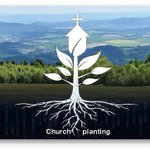
Having planted numerous Anglican missions over the past twenty-four years, I offer these practical observations for those undertaking the work of establishing a new mission within the classical Anglican tradition.
Begin by selecting a suitable name and submitting it to the bishop for approval. Keep it dignified and fitting, avoiding novelty. Gather a faithful core of Christians committed to meeting regularly for Morning and Evening Prayer according to the Book of Common Prayer, followed by fellowship and mutual encouragement.
Speak openly about the mission within your community and through appropriate means, including social media, and establish a simple website and Facebook page, as well as other social media sites.
When seeking a place to worship, first approach fellow Christians, particularly established churches that may be willing to support the work by sharing their facilities. Establish the mission on a sound footing by adopting bylaws, obtaining an Employer Identification Number (EIN), opening a bank account, and incorporating according to the laws of your state.
Identify faithful leaders early, for they will prove indispensable as the mission grows. Never hesitate to ask for assistance, whether in the form of prayer books, liturgical resources, financial support, or wise counsel.
Be patient, remembering that healthy missions are built steadily through faithful preaching, reverent worship, pastoral care, and personal relationships rather than by programs alone.
Above all else, devote yourselves to prayer. The Church is Christ's, the mission is His, and, as the Psalmist reminds us, "Except the LORD build the house, they labour in vain that build it" (Psalm 127:1).
One Faith. One Mission. The Anglican Missionary Church.
anglicanmissionary.com

Henry VIII did not truly “found” the Church of England, because an English church already existed for centuries before his break with Rome. Christianity had been established in England since late antiquity, and by the Middle Ages the English church possessed its own bishops, dioceses, monasteries, canon law, liturgical traditions, customs, and institutions.
The distinctive Sarum Use, for example, was an established English form of Western Christian worship long before the Reformation. England also had a long history of negotiating the respective authority of the Crown, English ecclesiastical institutions, and the papacy, as demonstrated by conflicts such as those between Henry II and Thomas Becket.
What Henry VIII actually did was sever the existing English church from papal jurisdiction and place it under royal supremacy. His original reforms were not even straightforwardly Protestant: Henry retained many traditional Catholic doctrines and practices. The Church of England that emerged from the Reformation was therefore not a church invented by Henry VIII, but the result of a profound transformation of an already ancient English ecclesiastical institution.
It is more historically accurate to say that Henry VIII re-founded or reconstituted the English church in relation to Rome, rather than that he created it from nothing.

Anglicanism is not dead; modernism is merely dying. What appears to many as the decline of mainline Anglican Christianity may instead be the exhaustion of an age that assumed Christianity could survive only by conforming itself to the spirit of the times. The historic faith has not become obsolete simply because modernity has grown tired of it.
Anglicanism still possesses the treasures of Scripture, the creeds, the sacraments, the Prayer Book, historic episcopacy, and centuries of theological wisdom. Its weakness has never been the ancient faith itself, but the temptation to surrender that faith in the hope of appearing relevant. Yet relevance built upon accommodation is fleeting. Cultural fashions change; truth does not. The Church does not need to become less Christian in order to have a future. It needs the courage to recover what it has inherited and proclaim it with conviction. If modernism once seemed inevitable, its inevitability is now far less certain.
The future may belong not to those who endlessly revise Christianity to suit the age, but to those willing to rediscover why the ancient faith endured in the first place. Anglicanism is not dead. The old faith remains—and it may outlive the fashions that declared it finished.

Why has the 1662 Book of Common Prayer been the preferred choice for new missions in the Anglican Missionary Church when other BCPs are permitted?
There are many reasons for this preference. Among them is the fact that the 1662 Book of Common Prayer remains the closest thing to a common prayer book within worldwide Anglicanism. As the official prayer book of the Church of England, it has exercised an extraordinary influence upon Anglican worship and doctrine throughout the world and has served as the foundation or principal reference point for many Anglican provinces, particularly in Africa, Asia, and South America.
While numerous local and national prayer books have been produced during the past century, the 1662 Prayer Book remains the foundational liturgical expression from which much of this tradition developed. For those who desire a form of worship that emphasizes continuity and fellowship with Anglicans throughout the world, the 1662 edition provides a particularly strong and recognizable point of unity.
The 1662 Prayer Book also possesses a notable simplicity and clarity of form. Morning Prayer, for instance, follows a straightforward progression of Scripture readings, confession, prayer, praise, and thanksgiving, with relatively few options or variations. This makes the service accessible to those who are learning the Prayer Book and enables a congregation to participate together without the complexity that can accompany more elaborate liturgical alternatives.
Above all, however, the enduring strength of the 1662 Prayer Book lies in its theological structure. Its services lead the worshipper through a coherent pattern of the Christian life: from the recognition of sin and the reality of judgment, to confession and absolution; from absolution to the assurance of God's grace; and from grace to prayer, thanksgiving, and peace.
This pattern is not merely an aesthetic feature of the liturgy. It reflects the Gospel itself. We come before God acknowledging our need, receive his mercy through Christ, respond with faith and thanksgiving, and are sent forth in peace to live as his people.
For a new mission, therefore, the 1662 Book of Common Prayer offers a distinctive combination of Anglican continuity, international familiarity, liturgical simplicity, and theological depth. Other authorized prayer books may certainly be used, but the 1662 provides a particularly strong foundation for establishing a common pattern of worship while connecting a new congregation to the broader Anglican inheritance.

"A house divided against itself cannot stand."
I believe this government cannot endure, permanently half slave and half free.
I do not expect the Union to be dissolved - I do not expect the house to fall - but I do expect it will cease to be divided.
It will become all one thing, or all the other.”
Abraham Lincoln
I believe that the issue of “dual integrities” will be the same in the Anglican Church in North America. I do not expect the ACNA to be dissolved, but it will become all one thing, or all the other.

The idea of an Episcopal Church or Anglican Communion “Reconquista” ultimately runs into a basic problem: you cannot reclaim an institution simply by winning a series of internal battles when the institution’s structure, leadership, and culture are distributed across generations and jurisdictions.
The Episcopal Church is decentralized, with authority divided among bishops, dioceses, clergy, and laity, meaning that even a highly organized traditionalist movement could gain influence without being able to impose its vision on the church as a whole. Furthermore, the denomination’s seminaries, clergy formation, diocesan structures, worship practices, and institutional leadership have developed over decades, creating a deeply established ecclesial culture that cannot easily be reversed.
The church also contains Anglo-Catholic, evangelical, broad-church, and progressive constituencies, so “restoring” the Episcopal Church would itself require agreement about what exactly is being restored. A movement might successfully revitalize traditional parishes, attract clergy, or gain influence in particular dioceses, but those victories would not necessarily translate into control of the national church.
Most importantly, institutional change requires succession: bishops must be consecrated, clergy must be formed, young leaders must be recruited, parishes must remain viable, and the movement must reproduce itself across generations. Without that long-term infrastructure, a Reconquista could produce pockets of traditionalist strength without actually reversing the broader trajectory of the denomination. Its greatest weakness, therefore, would not necessarily be a lack of conviction, but the enormous difficulty of turning conviction into sustained institutional power.

The King James Version is every bit as relevant today as it has ever been, because relevance does not depend upon sounding modern. The KJV was first published in 1611, and while its language reflects the English of another era, the truths it communicates concern matters that have never gone out of date: faith, sin, forgiveness, love, suffering, temptation, justice, death, hope, and the human search for God. Human nature has not changed simply because the English language has.
Its older language should therefore not automatically be dismissed as “stilted” or “outdated.” In many places, its formal and poetic style gives Scripture a distinctive gravity that ordinary conversational English does not. The KJV does not sound like a text written to follow the linguistic fashions of the moment; it sounds like Scripture. Its cadence and vocabulary have become deeply woven into English-speaking Christian worship, preaching, hymnody, literature, and culture. Generations have prayed, preached, memorized, and found comfort in its words, and that historical continuity remains meaningful today.
Nor is archaic language necessarily an insurmountable barrier. Most of the KJV is readily understandable once a reader becomes familiar with a relatively small number of older expressions such as “thou,” “thee,” “ye,” “hath,” “doth,” and “behold.” Even words whose meanings have shifted can be learned in context. We do not normally conclude that Shakespeare, Milton, or other older works are irrelevant simply because their language requires greater attention. We recognize that sometimes something worth reading requires us to meet it on its own terms rather than demanding that it conform entirely to ours.
There is also something valuable about a translation that has endured rather than constantly chasing contemporary speech. Modern language changes continually, while the KJV’s elevated register has remained recognizable across centuries. Its age is not evidence that it has become irrelevant; in many respects, its longevity is evidence of how deeply it has continued to speak to people.
Ultimately, the KJV does not need to sound like 2026 to speak meaningfully to people living in 2026. If the Bible addresses enduring truths about God and humanity, then those truths cannot become obsolete merely because vocabulary changes. The King James Version may require a little more effort from the modern reader, but difficulty is not the same thing as irrelevance. Its language, rhythm, history, and enduring message give it a character that remains profoundly meaningful—and for many readers, that very distance from everyday speech is part of what makes it special.


The ordination of women has seriously damaged Anglicanism and represents more than a change in church policy: it marks a rupture with the Church’s historic understanding of Holy Orders and has contributed to a wider crisis of Anglican identity.
For centuries, Anglicanism understood the ordained priesthood and episcopate as a male office, in continuity with the practice of the early and undivided Church and with the example of Christ choosing male apostles. When provinces began ordaining women, this historic consensus was abandoned, creating profound disagreement among Anglicans over whether the Church has authority to alter an institution received from Christian tradition. The consequences have been ecclesial as well as theological.
In the Church of England, the introduction of women priests led some clergy and laity to leave Anglicanism, while disputes over alternative episcopal oversight, the ordination of women as bishops, and recognition of one another’s ministries continued for decades. Across the worldwide Anglican Communion, different provinces have adopted incompatible practices, weakening the sense of a common sacramental and ecclesial order. The Anglican Church in North America (ACNA) and the Global Anglican Future Conference (GAFCON, now the the Global Anglican Council), have continued this practice.
The issue also exposed a deeper problem: if a practice regarded for centuries as part of the Church’s received tradition can be changed in response to modern cultural assumptions, then questions arise about which other elements of Christian tradition remain authoritative.
The novel idea of women’s ordination is a catalyst for fragmentation and is clear evidence of Anglicanism's movement away from its historic Catholic identity, and it explains why many traditional Anglicans regard the change as a decisive moment in the Church's loss of theological coherence and institutional unity.

“For the men of our race two books stand out above all others. The Bible has, of course, a place by itself; it is the sacred-library of the Christian revelation, and first among the books of the world. But next to it England would place the Book of Common Prayer. There are, of course, parties in the Church, just as there are parties in the State; but Churchmen of all parties agree in their devotion to the Prayer Book, even those who neglect to carry out many of its directions.
Nonconformists also, although they often misunderstand us, take the Prayer Book as part of their heritage, and use it more and more: indeed, in many Nonconformist chapels the service is nowadays almost indistinguishable from that of the Church.
Now the Prayer Book is full of Holy Scripture, and it is the great link which the ordinary Englishman has between our own age and the age when the last book of the Bible was written. It carries on for us the Christian Revelation from the first century to the present day, and it gathers for us gems of Christian prayer and praise from the centuries that lie between.”
Percy Dearmer

Bray and Keane’s How to Use the Book of Common Prayer (2024) explains how to use the 1662 Book of Common Prayer as a guide for daily Christian worship and prayer. The authors show that the Prayer Book is not simply a collection of prayers but a structured way of shaping Christian life around Scripture, confession, worship, thanksgiving, and prayer. They explain how to pray Morning Prayer and Evening Prayer, how the Psalms and Bible readings are organized, and how the church calendar guides worship throughout the year. They also explain the service of Holy Communion, baptism, marriage, funerals, and other important services.
The central idea is that the Prayer Book helps Christians develop a regular rhythm of prayer and worship, connecting personal devotion with the worship of the wider Church. In short, Bray and Keane teach the reader how to move from simply owning the Prayer Book to actually praying with it and allowing its pattern of Scripture and prayer to shape everyday Christian life.
I recommend it highly, and may be purchased here:
amazon.com/How-Use-Book-Comm…

The photo says it all. People wonder why the Episcopal Church, the Church of England, Anglican Church of Canada, and other “progressive” provinces of the Anglican Communion are dying.

