

Memory Networks, Asymmetric Self-Play, CommNet, Adaptive-Span, System2Attention, Feedback Transformer, Multi-Token Attention
Joined May 2010
- Tweets1.5K
- Following343
- Followers3.2K
- Likes5.2K





Sainbayar Sukhbaatar retweeted

Muse Wonder is out, with strong performance. My team contributed to memory (& MemoryBench, listed), legal, financial, and various other agentic tasks @shehzaadzd @tesatory Jack Lanchantin @swarnaNLP & others!


Sainbayar Sukhbaatar retweeted
Muse Spark 1.3 is out, with strong performance. My team contributed to its long context & IF abilities (@tesatory, @shehzaadzd, Jack Lanchantin) & coding ability (@ping_iris_yu, @EasonNie) amongst other things!

Sainbayar Sukhbaatar retweeted
💎Autodata: an agentic data scientist to create high quality data✨
We introduce a method for building agents that create high-quality training & evaluation data.
Key idea: agentic data creation provides a way to *convert increased inference compute into higher quality model training*.
We show how to train (meta-optimize) such a data scientist agent, so that it can create even stronger data.
Our initial study with a specific practical implementation, Agentic Self-Instruct, shows strong gains on scientific reasoning problems compared to classical synthetic dataset creation methods.
Overall, we believe this direction has the potential to change how we build AI data!
Read more in the blog post: facebookresearch.github.io/R…

Sainbayar Sukhbaatar retweeted
DeepSeek-V4 uses our Hash routing approach developed back in 2021 -- see screenshot of their tech report! (Looks like a great model, congrats!)
Bonus note: our same blogpost (& paper) back in 2021 also introduced 'looped transformers', but we called that staircase & ladder (see screenshot): parl.ai/projects/params_vs_c…
huggingface.co/deepseek-ai/D…


Sainbayar Sukhbaatar retweeted
Self-Improving Pretraining
We've updated our results given feedback:
- larger 8B baseline to match reward model size
- cross-task evals given different RM objectives
Overall, we see clear wins

Sainbayar Sukhbaatar retweeted
Our team in FAIR at Meta is hiring a postdoc researcher!
We work on the topics of Reasoning, Alignment and Memory/architectures (RAM).
Apply here: metacareers.com/profile/job_…
Location: NY, Seattle or Menlo Park.
Some of our recent work to give flavor:
Co-Improvement (position): arxiv.org/abs/2512.05356
SPICE (Self-Play in Corpus Environments): arxiv.org/abs/2510.24684
Self-Challenging Agents: arxiv.org/abs/2506.01716
RL from Human Interaction: arxiv.org/abs/2509.25137
AggLM (parallel aggregation): arxiv.org/abs/2509.06870
StepWiser (CoT-PRM RL): arxiv.org/abs/2508.19229
DARLING (diversity-trained RL): arxiv.org/abs/2509.02534
J1 (RL-trained LLM-as-Judge): arxiv.org/abs/2505.10320
CoT-Self-Instruct: arxiv.org/abs/2507.23751
Multi-Token Attention: arxiv.org/abs/2504.00927
Sainbayar Sukhbaatar retweeted
Our co-improvement position paper is now on arXiv!
(We've updated it, covering more existing work.)
📝: arxiv.org/abs/2512.05356
After >27 years of research, my first position paper!
Short 🧵 (1/5) follows 👇
Synopsis: it's about building AI that collaborates on AI research *with us* to solve AI faster, and to help fix the alignment problem together.
How? Build the AI with those collab skills (i.e., we create benchmarks! training data! methods! etc. for that).
I've been personally inspired by @Yoshua_Bengio's recent talks on safety & AI research, and also from seeing Nicholas Carlini's COLM keynote where he said we researchers can all do our bit to help (paraphrased). So – hope this helps! 🙏

Sainbayar Sukhbaatar retweeted

Holy shit… Meta might’ve just solved self-improving AI 🤯
Their new paper SPICE (Self-Play in Corpus Environments) basically turns a language model into its own teacher no humans, no labels, no datasets just the internet as its training ground.
Here’s the twist: one copy of the model becomes a Challenger that digs through real documents to create hard, fact-grounded reasoning problems. Another copy becomes the Reasoner, trying to solve them without access to the source.
They compete, learn, and evolve together an automatic curriculum with real-world grounding so it never collapses into hallucinations.
The results are nuts:
+9.1% on reasoning benchmarks with Qwen3-4B
+11.9% with OctoThinker-8B
and it beats every prior self-play method like R-Zero and Absolute Zero.
This flips the script on AI self-improvement.
Instead of looping on synthetic junk, SPICE grows by mining real knowledge a closed-loop system with open-world intelligence.
If this scales, we might be staring at the blueprint for autonomous, self-evolving reasoning models.

Sainbayar Sukhbaatar retweeted
🤝 New Position Paper !!👤🔄🤖
@j_foerst and I wrote a position piece on what we think is the path to safer superintelligence: co-improvement.
Everyone is focused on self-improving AI, but (1) we don't know how to do it yet, and (2) it might be misaligned with humans.
Co-improvement: instead, build AI that collaborates *with us* to solve AI faster, and to help fix the alignment problem together. More details in the paper!
Read it here:
📝:github.com/facebookresearch/…

Sainbayar Sukhbaatar retweeted
🌶️SPICE: Self-Play in Corpus Environments🌶️
📝: arxiv.org/abs/2510.24684
- Challenger creates tasks based on *corpora*
- Reasoner solves them
- Both trained together ⚔️ -> automatic curriculum!
🔥 Outperforms standard (ungrounded) self-play
Grounding fixes hallucination & lack of diversity
🧵1/6

Sainbayar Sukhbaatar retweeted
Was super fun to organize this workshop!! Thanks everyone: speakers, panelists, audience.
facebookresearch.github.io/R…


Sainbayar Sukhbaatar retweeted
🌀New Self-Driven RL Method: RESTRAIN 🌀
📝: arxiv.org/abs/2510.02172
- RESTRAIN turns spurious votes → self-Improving signals. No labels needed
- Does this through self-penalizing unreliable reasoning paths:
✔️ Uses all rollouts, not just the majority,
✔️ Offsets low-consistency rollout advantage,
✔️ Down-weights low-consensus prompts
📈 Results:
🔥 Beats existing techniques on both training-time (label-free) and test-time scaling — all without labels.
🔥 Nearly matches (and sometimes surpasses) gold-label RL
🧵(1/5)

Sainbayar Sukhbaatar retweeted

🚨New paper: Stochastic activations
We introduce stochastic activations. This novel strategy consists of randomly selecting between several non-linear functions in the feed-forward layers of a large language model.
Sainbayar Sukhbaatar retweeted
🤖Introducing OptimalThinkingBench 🤖
📝: arxiv.org/abs/2508.13141
- Thinking LLMs use a lot of tokens & overthink; non-thinking LLMs underthink & underperform.
- We introduce a benchmark which scores models in the quest to find the best mix.
- OptimalThinkingBench reports the F1 score mixing OverThinkingBench (simple queries in 72 domains) & UnderThinkingBench (11 challenging reasoning tasks).
- We evaluate 33 different SOTA models & find improvements are needed!
🧵1/5

Sainbayar Sukhbaatar retweeted
We worked on a whole line of research on this:
- Self-Rewarding LMs (use self as a Judge in semi-online DPO): arxiv.org/abs/2401.10020
- Thinking LLMs (learn CoTs with a Judge with semi-online DPO): arxiv.org/abs/2410.10630 *poster at ICML this week!!*
- Mix verifiable & non-verifiable tasks, comparing semi-online DPO & GRPO (similar results): arxiv.org/abs/2506.21495


Sainbayar Sukhbaatar retweeted
Google friends & ex-colleagues -- Google scholar seems pretty broken😔. Our most cited paper from last year "Self-Rewarding LLMs" has disappeared! Scholar has clustered it with another paper (SPIN) and it isn't in the search results. This is bad for PhD student & first author @WeizheY.
Q: Can someone working on Scholar help fix it? Scholar is an incredible resource for the community and affects dissemination & citation. But I see others posting with similar issues too for other papers.
(Note: We tried to fix this with the SPIN authors, but together we couldn't...is there something we missed?)

Sainbayar Sukhbaatar retweeted
Back in the day FAIR - 10 years ago pics! When Sainaa worked on Memory Networks, pre-Transformer (see RT).


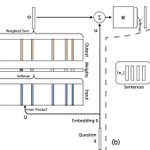
Ten years ago in 2015 we published a paper called End-to-End Memory Networks (arxiv.org/abs/1503.08895). Looking back, this paper had many of the ingredients of current LLMs. Our model was the first language model that completely replaced RNN with attention. It had dot-product soft-attention with key-value projections. We stacked multi-layers of attention so the model can attend to different parts of input. We introduced position embeddings to remedy order-invariance in attention.
It was an improvement of the Memory Networks paper (arxiv.org/abs/1410.3916) in 2014, the year before, which had introduced stacked hard attention over multiple layers – concurrently while soft attention was introduced on a single layer by Bahdanau et al. (arxiv.org/abs/1409.0473), see Dzmitry’s note about the history (xitter.cf/karpathy/status/186402…). End-to-End Memory Networks put these two ideas together and showed that multiple layers of soft attention induced complex reasoning abilities – which is one of the most important aspects of architectures today (note: Transformers are from 2017).
Given its 10 year anniversary, I thought it would be fun and maybe inspiring to share a little story about how this paper came about.
It started around spring of 2014 with my advisor Rob urging me to do research about memory. While now it’s obvious, back then I didn’t even understand what memory meant. This was a world dominated by recurrents networks and convolutions. Memory wasn’t as big a catchphrase like in today’s research.
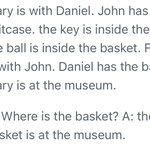
But the groundwork was done already. As said above, a year earlier, Jason and colleagues published a paper that outlined this crazy new architecture called Memory Networks. They also published a set of tasks called bAbI that made recurrent models fail miserably. These tasks required looking up multiple facts in out-of-order fashion, which of course was a deal-breaker for RNNs.
Despite all this, I was still clueless. And I was starting my internship at FAIR as a second-year PhD. The project initially attracted a lot of attention, with a lot of people attending the weekly meeting. But things didn’t go straightforwardly. Besides the general theme of memory, we had little concrete ideas. This lasted for months and people left the project one by one, probably frustrated by lack of any progress.
Eventually we started working on Memory Networks with the goal of making it learn where to attend instead of requiring given labels. Maybe because RL was a hot topic back then (like today I guess), or maybe because I like complex ideas, we decided to use RL training to teach memory where to attend. Fast forward to winter of 2014-2015 and we had actually implemented the RL code and were ready to compare against baselines on LM tasks. One obvious choice was soft-attention used in Bahdanau’s seminal work – but in our work stacked in multiple layers, which was not done before. So we implemented it as a baseline, but changed a few things like using dot-product instead of a small MLP to compute attention. Immediately our MemNet with this soft-attention started working so effortlessly that it became obvious to us that this was the way to go.
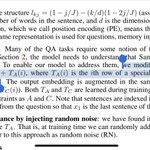
Things started moving fast after this. We started using the bAbI tasks as a benchmark, thanks to Arthur's insistence. We developed several new techniques such as using different projections for keys and values etc. We also needed something to resolve order-invariance of attention, so we added time embeddings (now known as position embeddings). Jason suggested adding random noise to these time values to reduce overfitting. Finally, we decided to do a language modeling task, which was at the time not popular. To our surprise, we actually beat LSTM using attention without any recurrence over time (in the paper, we use the word “recurrence” to describe repeated layers, i.e. sharing weights like universal transformers).
We wrote most of the paper on the last day of Neurips submission, with everyone scrambling. Thus our End-to-End Memory Networks paper came together. Fun fact, it was initially called “Weakly Supervised Memory Networks” because it required less supervision. Anyways, that period was a golden age of new architectures, with new papers coming up such as Neural GPUs, Stack RNN, and Neural Turing Machine.
Looking back after 10 years and the current state of LLMs, I think we got several things correct with our paper, even though it is overshadowed by the 2017 Transformer paper. Our model was the first attention-based language model that didn’t rely on recurrence. We did stacking multiple layers of attention so that the model can attend to different parts of context before outputting the next token. We also used position embeddings, even a relative one, which now has become an obvious thing for LLMs.
Of course, Transformer made important improvements, like using previous hidden states as memory for the next layer. And there are FF layers, multi-headed attention, and so on.
Still – 10 years later – I think there is more work to do to improve architectures! Just a few days ago we released Multi-token attention (MTA) (arxiv.org/abs/2504.00927), so I’m still working on the same things! When Jason mentioned that attention operated at only token-level, it became obvious what we needed to do. MTA conditions attention over multiple queries, keys and heads, and it improves over standard soft attention in many metrics. Particularly, it is able to solve long-context e.g. the needle tasks much better. That’s somewhat amusing that the conclusion of the Memory Network paper in 2015 mentioned this as future work: “smooth lookups may not scale well to the case where a larger memory is required”, which is something the field is still working on today. For the future, I’m sure there’s much more to come, of course maybe something much different to attention – let’s keep innovating and working together as a community – I’m excited about what further research lies ahead!

Sainbayar Sukhbaatar retweeted

🚨This week's top AI/ML research papers:
- Inference-Time Scaling for Generalist Reward Modeling
- Multi-Token Attention
- Why do LLMs attend to the first token?
- Command A
- LLMs Pass the Turing Test
- Advances and Challenges in Foundation Agents
- PaperBench
- Effectively Controlling Reasoning Models through Thinking Intervention
- TransMamba
- Open-Reasoner-Zero
- Scaling Tool-Integrated RL
- Scaling Language-Free Visual Representation Learning
- Output Constraints as Attack Surface
- Large (Vision) Language Models are Unsupervised In-Context Learners
- Memorizing is Not Enough
- ShortV
- MegaScale-Infer
- What the F*ck Is Artificial General Intelligence?
- Prompting Forgetting
- Enlightenment Period Improving DNN Performance
overview for each + authors' explanations
read this in thread mode for the best experience

Sainbayar Sukhbaatar retweeted

4 advanced attention mechanisms you should know:
• Slim attention — 8× less memory, 5× faster generation by storing only K from KV pairs and recomputing V.
• XAttention — 13.5× speedup on long sequences via "looking" at the sum of values along diagonal lines in the attention matrix.
• Kolmogorov-Arnold Attention, KArAt — Adaptable attention with learnable activation functions using KANs instead of softmax.
• Multi-token attention (MTA) — Lets the model consider groups of nearby words together for smarter long-context handling.
Read the overview of them in our free article on @huggingface -> huggingface.co/blog/Kseniase…


