A very poignant and timely piece by Jordi Salas-Salvadó on scientific taste in nutrition in the age of AI
Technology can increase the power of science. Scientific taste determines where that power should be directed.
doi.org/10.59717/j.xinn-nutr…
My new preprint: AI is accelerating nutrition science. Policing the tool will fail; verify the claim instead.
Papers will become concise accounts on auditable records. Prestige will shift from the journal name to whether a claim holds up.
doi.org/10.31222/osf.io/nzyx…
1
53
Tauseef Khan retweeted
Hazrat Khalifatul Masih V (may Allah be his Helper) states:
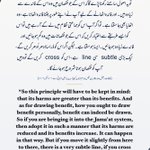
“So this principle will have to be kept in mind: that its harms are greater than its benefits.”
(Mulaqat with the Regional Amila and Qaideen, MKA Canada, Prairies Region)
#AI #Islam #Ahmadiyya

ALT Quote card in Urdu and English. Hazrat Khalifatul Masih V (may Allah be his Helper) states: “So this principle will have to be kept in mind: that its harms are greater than its benefits. And as for drawing benefit, how you ought to draw benefit personally, benefit can indeed be drawn. So if you are bringing it into the Jama'at system, then adopt it in such a manner that its harms are reduced and its benefits increase. It can happen in that way. But if you move it slightly from here to there, there is a very subtle line, if you cross that line, there you will start suffering harm.” (Mulaqat with the Regional Amila and Qaideen, MKA Canada, Prairies Region; This Week With Huzoor, MTA, 16 October 2026)
The frontier!
Replying to @claudeai
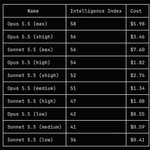
Fable 5.2 and Mythos 5.2 are a step above Opus 5.5 in almost all the capabilities we evaluated.
Testers have found that they communicate more clearly than past Fable and Mythos models. They generate outputs up to 30% faster than Fable 5.1 and Mythos 5.1.
43
Fable 5.2 and Mythos 5.2 are a step above Opus 5.5 in almost all the capabilities we evaluated.
Testers have found that they communicate more clearly than past Fable and Mythos models. They generate outputs up to 30% faster than Fable 5.1 and Mythos 5.1.
Tauseef Khan retweeted
“Who wrote that paper? AI use spurs debate over scientific authorship.”
science.org/content/article/…
Very good video on cognitive core of AI and capabilities of AI for learning. Karpathy is probably the most passionate about people getting better using AI through learning. He is also right that Toronto does not have an entrepreneurial culture. Lots of AI brains came from UofT but we don’t have any notable companies or startups from here.
Andrej Karpathy:
“A 1B model can be much more effective than most current LLMs.
90% of current models waste a ton of capacity and money on remembering stuff that doesn’t matter.”
here is his 5 core thesis about Small LLM’s:
1. the intelligence was never the knowledge. Strip the memorized internet, keep the reasoning. What’s left is the cognitive core, and it’s small.
2. the core might fit in ~1B params. Maybe less. “Plenty of room at the bottom.” We’ve been paying for a library when we needed a brain.
3. size stopped being the bottleneck. What makes an agent work is the tools it can call and how tight the feedback loop is, not parameter count.
4. intelligence lives in the system, not the weights. A raw LLM is a CPU with no OS. Small core + good harness > giant model alone.
5. you can own it. A model on your hardware is one no one can rate-limit, price-hike, or deprecate on you.
in 12 months the gap between teams shipping on-device and teams paying per-token frontier bills won’t be capability.
TwIL an 8.8B model at 90%+ of frontier isn’t a benchmark flex.
It’s the thesis Karpathy’s been repeating all year, made real.
study more on this below ↓
1
1
125
MS ignoring fundamental research in pursuit of scaling is such a short term thinking!
The End of AI Frontiers hunch.net/?p=13764006 .
There's a bit of a train wreck here that's painful to express. Nevertheless, it's a significant event for me and quite a few other folks involved so I wanted to memorialize a bit.
64
Tauseef Khan retweeted
The End of AI Frontiers hunch.net/?p=13764006 .
There's a bit of a train wreck here that's painful to express. Nevertheless, it's a significant event for me and quite a few other folks involved so I wanted to memorialize a bit.
Impressive. So many people will now try to interpret and modify model weights of these small models for specific improvements.
There's a buzzy new paper about GPT-6 Astra being able to directly interpret model weights (prompts full of floating point numbers) - I tried it with Qwen 3.8 27B on my laptop and found that, after 45+ minutes, that model could achieve the same thing simonwillison.net/2026/Nov/3…
51
The crazy MIT breakthrough together with LeCun JEPA method will train amazing compact models under 5B size. No need to buy expensive hardware.
Future of small specialized intelligent models is exciting!
Using words uttered by AI expert @SaadAWaraich
We asked GPT-6 Astra to edit Qwen3.5-0.8B weights to improve math.
It directly changed only 0.016% of weights, fixing 0.8B's reasoning loops & improving math up to 6x and even instruction following 3x, without gradients or training.
We call this Weight-Space Programming: frontier LLMs can now natively read/write neural network weights! 🧵
Blog: rikiyat.github.io/blog/weigh…
Readers added context they thought people might want to know
LLM was given weights explicitly as text in prompt and used code/forward passes (per authors' logs) to ablate Qwen looping direction, a known thinking-mode issue per model card. Primarily fixed repetition in that mode, not general 'natively' improving weights/math.
rikiyat.github.io/blog/weight-sp…
github.com/RikiyaT/lm_und…
huggingface.co/Qwen/Qwen3.5-0…
huggingface.co/RikiyaT/Qwen3.…
1
90
Very well explained!
大佬 Yann LeCun(杨立昆)在 X 上的硬核发言,狠狠戳破了当前 AI 圈狂热的“算力迷信”。简单来说就是:现在的 AI 越来越大,越来越费电,可能根本就走错路了。
现在大家都在卷大模型(LLMs),参数动辄几百上千亿。为什么模型非得这么大?LeCun 解释得很透彻:因为现在的 AI 本质上都在“死记硬背”。它们把全网的知识全都吞进去,存在巨大的参数堆里,所以才能回答你各种五花八门的问题。这就好比一个超级记忆大师,虽然能倒背如流一整本百科全书,但代价极其昂贵——需要吃掉海量的内存、算力,烧掉无数的钱。
但是,我们要的真的是一个只会背书的机器吗?
LeCun 提出了另一条路:用真正的“理解”来代替“死记硬背”。这就是他一直死磕的 JEPA(联合嵌入预测架构)世界模型。
说句人话,打个比方:你教小孩什么是“重力”,你不需要让他看遍世界上所有物体掉落的视频,更不需要让他背下牛顿定律的每一个字。你只需要让他扔几次苹果,摔几次玩具,他就“理解”了这个物理规律。
JEPA 也是这个逻辑。它不去强行重建或死记每一个像素或单词,而是去抓取数据背后真正的运作规律。一旦 AI 掌握了这种“常识”,它需要的数据和内存就会呈现断崖式下跌。正如评论区里提到的那个惊人对比:仅仅 1 亿多(109M)参数的 JEPA 模型,在特定任务上甚至能暴打 720 亿(72B)参数的传统大模型。
这意味着什么?这意味着未来的 AI 可能不需要塞满成千上万张显卡的机房,也不需要把整个互联网的数据都喂进去。通过建立对世界的真正理解,哪怕在极低的内存下,它也能极其聪明。
真正通向 AGI(通用人工智能)的门票,或许根本不是单纯的“大力出奇迹”,而是让机器像人类一样去建立认知。现在的科技巨头们都在狂买显卡,但如果 LeCun 是对的,下一代 AI 的终局,可能属于那些真正“懂”这个世界的小模型。
2
38
This is crazy — models revising other models to become better!
We asked GPT-6 Astra to edit Qwen3.5-0.8B weights to improve math.
It directly changed only 0.016% of weights, fixing 0.8B's reasoning loops & improving math up to 6x and even instruction following 3x, without gradients or training.
We call this Weight-Space Programming: frontier LLMs can now natively read/write neural network weights! 🧵
Blog: rikiyat.github.io/blog/weigh…
Readers added context they thought people might want to know
LLM was given weights explicitly as text in prompt and used code/forward passes (per authors' logs) to ablate Qwen looping direction, a known thinking-mode issue per model card. Primarily fixed repetition in that mode, not general 'natively' improving weights/math.
rikiyat.github.io/blog/weight-sp…
github.com/RikiyaT/lm_und…
huggingface.co/Qwen/Qwen3.5-0…
huggingface.co/RikiyaT/Qwen3.…
44
And to give good news. Yann LeCun just showed in his paper that smaller JEPA models, which understand rather than accumulate knowledge like LLMs, can be far smaller (about 660 times) and still match how big models see the world. He left Meta to build this kind of model.
In brief, he showed that if you show the model two views of the same thing (two photos of an apple, or two captions of the same apple photo), it understands apple quickly. No need to give it 1000s of pages where apple is mentioned so it makes those connections.
Conclusion: Future models could be very tiny and still very smart (hoping), and yes, we would run them on our laptops. Can't wait.
Replying to @heyshrutimishra
LLMs accumulate a lot of declarative knowledge.
That's how they can answer a large number of questions.
That's also why they require so many parameters and hence so much memory.
But one can replace the accumulation of knowledge by *understanding*
That what JEPA world models do.
That's one reason they can be useful with considerably less memory and training data than LLMs.
This paper merely shows that the underlying similarity structure of the data, whether text or image (e.g. co-occurence of words in text or objects in images) uniquely determines the shape of the representation point cloud, when the encoder is trained trained with a common anti-collapse criterion like SIGReg or VCReg (not by reconstruction).
1
64
This is where China is right now. They trained GLM 5.3 model to be a full agentic lab research assistant. If this is not Star Trek I don’t know what is.
youtu.be/dD5TBiZQGAE?si=vOS9…
In the west we are still discussing if AI should be used or not in university labs🙄. While the dangers of AI exist we can accelerate research by carefully staying on the right side the benefit line.
xitter.cf/chenru_duan/status/211…
We’re introducing Hydrogen-1.0, our first open-weight model for scientific research. We post-trained GLM-5.3 (@Zai_org) on our internal scientific data, lab records, and discovery trajectories.
It scores 38.3% on FrontierScience-Research vs GPT-6-Astra’s 33.3% and scores 93.0% on GPQA-Diamonds.
We believe science should be open, collaborative, and democratized, rather than proprietary. Only open weights let researchers inspect, adapt and build on the unprecedented speed of AI growth. There are many recent models named by chemical elements, but we believe Hydrogen-1.0 is the first aiming towards and open scientific superintelligence for discovery. 🧵
1
138
This is so cool. What possibilities.
We’re introducing Hydrogen-1.0, our first open-weight model for scientific research. We post-trained GLM-5.3 (@Zai_org) on our internal scientific data, lab records, and discovery trajectories.
It scores 38.3% on FrontierScience-Research vs GPT-6-Astra’s 33.3% and scores 93.0% on GPQA-Diamonds.
We believe science should be open, collaborative, and democratized, rather than proprietary. Only open weights let researchers inspect, adapt and build on the unprecedented speed of AI growth. There are many recent models named by chemical elements, but we believe Hydrogen-1.0 is the first aiming towards and open scientific superintelligence for discovery. 🧵
1
80
Tauseef Khan retweeted
Your Harness. You Define It.
Meet Creator Mode in DeepSeek Harness.
Turn ideas into plugins that you can use, from a design workspace to a sandbox game or a 3D LLM visualizer.
What will you create?
Tauseef Khan retweeted
The Promised Messiah (on whom be peace) states:
“Therefore, study the Quran with deep contemplation and hold it very dear. Love it more than anything else.”
(Noah’s Ark: An Invitation to Faith, 2018, p. 43)
#Islam #Ahmadiyya