

such terrifying magnitude, such utter desolation
London
Joined January 2020
- Tweets2K
- Following305
- Followers2.9K
- Likes21.9K





Pinned Tweet
The search to define a Chinese order is raising questions beyond liberal political theory. Jiang Shigong has offered a new vision of the question of political space–pointing towards the reconstruction of world empire. My latest for @palladiummag: palladiummag.com/2020/02/05/…

Amodei's last essay feels like an odd artifact. Has the same sensibility as a patriotic 18th-century technician talking about the grandeur that industrial technology will bring to this or that European dynasty.
Vincent Garton retweeted

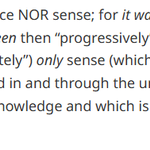
Reading Hobbes and then reading Locke is like going from fine whiskey to hypersaturated sweet tea. It honestly feels like you’re reading something written for children.
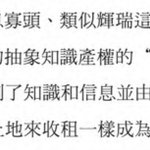
Also came across this unexpectedly in Jiang Shigong's book on World Empire where he invokes "information feudalism", citing Drahos and Braithwaite, though fortunately only in passing and apparently without treating it as postcapitalist. A rare miss either way?


One of the odder persistent misunderstandings of Mao. The basic idea of the Great Leap Forward was hyperrapid industrialisation. Even the rustication of youths was partly about the countryside being a new developmental frontier (and using it to solve urban unemployment).

So Kojève observing in 1957 that China is the only place where the world myth of industrialisation is still alive.
"If philosophy is a tragedy, a tragedy is only philosophical if it is not taken too seriously ... If one is a Platonist, one is tempted to say that philosophy only stops being facetious when it dies." (Kojève, Reasoned History of Pagan Philosophy II)
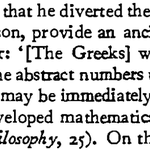
Guthrie's 1962 History of Greek Philosophy incidentally cites Feng Youlan for the argument that Greek philosophy originated in commercial accounting


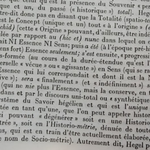
The unabridged original of the Kojève blockquote in my review essay - where he says that History is the active process that transforms essence into sense (or, in other words, reality into language). Gives a good sense of his frenetic writing style.


Vincent Garton retweeted

Vincent Garton/@sysimmolator has written an excellent review for MIH of two new books on Alexandre Kojève by Marco Filoni, (The Life and Thought of Alexandre Kojève) and Boris Groys, (Alexandre Kojève: An Intellectual Biography). Read it here: cambridge.org/core/journals/…

Perdue rightly says "proper history critiques and subverts conventional wisdom", so it's odd that the essay's engagement with contemporary China just rambles through newspaper clichés into a romantic picture of an eternal freedom-loving South struggling against a despotic North

Historian Peter Perdue on Xi's "great unity thesis," the PRC's new history of China. He finds Marx is all but gone, replaced by Confucius, and a vision of China that would be in many ways pleasing and familiar to Chiang Kai-shek. aeon.co/essays/why-china-ins… via @aeonmag


occasionally one really needs to say something about this genre of dullard westerners with pulpits sharing their earth-shattering insights from visiting China for a few days -- in this case not just wrong, but also impressively internally incoherent

