

Study Symbolism. Members unlock 25+ hrs of exclusive content. Available for symbolic research, creative consulting & design.
Pacific Northwest
Joined October 2020
- Tweets1.5K
- Following611
- Followers19.5K
- Likes6.5K


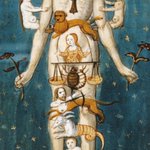


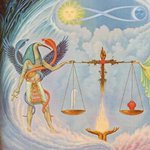
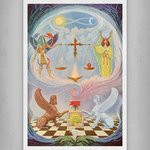



The Symbolism of Libra (SS Ep. 23) has been publicly released: youtu.be/FHzyfxyE7rc
Shoutout, once again, to @warjord and everyone else for their brilliant contributions.
Libra and its gems, according to Wills’s Cigarettes “Lucky Charms” card series (1923):
"Libra, The Balance. Seventh sign of the Zodiac, Sept. 23rd to Oct. 24th. Venus is the ruling planet; correct metal, Copper. Those born under Libra's influence were supposed to be affable, courteous, even-tempered, painstaking, and with marked perceptive qualities. The Libra stones are the Opal, Chrysolite and Sardonyx. To the ancients the Opal was the "Stone of Mystery," its flashing and glowing rainbow hues suggested occult powers, and it was regarded as sacred in the East. In India it was believed to strengthen the mind and clear the brain; in Greece to give the wearer the power of prophecy and foresight, and during the 14th century used for strengthening the eyesight."


Libra’s position as the “central” sign of the zodiac mirrors its correspondence with the middle region of the human body. Specifically, Libra is said to govern the kidneys, bladder, hips and lower back. This region serves as a point of division between the upper and lower body, symbolically distinguishing our “higher” and “lower” nature. Similarly, Libra divides the “light” and “dark” halves of the year, beginning when day and night are of equal length.
It’s the “middle” or “center” of any system that maintains stability, which appears to be Libra’s symbolic role in the zodiac. Look no further than a pair of scales and notice how its central column is essential to their function.
The kidneys, like all organs, are rich in symbolic meaning. Like the pans of a scale, there’s two, and they provide balance to our system in their ability to filter blood and regulate the body’s internal chemistry. In this way, they maintain equilibrium amid ever-changing conditions, a function consistent with Libra’s symbolic nature.


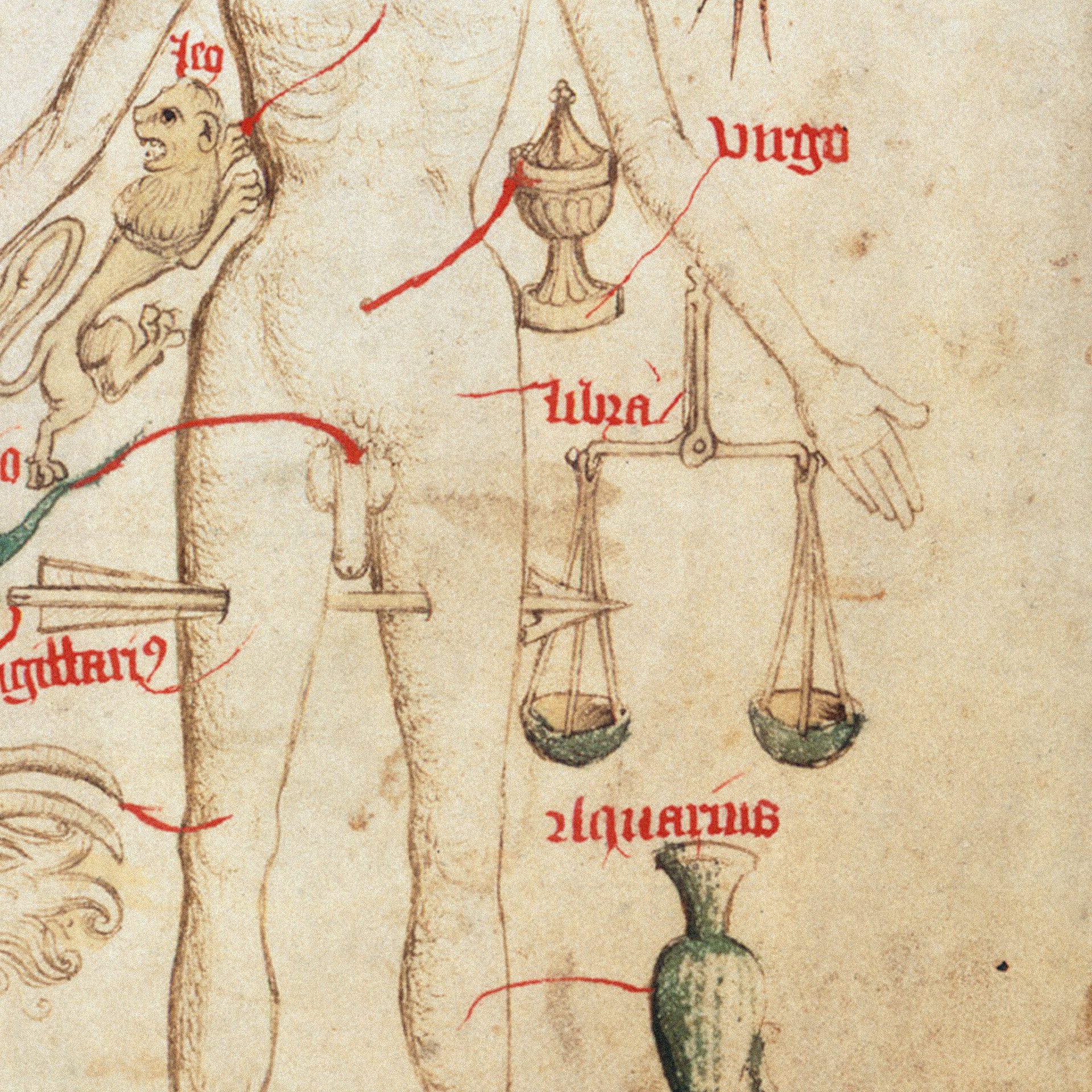


New podcast! SS Ep. 23: The Symbolism of Libra has been released early for members: symbolicstudies.com
If you’re looking to dive into the symbolic depths of The Scales, this is it! It’s 2 hours long and packed with info.
Shoutout to @warjord and everyone else for their brilliant contributions.


The middle path is the balanced path, where opposites are unified. Symbolically, a scale can only function because of its central support or handle, which creates a fulcrum (a point of pivot) between the two pans. It’s this “middle” point that allows the instrument to work in the first place. The Scales, being the sign of the fall equinox, also occupies a “central” position in the zodiac.
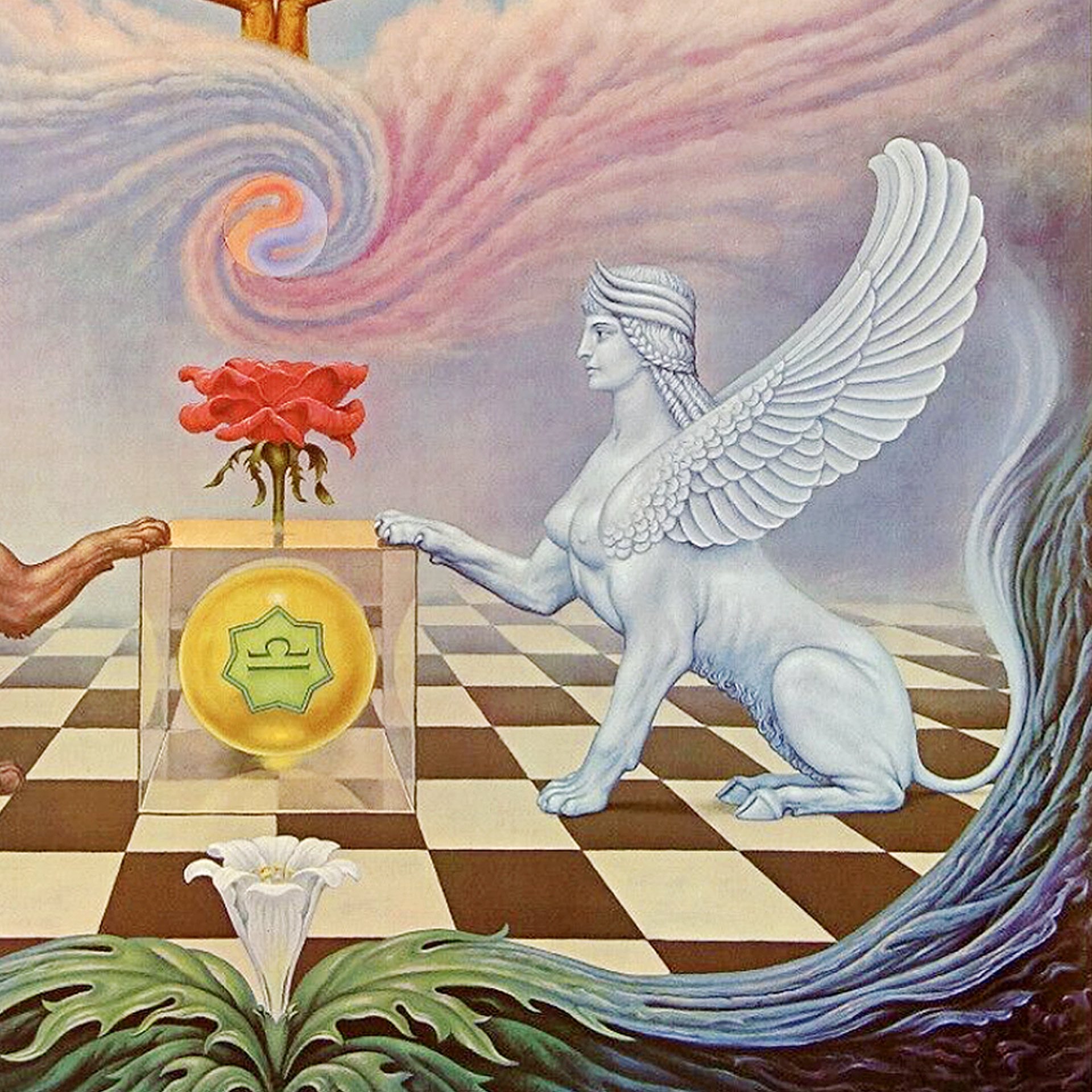
Johfra Bosschart masterfully portrays the “balanced” nature of polarity and duality in his painting of Libra. The sun compliments the moon, Thoth stands opposite Hathor, and a masculine Sphinx faces their feminine counterpart. The pans themselves hold Maat’s Feather of Truth and a vase, an Egyptian symbol for the heart.
In the middle of the painting, symbols of unity are on display: the yin yang symbol, several flowers and a “central” fire. A hand points upward toward the mid-point of an infinity glyph, drawing our attention to yet another display of unification. An extended index finger also doubles as “number one” which is the number of unity, the undivided or the monad.
There’s certainly more to appreciate, but I’ll leave that for your wandering eyes.


Today, September 29th, is the Feast of St. Michael the Archangel. Traditionally associated with the Last Judgment and the weighing of souls, Michael is often depicted holding a scale in one hand and a sword in the other. The imagery naturally brings to mind Lady Justice and the Justice card, which corresponds with Libra. It’s fitting, then, that St. Michael’s feast day falls within the Scales of Libra.

FINAL REMINDER! We’d love to hear your thoughts on the symbolism of Libra for our upcoming podcast episode. Submit your voicemail by tonight, September 27th. Please keep it to 3 minutes or less.
symbolicstudies.com/voicemai…
We look forward to hearing your insights!

LIBRA VOICEMAIL REMINDER: We’d love to hear your thoughts on the symbolism of Libra for our upcoming podcast episode. Submit your voicemail by tomorrow, September 27th. Please keep it to 3 minutes or less.
symbolicstudies.com/voicemai…
We look forward to hearing your insights! Artwork from Le Tarot Astrologique (1927).

LIBRA PODCAST VOICEMAILS: We’d love to hear your thoughts on the symbolism of Libra for our upcoming episode. Submit your voicemail by September 27th, please keep it to 3 minutes or less.
Submit here: symbolicstudies.com/voicemai…
We look forward to hearing your insights! Artwork from Emblemata Politica (1632).


Happy equinox! It’s time to explore all things related to Libra, the seventh sign of the zodiac. Is there anything specific I should focus on over the coming weeks? Any unique insights about Libra, scale symbolism or Venus you’d like to share? Let us know.
Also, the Libra voicemail deadline will be 9/27. I’ll make more announcements about it soon.


Johfra Bosschart was a rare breed. Not only is he able to execute technical and beautiful works of art but his understanding of symbolism and mythology is equally impressive. This is his rendition of Virgo, the Queen of Heaven. A whole series could be made decoding the various elements of this piece. My favorite detail, however, has to do with the inclusion of Hermes-Mercury in the upper portion of the painting.
Virgo, as you know, corresponds with the planet Mercury. The Messenger of the Gods cradles his hands around the Milky Way galaxy which emanates a light upon the Virgin. This light creates a symbolic keyhole which aligns beautifully with Virgo who represents the receptive quality of earth.
What I find interesting is that some depictions of Mercury show him holding a wheel, not unlike the galaxy he holds here. Over the years, I’ve noticed that Mercury relates strongly to axis or “axial” symbolism which carries profound meaning. Notably, the world axis (or axis mundi) was imagined as a symbolic bridge between all realms above and below, which is what Mercury uses to travel from domain to domain.
There’s plenty more to appreciate about this piece, which I encourage you to study. What do you see? I’d love to know.


Virgo and its gems, according to Wills’s Cigarettes “Lucky Charms” card series (1923):
“Virgo, The Virgin. Sixth sign of the Zodiac. Aug. 24th to Sept. 22nd. Ruled by the planet Mercury; correct metal, Silver. Those born under the influence of Virgo were supposed to be painstaking, efficient, ingenious, methodical, sensitive, studious, restless, rather irritable, but slow to anger. The Virgo gems are the Cornelian and Sardonyx. The Cornelian has always been a favourite talisman in the East. The Chinese had great faith in its supposed medicinal virtues. In Egypt used as a protection from every kind of evil; in Turkey and Arabia engraved with a verse from the Koran, and worn as an amulet for evil-eye, the plague, and every form of sickness; in Spain for courage and eloquence.”


