

Live, Learn, Laugh, Love
Cordoba, Spain
Joined May 2019
- Tweets438
- Following88
- Followers180
- Likes459


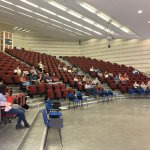

A new contribution with my colleague James Meza and out PhD student Gabriel Cotera.
NLP-based course assignment optimization peerj.com/articles/cs-3557/?…
An article I handled as editor has been published today @PeerJCompSci peerj.com/articles/cs-3336 #ComputationalLinguistics #ComputerEducation #DataMiningandMachineLearning #DataScience
18
I am glad to announce that the paper "Weak Supervision: A Survey on Predictive Maintenance" has just been published! Please read it here: doi.org/10.1002/widm.70022 #publishedarticle @wileyinresearch

2
47
A new proposal based on evolutionary computation to optimise the hyperparameters of machine learning models. In collaboration with my former PhD student, Antonio Moya. ieeexplore.ieee.org/document…

2
59
Sebastian Ventura retweeted

Great intro to Connected Papers!
youtube.com/watch?v=RWu5eA-j…
Sebastian Ventura retweeted

A Thread of photos and videos featuring humans next to enormous things to illustrate their size
1. Old salt mine in Romania
La moratoria de 30 años a la caza de elefantes corre peligro. Digámosle a @SuluhuSamia que la mantenga: secure.avaaz.org/campaign/es…
1
81
In this new publication, we analyze some data aspects that influence the performance of frequent itemset mining —a good collaboration with our good friend Philippe Fournier-Viger (Shenzen University).
doi.org/10.1016/j.ins.2024.1…
Sebastian Ventura retweeted

One more time on Principal Component Analysis (PCA): Recently, a student asked, "What do principal component loadings look like and can we interpret them?".
To help that student, I wrote this #Python @matplotlib dashboard. Vary the strength of the correlation between features 1, 2 & 3 and watch PCA learn!
- first principal component is a combination of features 1, 2 & 3, describing about 2.7 variance of 4.0 total variance at max. correlation.
- second principal component describes all the 1.0 variance in uncorrelated feature 4
- third and fourth principal components capture the remaining variance, mostly noise
- total variance is preserved, sum principal component variance is 4.0
- without correlation, all principal components equally share the 4.0 total variance.
I shared my dashboard on #GitHub @ github.com/GeostatsGuy/DataS… taScience_Interactive_Python/blob/main/Interactive_PCA_Rotation.ipynb ∀. #DataScience #MachineLearning
sciencedirect.com/science/ar…
This paper introduces StaTDS, an open-source library and web application designed to analyze, test, and compare Data Science algorithms
Sebastian Ventura retweeted

Kolmogorov-Arnold Networks: the latest advance in Neural Networks, simply explained by Theo Wolf buff.ly/4ak8HMT

Sebastian Ventura retweeted

Using LoRA in Stable Diffusion
zurl.co/w0mI
Sebastian Ventura retweeted
Prompting Techniques for Stable Diffusion zurl.co/vlU1

Nita Strauss & Courtney Cox NAMM 2020 Boss Trooper youtu.be/KcWw0k1mjM4?si=3k0D… via @YouTube
What else to say... Women rule!
151
Sebastian Ventura retweeted

Se dice que Poincaré fue el último matemático capaz de abarcar todas las matemáticas de su tiempo.
Desde Poincaré, la disciplina simplemente se volvió demasiado compleja como para poder ser dominada en el transcurso de toda una vida de estudio.
Desde Poincaré, los matemáticos son especialistas: adquieren conocimientos generales de toda la materia, pero luego concentran su estudio en una única parcela.
Desde Poincaré, solo una vida no basta.
Pienso que los técnicos que crecimos con el Spectrum, el Amstrad o el Amiga somos la generación de Poincaré. Hemos asistido al nacimiento de las computadoras domésticas, de las redes informáticas y de internet. Del florecimiento del software como ingeniería. De la nube. Y, ahora, de la inteligencia artificial. Somos coetáneos de estos cambios que transforman el mundo.
Pero como con Poincaré, la tecnología ya es demasiado compleja como para caber contenida en solo una vida. Los nuevos técnicos conocerán los primeros rudimentos de la profesión informática no por su ejercicio como un fenómeno histórico.
Somos una generación frontera. La única que ha conocido la vida antes y después de la hiperconectividad y los dispositivos móviles. La que ha visto coexistir las máquinas de escribir y los monitores de fósforo verde. La última que pudo abarcar toda la tecnología de su tiempo.
Somos una generación de inflexión.
A partir de aquí, el mundo cambia.

ALT Una antigua cabina de teléfono en un parque público.
Sebastian Ventura retweeted
Introduction to Clustering Algorithms - A comprehensive guide to 10 clustering algorithms commonly used for Hierarchical, Partitional, and Density-Based Clustering by @BabitzKevin buff.ly/3sy0Knu
Sebastian Ventura retweeted

A Survey on LLMs for Code
Great paper providing an overview (50+ pages) of LLMs for Code.
arxiv.org/abs/2311.07989v1

Sebastian Ventura retweeted
A Gentle Introduction to OpenCV: An Open Source Library for Computer Vision and Machine Learning zurl.co/hiTo

Sebastian Ventura retweeted
Plotting the Training and Validation Loss Curves for the Transformer Model zurl.co/73Cc

Sebastian Ventura retweeted

This is such an impressive dataset.
The python package Leafmap now supports downloading Google Open Buildings, the largest building dataset, for any country with only one line of code.
Notebook: lnkd.in/g2RD5Yaq
GitHub: lnkd.in/gwYSagUD