

PhD student in Evolutionary Ecology @LundUniversity ~ Exploring the effects of air pollution in birds and bumble bees | she/her |
Joined September 2021
- Tweets18
- Following78
- Followers25
- Likes6
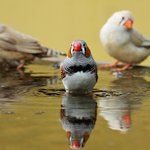

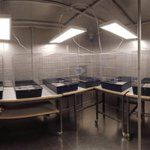


#scicommUU24 6/6 Although most of the experimental work is done, much labwork, analyses and writing is still left to do. This coming year will be busy, and I can’t wait to share all the results with you once they are ready!
#scicommUU24 5/6 Urban birds and bumblebees are constantly exposed to traffic-related pollution, yet we know very little about how this type of pollution deposits in these organisms and affects their health. And that’s the reason why I am doing my PhD research 😊
#scicommUU24 4/6 Why is this important? Outdoor air pollution has been classified as carcinogenic for humans and contributes to millions of human deaths every year. Cities are major hotspots for traffic-generated air pollutants, and we are not the only ones living there!
#scicommUU24 3/6 In the lab, I assess the direct links between pollution exposure and the effect on the individual. In the field, I explore whether there are correlations between air pollution levels and fitness measures. Both approaches are necessary and complement each other!
#scicommUU24 2/6 To assess such toxicity, I look at physiological indicators and the levels of expression of certain genes. I also use both lab and field-based approaches and work in an interdisciplinary environment with aerosol physicists.
#scicommUU24 1/6 What is my PhD about? My PhD research aims to delve deeper into the effects of air pollution on birds and insects. Specifically, I investigate how toxic common air pollutants in the city can be to a few passerine species and bumblebees.
1/6 #BOU2023 #Sesh3 My talk is about the physiological effects of #airpollution, specifically #soot, on the #zebrafinch. Air pollution causes ¨~4.2 million premature human deaths every year (WHO, 2022). However, does soot affect birds the same way as us humans? Let’s find out!


