







Surse Pierpoint retweeted

Yo añadiría decretar que en invierno haga menos frío y que la vida no sea tan corta.
Ah, y que lo bueno no engorde.

Estas son nuestras 5 propuestas para tener paz, casa y trabajo.
1️⃣Las casas son para vivir.
2️⃣Bajar el coste de la vida.
3️⃣Ni un euro para guerras.
4️⃣Subir el SMI a 1.800€ y jornada laboral de 30h.
5️⃣Proteger lo público y políticas contra el cambio climático.
🎥@_PabloFdez_


“Bernie Sanders is in essence the most useless man America has ever seen.”

The Architect of Nothing: Thirty Years of Bernie Sanders Robbing America
Bernie Sanders is in essence the most useless man America has ever seen.
For more than three decades, the American political stage has tolerated the finger-wagging theater of Bernard Sanders, absolute fossil who has perfected the art of converting economic illiteracy into a lucrative personal enterprise.
Watching Sanders lecture the working class on enterprise and economics resembles listening to an alchemist preach modern chemistry. He presents himself as the righteous champion of the laborer, yet his entire career is an unbroken record of legislative inertia, fiscal delusion, and moral abdication dressed in the tattered costume of democratic socialism.
The record of his legislative productivity exposes the myth completely. Sanders arrived on Capitol Hill in 1991. Across thirty-five years of feeding at the public trough, drawing a taxpayer-funded salary while railing against the system that enriched him, the self-proclaimed revolutionary has managed to enact exactly three substantive standalone bills into law. Two of them were designations to name post offices in Vermont. Decades of pompous floor speeches, decades of furious town halls, and the net monument to his legislative skill is brass plaques on two local postal branches. When tasked with real governance, such as chairing the Senate Veterans Affairs Committee, the result was a catastrophic managerial breakdown. An investigative probe uncovered systemic falsification of appointment schedules and lethal waitlists for vulnerable veterans while Sanders initially brushed off the reports as an ideological conspiracy concocted by political enemies.
Beyond bureaucratic incompetence lies an even deeper rot: total detachment from the basic laws of arithmetic. Sanders routinely touts single-payer healthcare proposals that would cost tens of trillions of dollars over a decade, blithely demanding that taxpayers swallow unprecedented confiscatory rates to fund an unwieldy state apparatus. He lectures free-market enterprises while conveniently ignoring that his flagship socialist models across Latin America systematically collapsed into breadlines, blackouts, and hyperinflation. When pressed on the mechanisms of capital allocation, he retreats into adolescent platitudes about millionaires and billionaires, conveniently updating his rhetoric to omit millionaires the moment book royalties converted him into a multi-property owner who shuttles between lakeside retreats and Capitol Hill suites.
The working class does not need lectures from a lifelong functionary who never built a business, never managed a payroll, and never created a single productive private-sector job. Sanders preaches solidarity while functioning as a sheepdog for the very managerial establishment he claims to oppose, reliably folding his theatrical resistance every election cycle to endorse the corporate machine. The entire socialist enterprise rests on exploiting envy and masking personal inadequacy behind state-mandated confiscation.
Bernard Sanders should retire into silence, because thirty years of empty slogans cannot hide the reality of a political career defined by total legislative bankruptcy.

"La izquierda necesita pobres." - José Antonio Kast

La Izquierda tiene una relación simbiótica con la pobreza, es un hecho contrastado.
No se limita a convivir con ella: la necesita, se alimenta de ella y extrae de ella su poder político. Su negocio consiste en convertir la miseria ajena en capital electoral.
Su jueguito es ingenioso.
Y el problema con los zurdos no es únicamente que sus recetas económicas fracasen.
Es que sus fracasos se convierten en su mejor argumento para exigir más poder.
Si la pobreza persiste, necesitan más intervención. Si la intervención fracasa, necesitan todavía más intervención. Y así convierten sus propios errores en la justificación para perpetuarse.
La pobreza se vuelve una excusa interminable.
Nunca es el momento de admitir que sus ideas no funcionan, porque siempre pueden culpar al mercado, a los empresarios, al imperialismo, a la especulación o a cualquier enemigo imaginario.
Ya va más de un siglo de estafa, ya va siendo hora de despertar.
Menos miel, menos moscas: El economista Thomas Sowell distinguía dos visiones del hombre. La irrestricta cree que el problema son las personas y que basta con poner a las buenas. La restringida asume que la naturaleza humana no cambia; solo cambian las tentaciones que la ley le pone delante. Cada campaña promete la primera; los aprehendidos confirman la segunda.
prensa.com/opinion/menos-mie… via @prensacom

Barrio Norte, en Colón, recibió $14.1 millones de la “descentralización paralela”, la mayor asignación del país. La fiscalía busca hoy unos $6 millones gastados sin un papel que los respalde.
La lista de aprehendidos no es una galería de malas personas, es un mapa: cada firma que vale dinero atrae a quien mejor sabe cobrarla. Con menos miel, llegan menos moscas.
Mi columna en @prensacom 👇prensa.com/opinion/menos-mie…
Surse Pierpoint retweeted

Este artículo de Antonio Maestre desvelando las fechorías de Pablo Iglesias es canela en rama. Sacad palomitas y leed:
lasexta.com/el-muro/antonio-…

“Earning a living with your own hands, building wealth on trust and reputation—these are the most basic dignities in any healthy society. But if a place gets used to treating victimhood like a golden ticket, that person quietly making a good life for themselves often ends up the first one in the crosshairs.”

德国 DW 电视台拍过一部关于巴黎郊区移民的纪录片。
镜头对准了生活在同一片区域的两个群体。
一边是大约七万人的法国华人。
在巴黎北郊的欧贝维利耶,他们建起了欧洲最大的服装批发中心。
这批人的生活方式很简单:
起早贪黑,开小作坊、看店、跑货运。
赚了钱继续投入生意,遇到难处自己想办法扛。
平时低调安静,很少向政府伸手要特殊补贴,也不上街制造混乱。
几十年下来,越来越多家庭买了房,把生意做了起来。
另一边,是同样生活在这片街区的北非移民群体。
从整体上看,他们在当地的经济融入相对滞后。
但纪录片捕捉到了一个细微却现实的心态变化:
一种把自食其力者视作威胁的情绪,正在悄悄蔓延。
按片子里的观察,
一些融入受挫的人,习惯以受害者自居,觉得社会欠自己太多。
可当他们转头看到身旁的华人时,心态变了。
他们不仅没有去学怎么做生意,反而把华人当成了竞争对手。
这种敌意到底从何而来?
最现实的冲突在于:华人的日子越过越好,受害者叙事就越难自圆其说。
大家同样是外来者,同样面对异国他乡的壁垒。
甚至华人刚来的时候连法语都不会讲,更谈不上本地人脉。
如果有人靠一天干十几个小时,能把日子一点点撑起来,
那句“我们过不好全怪外界不公”,就很难再理直气壮地说出口。
一个闷头自立的人,往往会让习惯归咎环境的人感到刺眼。
更深层的错位在于对财富的理解。
在很多索取者的认知里,财富是一块固定死的大饼。
他们看不到那些批发店是怎样一箱一箱货物搬出来的,
只觉得华人的店铺赚到了钱,就是占了自己的便宜。
再加上华人素来习惯忍让,遇到纠纷往往选择息事宁人,
这种心态上的失衡,很快就落成了现实中的治安麻烦。
抢劫、尾随、街头袭击,接二连三指向这群只想安分过日子的人。
靠双手养活自己、靠信誉积累财富,放在任何健全的社会都是最基本的尊严。
但如果一个地方习惯了把受害者身份当成通行的筹码,
那个默默把日子过好的人,
往往最先成为被针对的对象。
Surse Pierpoint retweeted

Esto quieren los que dicen que “no habrá paz en las calles”.
No votes nunca a la izquierda.
JAMÁS.
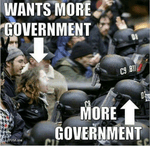
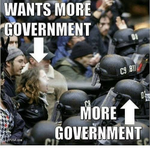
“Listen to the street: it wants more State. One of the largest deficits in the eurozone, and a crowd that wants it even bigger. A religion of salvation whose god is bankrupt does not lose followers; it raises its voice and, alas, its lighters.”

Message à la droite française.
Vous allez probablement gouverner en 2027. Alors je vous parle franchement, de l'extérieur : je suis économiste de l'école autrichienne et je vous écris de Suisse.
Hier soir, à Limoges, une mairie de 1883 a brûlé et son clocher est tombé. Elle avait été payée par une France qui produisait encore. Elle a été brûlée par une France qui ne fait plus que distribuer. Les formes survivent longtemps à leur raison d'être. Puis elles brûlent.
Rien de ce que l'État pleure aujourd'hui n'a été bâti par lui. Les banques, les lettres de change, la comptabilité, les bourses : les villes les ont faites, entre marchands qui se devaient des comptes. La couronne les a encaissées et a appelé le produit « la France ». Le comité a hérité du tout. Les fruits de la liberté se récoltent dans des phases de non-liberté croissante, et c'est pourquoi l'on prend si facilement le centralisme pour la cause de la prospérité.
Je le dis comme je le pense : la Révolution française fut une erreur, et le centralisme qui la suivit en fut une autre. La théorie étatique de la monnaie n'a fait en 1789 que changer d'habit, de l'hermine au comité. Le comité est devenu ministère, le ministère déficit.
Écoutez la rue : elle veut plus d'État. Un des plus gros déficits de la zone euro, et une foule qui le veut plus gros. Une religion de salut dont le dieu est en faillite ne perd pas de fidèles ; elle hausse la voix et, hélas, ses briquets.
Il n'y a pas de complot, ni à gauche ni à droite. L'Occident s'est relâché après une surtension excessive et névrotique, et dans le vide s'est avancée la religion de substitution de l'étatisme : le salut par l'État, la rédemption dans le nous collectif. La plus grande part de la faute, aussi paradoxal que cela paraisse, revient aux prétendus conservateurs. Un appareil se nourrissait en parasite des institutions et consommait leur capital, et les conservateurs appelaient cela préserver. Ils ont donné bonne conscience au déclin.
Et l'immigration ? Vous pouvez la régler demain matin, vous n'aurez soigné que la fièvre. L'immigration de masse subventionnée vers l'État-providence, menée sous le mensonge du réfugié, est le dernier symptôme : le point culminant d'une naïveté hors du réel, d'un formalisme aveugle et de la consommation de statut et de revenu dans l'État thérapeutique. Qui y voit la cause confond la poussée de fièvre avec la maladie.
Et ne comptez pas sur le patriotisme pour vous sauver de l'étatisme : il en est la forme d'origine. La nation est née en 1789 avec le comité, la conscription et l'impôt pour tous, et la droite « patriote » vit aujourd'hui du même jeu à somme nulle que la gauche : servir les nôtres contre les autres avec l'argent d'une machine qui ne produit rien. Sans la machine, elle n'aurait rien à promettre. L'électoralisme est le cœur du système, pas une faiblesse de vos candidats : il sélectionne une classe qui distribue et une foule qui attend la distribution. Il est trop tard pour le patriotisme ; il faisait partie du problème.
Ne cherchez pas non plus le moment où revenir. Ce moment n'existe pas : tout moment que l'on voudrait ramener est une récolte, et les récoltes ne se répètent pas, mais bien les semailles. Ce qui demeure de la nostalgie, c'est le costume, et le costume pris au sérieux devient un jeu de rôle qui ne veut plus que célébrer sa certitude de salut.
On ne renoue pas avec un moment. On renoue avec un momentum : l'autonomie des villes, la décentralisation, la confiance entre étrangers, l'ambition culturelle, l'esprit d'entreprise, l'invention, l'individu qui ose quelque chose et en répond. La France en avait plus que quiconque, dans ses villes, ses foires, ses salons et ses ateliers.
Il n'y faut pas de programme ; les programmes sont la figure sous laquelle un moment se défend contre le temps. Il y faut des hommes qui fondent, découvrent, inventent, tiennent une maison sur des générations et contredisent une autorité lorsqu'ils savent mieux qu'elle. Et des institutions qui leur donnent durée, dignité et liberté, au lieu de les traiter en suspects.
On ne ramène pas 1883. On peut ramener ce qui l'a bâti.
“Mises understood this back in 1944: the bureaucrat creates nothing. He administers what others created, following rules that have no connection to the value produced. The day value flows directly from the one who creates it to the one who receives it, the bureaucrat has no function left.”

I don't know if you realize what just happened.
Elon Musk is completely bypassing the State.
For 100 years, we've been told the problem is capital. That it must be captured, taxed, redistributed. With an army of intermediaries standing between those who create wealth and the people: ministries, agencies, commissions, bureaucrats.
Musk is doing the opposite. He's taking his capital and giving it directly to the people. One SpaceX share to every kid in America. Not a handout. Not a subsidy. A piece of the machine that's taking humanity to Mars.
And he says it himself: this is the first of many.
Mises understood this back in 1944: the bureaucrat creates nothing. He administers what others created, following rules that have no connection to the value produced. The day value flows directly from the one who creates it to the one who receives it, the bureaucrat has no function left.
That's what's being born right now. A new liberal world order, where the very concept of the State will make less and less sense.
The world we're entering is a world of abundance. AI, robots, energy, space. And that abundance won't come through the State, for one simple reason: we have a century of proof that it doesn't work.
Redistribution was version 1.0. Direct distribution of capital is 2.0.
While France is still debating how to tax builders even more, America is handing stock to its kids.
Pick your side.
“Here's the irony. Capitalism is the force that drove down the price of almost everything it touched. The state is the force that blew up the price of almost everything it captured. And young people blame the first for the crimes of the second.
It's like blaming the firefighter for the fire because you saw him at the scene.”
On my way to the office this morning, I passed a group of young people protesting, a Palestinian flag draped over their shoulders.
And I asked myself a question I can't shake: why does this generation always fall into the same trap? No matter the history. No matter the context. Even the ones from wealthy families, who went to the best schools, who were dealt every good card. Always the same trap.
I don't think it's stupidity. I think it's a mechanism. And a mechanism can be taken apart, piece by piece.
A. The observation: everything the state touches becomes unaffordable.
Look at economist Mark Perry's famous chart, the one people call "the chart of the century." It tracks US prices since 2000.
At the top, what explodes: hospital services, college tuition, textbooks, childcare, housing. Increases of +100%, +150%, up to +250%, far above general inflation.
At the bottom, what collapses: TVs, software, phones, toys, clothing. A TV today costs a fraction of what it did in 2000, for an infinitely better product.
Look at what separates the two groups. It isn't technology. It isn't complexity. It's one variable: how much the state is involved.
At the top, sectors that are subsidized, regulated, shielded from competition, where the state funds demand and blocks supply. At the bottom, sectors where companies fight every single morning to serve you better and cheaper.
B. The mechanism: why it's systematic.
When the state subsidizes demand without freeing supply, prices rise. Every time. Guaranteed student loans, and universities raise tuition. Housing aid plus blocked building permits, and rents skyrocket. Administered healthcare, and bureaucracy eats the budget before it ever reaches the patient.
In France it's even more vicious, because the price doesn't disappear: it hides. You never see the hospital bill, you pay it through payroll contributions. You never see the cost of school, you pay it through taxes. Public spending at 57% of GDP, one of the heaviest tax burdens in the world, more than €3.4 trillion in debt. And the result? Overflowing ERs, falling PISA scores, young people who can't afford to live in the city where they work.
The market didn't fail in these sectors. It was never allowed in.
C. Suffering demands a culprit.
A 22-year-old lives all of this in their bones. They can't find a place to live. Their degree either buries them in debt or opens no doors. The future feels blocked. That suffering is real, and I don't deny it for a second.
But human beings can't stand suffering without a culprit. They need a face. A scapegoat.
And this is where everything is decided: who taught them how to read the world?
D. Whoever tells the story picks the villain.
Schools are public. Universities are public. Culture runs on grants. Film goes through funding committees. Public broadcasting shapes the narratives. The people handing down the interpretive framework are, overwhelmingly, paid by the very system that creates the problem.
Do you really think that system is going to name itself as the culprit?
No. It names the capitalist. The boss. The landlord. "The rich." The multinational. The commercial West. Same role, same casting, every time.
E. One lens, a thousand causes.
And this brings me back to that flag. A generation taught to read every situation through a single lens, oppressor on one side, rich, Western, capitalist, oppressed on the other, will apply that lens everywhere. To housing. To climate. To conflicts on the other side of the world. The cause changes, the lens stays. That's why the trap is always the same: it's not the cause that draws them in, it's the way of thinking that was installed in them.
F. The perfect inversion.
Here's the irony. Capitalism is the force that drove down the price of almost everything it touched. The state is the force that blew up the price of almost everything it captured. And young people blame the first for the crimes of the second.
It's like blaming the firefighter for the fire because you saw him at the scene.
G. The ballot box confirms it.
In the US, a few weeks out from the midterms, a large share of urban young voters is getting ready to vote Democrat for more state, more spending, more regulation. New York elected a self-described socialist mayor, carried by young voters, on promises of rent freezes and city-run grocery stores. Rent freezes, the policy that has made housing scarcer everywhere it's been tried. The cure that worsens the disease.
In France, it's the same play in two acts. Part of the youth votes for the radical left, which promises more state. Another part votes for the center, which promises to "manage" the state well, and has dug the debt deeper than ever. Two different ballots, one shared assumption: the problem is the market, the solution is the state.
H. The way out.
These young people aren't stupid. They're right to be angry. They're just aiming at the wrong target.
The day they understand that their rent, their tuition and their hospital are expensive precisely because the state runs them, their anger will change direction. They'll stop protesting against those who create. They'll start protesting against those who capture.
That day, the greatest intellectual scam of our time will be over.


Surse Pierpoint retweeted

Could have Édith Piaf singing on top of the Eiffel Tower with a cigarette in one hand and a decapitated head in the other and it would still somehow be less French than this photo

Readers added context they thought people might want to know
The photo in this post is AI-generated, not a real photograph of protests in Paris. It edits a 2015 image from Yerevan, Armenia, replacing the protester with the Pink Panther.
sicnoticias.pt/sicverifica/20…
newtral.es/pantera-rosa-p…
theguardian.com/world/gallery/…


"A neoconservative is a liberal who's been mugged by reality. A neoliberal is a liberal who's been mugged by reality but has refused to press charges." - Irving Kristol


Cada año el debate del presupuesto en Panamá termina igual: todos piden más.
Esta vez los diputados quieren sumar $199,1 millones al presupuesto de 2027. De esos, $23 millones serían para la propia Asamblea, casi 12 centavos de cada dólar adicional, destinados a funcionamiento: planillas y gastos administrativos.
Lo revelador no es la cifra. Es quién la pide.
La Asamblea aprueba el presupuesto de todos, incluido el suyo. Cualquier ministerio tiene que convencer a alguien; la Asamblea solo tiene que convencerse a sí mismo. Y nadie se niega un aumento cuando la firma es suya y la factura la paga otro.
No es un problema de malas personas, es un problema de diseño. Con estas reglas, cualquier diputado de cualquier partido enfrenta el mismo incentivo.
La salida no hay que inventarla. En 1789 James Madison propuso que ningún cambio en la remuneración del Congreso de Estados Unidos entrara en vigor antes de la siguiente elección. Hoy es la Enmienda 27 de su Constitución.
Apliquemos la misma regla aquí: todo aumento en salarios, dietas y planillas de la Asamblea entra en vigor solo después de la próxima elección. No se trata de que lo cobren otros, sino de que los votantes opinen primero. El diputado que vote el aumento tendrá que defenderlo en campaña antes de ver un centavo.
Si el gasto es necesario, sobrevivirá a la elección; si no lo es, nadie se atreverá a pedirlo.
Ese es El Panamá Posible. prensa.com/politica/diputado…
