

World's first stem cell medical platform 🧡Join us 👯TG:https://xitter.cf/t.co/gssMGF507Y 👾DC:https://xitter.cf/t.co/WcUdsXFn5v
Joined December 2022
- Tweets715
- Following25
- Followers3.5K
- Likes403




Pinned Tweet
Official Statement
The only official SCT (SuperCells Token) is deployed on BNB Chain.
Any SCT operating on other blockchain networks, including Arbitrum, is NOT issued, authorized, endorsed, or affiliated with the SuperCells Official Team.
SuperCells Official Team


NIH researchers have developed a detailed 3D “digital twin” of retinal pigment epithelial cells using imaging data and AI. It offers a new way to study how cellular organization changes in age-related macular degeneration.
Source: nih.gov/news-events/news-rel…
Emerging research is exploring how the cellular environment surrounding stem-cell-derived β cells may influence their survival and function.
Understanding these interactions could become an important part of future regenerative medicine research.
Source: science.org/doi/10.1126/scia…

From Stem Cell Research to Clinical Translation
A promising experiment is only the beginning. 🧬
Turning stem-cell science into reliable healthcare also requires reproducible manufacturing, quality control, safety assessment.
Source: nature.com/articles/s41392-0…

What changes when stem cells age? 🔬
A 2026 study found that the internal organization of intestinal stem cells helps them receive signals needed for tissue renewal — and that this system becomes compromised with age.
Source: nature.com/articles/s41467-0…

Organoids & Human Biology
Organoids are becoming increasingly sophisticated models of human biology. 🧫
Researchers continue to explore how greater cellular complexity can make these models more useful for studying human development and disease.
Source: cell.com/cell-stem-cell/home
The Next Stage of Regenerative Medicine
What will shape the next stage of regenerative medicine? 🌱
A 2026 horizon scan highlights not only stem cell therapies, but also patient safety, scalability, affordability, workforce readiness and access.
Source: ncbi.nlm.nih.gov/books/NBK62…
Twenty years after the emergence of iPSC technology, its role continues to expand — from disease modeling and drug discovery to regenerative medicine. 🔬
Source: cell.com/cell-stem-cell/home
Regenerative medicine is also being explored for spinal cord injury. 🧬
A Phase 1 study published in Nature Medicine reported long-term follow-up of an iPSC-derived neural progenitor cell therapy for subacute spinal cord injury.
Source: nature.com/articles/s41591-0…

Stem-cell research for Parkinson’s disease continues to move forward. 🧠
A Phase 1/2 study reported 12-month safety and interim efficacy outcomes following transplantation of pluripotent stem-cell-derived dopaminergic progenitor cells.
Source: nature.com/articles/s41591-0…

A major milestone for regenerative medicine in Japan 🇯🇵
In March 2026, Japan approved two iPS cell-based regenerative medicine products with conditions and time limits.
Source: amed.go.jp/en/news/topics/20…

Cellular science is moving beyond isolated laboratories.
Research, manufacturing, biobanking, and data governance increasingly need to work together.
SuperCells is being built around one idea: better connections can create better infrastructure for the whole industry.

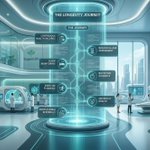
Longevity is more than a once-a-year health check.
Continuous health records, biological age assessment, sleep, nutrition, exercise, metabolic health and professional referrals can form a much more useful long-term picture.
Health is a journey, not a snapshot. 🌿

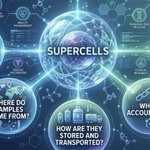
In cellular technology, trust starts with transparency.
Who provides the service? Where do samples come from? How are they stored and transported? Who is accountable?
SuperCells believes these questions should be easier to answer — not harder.

The future of cellular health is not about one isolated service.
It is about connecting research, biobanking, quality control, health management and clinical collaboration into a system that people can understand and trust.
That is the infrastructure SuperCells aims to build.

A cross-disciplinary team, led by the University of Glasgow, alongside the Universities of Nottingham and Strathclyde, will use pioneering technology to manufacture stem cells could help to treat blood cancers in the future
nottingham.ac.uk/news/manufa…
Stem-cell therapy reverses type 1 diabetes in groundbreaking case study
medicalnewstoday.com/article…

A Stanford Medicine-led study found that residual liver cancer cells interact with neighboring macrophages to prompt the disease to reappear.
med.stanford.edu/news/all-ne…

Billionaires are backing top scientists racing to develop tech that could reverse aging. Cellular reprogramming promises to rejuvenate the body
youtube.com/watch?v=_oxx-cXD…
