

Applied AI @lazer_hq - keeping the bots warm
SoCal
Joined July 2021
- Tweets1K
- Following1.7K
- Followers1.1K
- Likes9.4K








Jesse retweeted

One of the most compelling parts about working at an ElonCo was the agility to pivot to whatever the most important problem was.
One day I said: I wasn’t hired to go after spam, but a tsunami is coming and I’m going to drop everything to focus on that.
The org is so flat and agile that your title is basically meaningless. Anyone can sound the alarm about a problem and solve it themselves—or rally the team to join them.
This is how startups work but it’s very hard to make it work in a larger company.
Jesse retweeted

Have you tried the new model? It's on Muse. It's literally on Instinct. It's on Hermes with rate limits. It's literally on Claude. You can probably find it on Grok. Dude it's on Zorlt. It's a Blimbo open-weights release. It's on Squonk. You can prompt it on Squonk. You can go to Squonk and ask it anything. Log onto Squonk right now. Go to Zorb. Fine-tune on Squonk. You can Squonk it. Squonk on Squonk. Squonk has it for you. Squonk has it for you.
Jesse retweeted

If you work in AI or use it daily, spend more time around people who don’t.
It’s very easy to confuse technical possibility with market reality.
I’m sitting in a coffee shop right now.
People are manually sorting through their emails, editing in Photoshop and DaVinci, sending LinkedIn messages one by one, and using essentially the same interfaces they were using 3 years ago.
Meanwhile, inside the AI bubble, people are orchestrating agents, living in terminals, automating entire workflows, and arguing about what comes next.
The distance between those two realities is massive.
For most people, AI is still better search, a useful second opinion, and an occasional assistant.
They have no idea what power users are doing right now. Like, seriously, none at all.
They don’t know what Grok Bot is. They’ve never heard of MCP. Mention Hermes and they’ll assume you’re talking about Greek mythology.
And that puts the opportunity into perspective.
The constraint isn’t intelligence anymore.
It’s translation.
Distilling the complex into the simple.
AI capabilities can change in months.
Human habits, interfaces, trust, and incentives change much more slowly.
Power users organize their lives around what is possible.
Everyone else organizes theirs around what feels familiar.
That gap matters enormously.
The biggest AI products won’t simply give people more capability.
They’ll hide the complexity of frontier AI behind behaviors people already understand.
Making the extraordinary feel obvious.
The lag between what AI can do and what ordinary people actually do with it is where some of the largest businesses in AI will be built.
Now make that lag your market.
Jesse retweeted

Had a lot of fun animating our new Grok Bot icon. It's entirely made in code, with every state, shape and expression able to morph smoothly into the other. And of course, I made it with Grok Build.
Jesse retweeted

The biggest opportunities right now:
1. build for solving loneliness (the more AI floods everything, the more people crave real human connection, IRL and small social)
2. build for agents that need to spend money (they're getting virtual cards and budgets, someone builds the spend controls, fraud protection, receipts)
3. build for people drowning in AI output (everyone generates infinite drafts now, the bottleneck moved to reviewing and choosing, build the judgment layer)
4. build for the burnout economy (everyone is expected to always be on and always optimizing, and the backlash toward rest, slowness, and enough is building)
5. build for verifying humans (deepfakes broke trust, every dating app, marketplace, and video call needs proof-of-human within 2 years)
6. build for the physical world (the trades, hardware, robots that AI is finally reaching)
7. build for the agent that answers the phone (every local business misses calls after 5pm, a voice agent that books the job is worth thousands a month)
8. build for the aging (70M+ boomers who want to stay healthy, sharp, and connected)
9. build for the LLM-search land grab (being the cited answer is the new SEO)
10. build for the newly automated (the paralegal, the analyst, the marketer whose job just changed and needs to reskill fast)
11. build for the seat-pricing collapse (software repricing from $50/seat to per-outcome, whoever nails outcome billing wins a category)
12. build for AI enablement (95% of businesses use nothing beyond ChatGPT, someone has to onboard the other 95%)
13. build for the agency everyone resents (businesses pay $1k/mo to agencies they hate, an agent that does 80% of it undercuts the model)
14. build for verticals on 2011 software (dentists, HOAs, contractors, all overdue for an AI-native rebuild)
15. build for reviving dead software (thousands of abandoned apps with real users, agents can maintain what a team couldn't, buy and revive)
16. build for markets too small to matter before (500 lobster fishermen was never worth a team, now it's a weekend and a real business)
17. build for agents hiring agents (a shadow economy is forming, it needs escrow, reputation, and dispute resolution for machines)
18. build for the anti-AI premium (as everything gets generated, human-made and analog become status symbols people pay up for)
19. build for distribution-first (anyone can build the product now, so the audience is the moat, media company first, product second)
20. build for the reinvention of college (what does an MBA even mean anymore)
21. build for a world with more free time than it knows what to do with (if AI takes the busywork, the question becomes what people do with the hours, and that's a civilization sized market)
note: more trends/ideas @ideabrowser (free to sign up)
22. build for the return to the physical (screens fill with slop, people crave the real world, the hands-on, the local, the analog)
23. build for the caregiving wave. The population is aging fast, tens of millions are caring for parents, and the whole burden is landing on families with no support.
24. build for the longevity shift (people want to live to 100 healthy, and a whole industry is forming around actively managing your own biology)
25. build for the housing and rootlessness problem (people can't afford to settle down, and the whole idea of a stable home base is up for grabs)
26. build for spiritual hunger (as institutions hollow out, the need for meaning, ritual, and belonging is exploding into new forms)
KEEP BUILDING
Jesse retweeted

We're continuing to grow our fintech team at @Lazer_HQ to help servicing more and more clients who need engineering and product help to build the best products across agentic payments, banking and stablecoins.
Apply below if you're interested and think you'd be a good fit!
Jesse retweeted

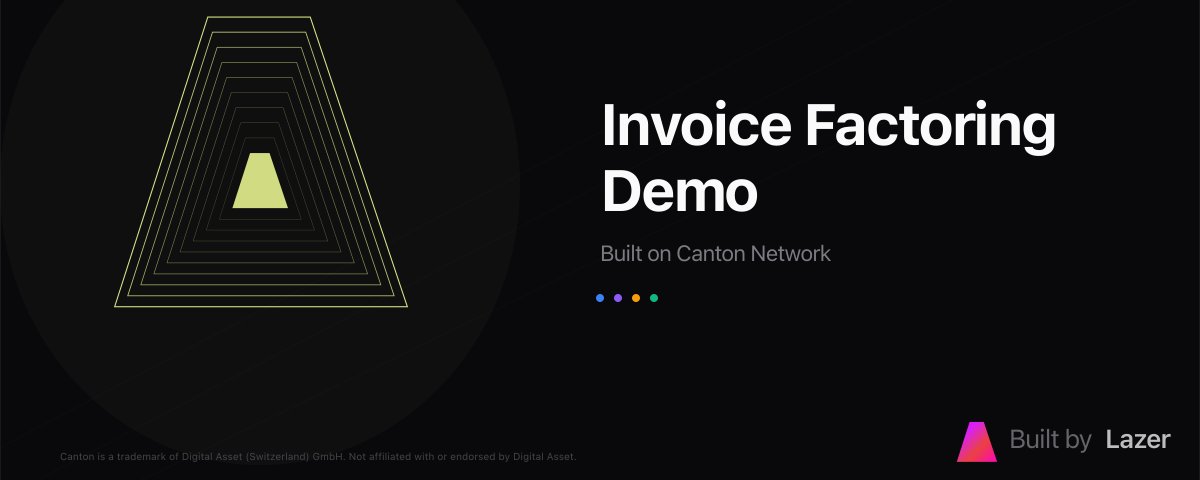
We forked the @CantonNetwork quickstart, built a live invoice factoring demo, and wrote up everything we ran into and learned.
daml.lazer.tools
Built by @yachtyyachty . Go break it.



Jesse retweeted
Enterprises are spending millions on subscriptions to Anthropic, OpenAI and other AI tools. Most are hitting the same wall: they bought the technology and haven't seen the ROI.
The gap isn't the technology. It's the implementation.
Dropping an LLM into an existing workflow doesn't transform it. It just adds a layer. The real unlock comes from rethinking the workflow itself.
This is where process engineering has become the most in-demand AI engagement in enterprise. Before a single agent gets built, someone needs to map how the business actually operates. Where do tasks bottleneck? Where is human effort being spent on work AI could handle? Where does judgment still need to stay human?
Think of it as the "Enterprise Process Engineer" role. Part systems thinker, part operator, part technical builder. Their job is to identify the highest-leverage workflows, map data flows, define the future-state process, then deploy and manage agents against it.
The economics are compelling if they can be realized. ServiceNow has reported hundreds of millions in AI-driven savings. Block is targeting $2M in gross profit per employee, up from $750K a year ago. But those results come from re-engineering operations, not simply from buying a subscription.
For every dollar enterprises spend on software, six are spent on services. The companies that can audit operations, identify automation opportunities and deploy agents against them will capture an enormous share of that spend.
The hottest trend in enterprise AI isn't a new model or product. It's the unsexy work of understanding how a business runs and rebuilding it for a world where intelligence is cheap. Companies that audit their processes, redesign their workflows and deploy agents against them will capture the most value from AI.
The transformation isn't coming from the tool. It's coming from the work.
Jesse retweeted

Dogfooding Opus 4.7 the last few weeks, I've been feeling incredibly productive. Sharing a few tips to get more out of 4.7 🧵
Jesse retweeted

I experimenting with a new idea, it involves social, current events, prediction markets, perps, options etc.
I am looking for some people to do 15 min calls with to demo what I am building and get first reactions and feedback on what would get you to use this
If you are open to chatting with me please hit my dms
Jesse retweeted

In the corporate world, if you have:
- a decent salary,
- a manager who trusts you without micromanaging,
- the flexibility of a hybrid work setup,
- the freedom to take time off when needed,
- opportunities for growth and skill development,
- a supportive and inclusive company culture,
You’re already among the top 1% of professionals enjoying a truly balanced and fulfilling work life.
Jesse retweeted

Remote Control - Session Spawning:
Run claude remote-control and then spawn a NEW local session in the mobile app.
* Out to Max, Team, and Enterprise (>=2.1.74)
*Have GH set up on mobile (relaxing soon)
* Working on speeding up session start-time
Jesse retweeted

tl;dr hire ex-founders

the most underrated hire right now is a great product person.
when i say product person i'm def not talking about a product manager. perhaps i think there has to be somewhat of a new role. i don't have a good name for it yet but maybe something like "product thinker".. someone with an intuitive grasp of the product as it exists, where it's soft, where it sings, & how to iterate it toward something even sharper. in some sense, this person has to cohesively hold in their head where this product should be 2 years from now & work backwards from that.
i say this cuz when building was hard, engineering was the bottleneck & the status hierarchy often reflected that. building is no longer hard. which means the variance in outcomes has shifted almost entirely to judgment on what to build, how to sequence it, & how to talk about it.
& the story matters as much as the thing. internally, it organizes the team around a shared model of why. externally, it shapes the interpretive frame users bring to their first experience. you can't retrofit narrative onto a product & expect it to land, it has to be load bearing from the start.
the rarest version of this person sits at the intersection of culture & deep technology. someone genuinely bilingual. they know what's technically possible & they know which cultural currents are real vs. ephemeral. that combo is what separates products that feel inevitable from products that feel assembled.
before ppl clap back with this person has always been valuable, i know.. i am just saying now they might be the most *important* person in the room. their value compounds like never before.


Jesse retweeted

software is still about thinking
software has always been about taking ambiguous human needs and crystallizing them into precise, interlocking systems. the craft is in the breakdown: which abstractions to create, where boundaries should live, how pieces communicate.
coding with ai today creates a new trap: the illusion of speed without structure. you can generate code fast, but without clear system architecture – the real boundaries, the actual invariants, the core abstractions – you end up with a pile that works until it doesn't. it's slop because there's no coherent mental model underneath.
ai doesn't replace systems thinking – it amplifies the cost of not doing it. if you don't know what you want structurally, ai fills gaps with whatever pattern it's seen most. you get generic solutions to specific problems. coupled code where you needed clean boundaries. three different ways of doing the same thing because you never specified the one way.
as Cursor handles longer tasks, the gap between "vaguely right direction" and "precisely understood system" compounds exponentially. when agents execute 100 steps instead of 10, your role becomes more important, not less.
the skill shifts from "writing every line" to "holding the system in your head and communicating its essence":
- define boundaries – what are the core abstractions? what should this component know? where does state live?
- specify invariants – what must always be true? what are the constants and defaults that make the system work?
- guide decomposition – how should this break down? what's the natural structure? what's stable vs likely to change?
- maintain coherence – as ai generates more code, you ensure it fits the mental model, follows patterns, respects boundaries.
this is what great architects and designers do: they don't write every line, but they hold the system design and guide toward coherence. agents are just very fast, very literal team members.
the danger is skipping the thinking because ai makes it feel optional. people prompt their way into codebases they don't understand. can't debug because they never designed it. can't extend because there's no structure, just accumulated features.
people who think deeply about systems can now move 100x faster. you spend time on the hard problem – understanding what you're building and why – and ai handles mechanical translation. you're not bogged down in syntax, so you stay in the architectural layer longer.
the future isn't "ai replaces programmers" or "everyone can code now." it's "people who think clearly about systems build incredibly fast, and people who don't generate slop at scale."
the skill becomes: holding complexity, breaking it down cleanly, communicating structure precisely. less syntax, more systems. less implementation, more architecture. less writing code, more designing coherence.
humans are great at seeing patterns, understanding tradeoffs, making judgment calls about how things should fit together.
ai can't save you from unclear thinking – it just makes unclear thinking run faster.
Jesse retweeted

Founders: The winning sales deck structure:
1. Market forces (why now)
2. Current challenges (their pain)
3. Future vision (the dream)
4. Your solution (the bridge)
5. Proof points (why believe)
6. Next steps (the path)
Tell a story, don't list features.
Jesse retweeted

"Programmers will automate themselves out of existence."
That's what they said. And programmers laughed so hard they couldn't respond.
Two years into the AI revolution, here's what actually happened:
What the doomers predicted:
1./ AI writes all the code
2./ Developers become obsolete
3./ Only managers and marketers survive
4./ Programming becomes a dead career
What actually happened:
1./ AI writes code that needs debugging by developers
2./ Developers spend more time reviewing AI output than writing from scratch
3./ The skill gap between good and bad developers got WIDER, not narrower
4./ Demand for senior developers who understand what AI can't do went UP
The brutal irony nobody saw coming: AI didn't replace developers. It replaced the developers who thought AI would do their job for them.
Here's the real shift:
- Junior devs who learn to prompt AI? Productive.
- Senior devs who understand system design? Irreplaceable.
- Developers who just copy-paste without understanding? Already obsolete (AI just made it obvious).
- Managers who thought they could skip hiring developers? Drowning in unmaintainable AI-generated code.
We're not laughing because we're safe. We're laughing because the people who predicted our extinction don't understand what we actually do.
AI is a tool. And like every tool before it, it makes good developers better and exposes bad developers faster.
