

occasional visitor, bc099cfbc1
Joined July 2012
- Tweets1.2K
- Following1.7K
- Followers4.9K
- Likes3.3K






A few follow-up thoughts after rereading. Starting q re why we are plateauing is good obviously, as is pushing past naive HF crowding and exploring how CFs affect deliverable pricing near 6%.
Where I have questions or would push back:

New blog on the Treasury cash-futs basis: Contract design, higher yields make basis trade alternatives attractive
1/n
As many of you are already aware, the basis trade has plateaued over the past year (CFTC data and sponsored repo volumes show it). Two most common explanations offered:
(i) trade has become too crowded competing returns down.
(ii) SLR relief has allowed dealers to warehouse more Tsys, which they hedge by shorting futures - displacing HFs/reducing returns available
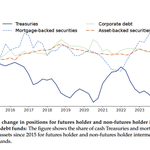
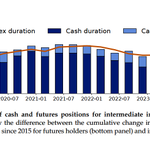
We argue both fall short: (i) might explain which HFs might be in the trade but not aggregate positioning and (ii) does little to explain why asset managers (AM) longs plateaued. Instead we argue the long-end basis has narrowed for reasons tied to the mechanics of the futures contract and the level of yields, and HFs now have a comparable alternative.


between mid-2024 and late-2025, precisely when that ratio looked, absolutely and relatively, poor.
7/ Assuming the duration need remains, where do asset managers go if futures look worse? Even with swap spreads compressing (and AI financing may play a role there), sourcing
Interesting note by a good group at the Dallas Fed.
Ambitious, big-picture argument on the basis trade plateau. Probably due to the format, it flies past some big assertions without grounding them 100%. Deserves a closer look.
New blog on the Treasury cash-futs basis: Contract design, higher yields make basis trade alternatives attractive
1/n
As many of you are already aware, the basis trade has plateaued over the past year (CFTC data and sponsored repo volumes show it). Two most common explanations offered:
(i) trade has become too crowded competing returns down.
(ii) SLR relief has allowed dealers to warehouse more Tsys, which they hedge by shorting futures - displacing HFs/reducing returns available
We argue both fall short: (i) might explain which HFs might be in the trade but not aggregate positioning and (ii) does little to explain why asset managers (AM) longs plateaued. Instead we argue the long-end basis has narrowed for reasons tied to the mechanics of the futures contract and the level of yields, and HFs now have a comparable alternative.
Good to see the NY Fed’s focus on this getting coverage.
Worth keeping in mind that hfs aren't absorbing the net duration pensions dropped. The basis trade is basically DV01-neutral; funds are just warehousing the physical bonds to service institutional demand for

NEW: Hedge funds, which control a record 7% of Treasurys, are the new wild card--and potential headache for Bessent--as yields keep climbing.
wsj.com/finance/investing/bo…

just an awkward workaround for how duration gets sold.
As fate would have it, Treasury itself could step into that role directly at the source. And Bessent is certainly better placed than most to see the logic. One way to approach it: ft.com/content/55a506e8-8cba…

stwill1 retweeted

The big surplus countries are still accumulating foreign assets through state investment vehicles and state banks (but not through their formal reserves).
A new blog with @EtraAlex of Vanda/ Exante
1/
cfr.org/articles/de-reservif…

Great to see this out on FT AV.
Many thanks @RobinWigg for editing and hosting the proposal, and pushing the debate beyond regulatory tweaks and crisis backstops.

How to fix the brittleness caused by Treasury basis trades ft.trib.al/18Z42vX
on top of traditional cash-side pressures.
TLDR Cash-futures basis trades aren’t just levered spread arb. In the tails, they currently underwrite a massive dose of unhedged mortgage convexity.
Full note has the structured breakdown, the necessary derivations and more graphs, for those who care to look.
18/18
concentratedambiguity.wordpr…
