

Web3 ivestment and onchain analytics since 2017
Joined December 2017
- Tweets548
- Following1.7K
- Followers375
- Likes2.6K







stsoen retweeted

JUST IN: Leopold Aschenbrenners Fund (Situational Awareness) has reportedly officially blown up…
These are the current (now liquidated) holdings:
- $MU bought at $1,153, now $703, (-39%)
- $CORZ bought at $25.6, now $11.1, (-56%)
- $SNDK bought at $2,268, now $874, (-61%)
- $NBIS bought at $273, now $121, (-55%)
- $CRWV bought at $99, now $42, (-57%)
- $BE bought at $301, now $165, (-45%)
Use him as a lesson why you NEVER over-leverage into high risk positions.
That concludes an end of an era…


Readers added context they thought people might want to know
Situational Awareness's public equity book was sold to Citadel in July 2026, not Nov 5. The firm hasn't closed: it retains a ~$5B Anthropic stake, continues operating, and 2026 returns are still reported around 80%. aiweekly.co/alerts/aschenb… withintelligence.com/insights/arche…
stsoen retweeted

DPRK holds approximately 420.000 ETH from the Binance hack
Ethereum Foundation has approx 170.000 ETH in its treasury
DPRK:

ALT Look at me. I am the EF NOW
It really feels like L2s may matter less (remember ZK-rollups, lol), while infra providers could suffer. DeFi may become more homogenized: faster and more efficient, but at the cost of innovation and the traders’ arms race
It looks like crypto need some real-world usecases soon

Glamsterdam is the first real redesign of Ethereum’s L1 resource economics since the Merge.
We mapped the actual mechanics:
- Gas limit path from ~60M → 200M = ~3.3x block capacity
- New state creation costs jump ~5x (storage slot ≈ 97,920 gas)
- Existing state updates become relatively cheaper under larger blocks
- Clear architectural edge for singletons, aggregators, and intent/batch systems
- Factory patterns and fully onchain order books face structurally higher costs
This is a cost redistribution that rewards efficient, reusable design.
Full breakdown: brlabsxyz.substack.com/p/gla…

1
4
383
Good idea! But actually, it’s worth clarifying: the issue with DeFi on the EVM might be that it doesn’t support continuous millisecond-level price updates. And Ethereum (Mainnet) still has throughput issues, creating arbitrage opportunities due to the time lag.


1
61
stsoen retweeted

the cool thing is LayerZero’s DVN and multisig could be 100% compromised across all signers & instances, and your application on the LayerZero protocol could remain 100% unaffected working perfectly fine with 0 losses if you just set up your config properly.
🤷🏼♂️
stsoen retweeted

People might accuse me of grave dancing for saying it
But we have to stop letting centralized things call themselves DeFi
Admin key can drain all funds? CeFi
Otherwise DeFi means nothing and it’s brand is destroyed
No admin key can drain any version of Uniswap for a reason


1/ The problem is that NFTs and tokens are often built mainly to make money in the market.
The fact is, most crypto projects don’t need tokens; they need real usecases.
These are simply different approaches: building a high-quality product vs creating a product with a token.

I’m leaving Web3.
After years building (40+ products/apps), I’m done pretending this space is something it’s not.
Most NFTs are down 90-99%. Not “cooling off” completely dead. And the second price goes, the community vanishes. Because it was never community, it was people watching a chart.
We dressed up speculation as culture and called it innovation.
Let’s be real the majority of users aren’t here for products. They’re here to gamble. Every new launch is the same cycle:
- hype
- rush in
- dump on the next person
Early just means finding someone dumber to be exit liquidity.
Builders say “we’re building for the future” but most of these products only exist to extract revenue from the same rotating pool of users.
No users. No retention. No PMF.
Just extraction.
We’ve financialised everything so aggressively that real users never had a chance to exist.
And the worst part? Everyone knows it. No one says it.
Because as long as there’s a chance of another cycle, people will keep playing along.
I’ve seen enough to know how this ends.
I’ll be open sourcing 40+ projects. Games, infra, wallets, experiments. Take it, fork it, do whatever you want.
I’m out.
1
53


stsoen retweeted

A product is the thing you use to solve your problem or get a job done. People use products. Products thus serve those people. Not all people. Just the people with the specific problem the product aims to solve.
The best products focus. If you have a loose screw, you reach for a screwdriver. Not a hammer. Not a penny. Not a multitool. A fucking screwdriver.
A platform is a foundation for products. It's the technology, the infrastructure, the tooling, the resources. Eventually it is the ecosystem of people and APIs and libraries and other products and network effects.
People do not use the platform. People build products on the platform. They build products that serve their users. The platform is the foundation. It is not the product.
The best platforms are ones where every builder can build whatever they want without any blockers. You don't need approval. You know your users and their needs and you solve their problems. The platform unlocks and enables you to do that better, cheaper, more easily. If the platform does not allow you to create more value with the platform than without it then you don't use the platform. It's very simple. See: Base v OP Stack.
The second-worst platform is a product that calls itself a platform. That non-platform end ups not empowering anyone while also not bothering to solving any problems or serving any user needs. It's bad, but mostly harmless (unless you are an employee there lol)
No, the absolute worst platform is one that is actually a platform that actually has products built on it but suddenly fancies itself a product.
If you are building on a platform that shifts to serve end-user directly, you should RUN THE FUCK AWAY. Their mission is no longer to empower anyone to build anything. It's to deliver their own products and solve their own user's needs. They will happily ignore/deprioritize/rug every other competing product. As they should.
You cannot build a great product while building someone else's product at the same time.
You cannot build a great platform if you are building a solution to a specific problem and specific user need.
The EF is not building a product.
Great article!
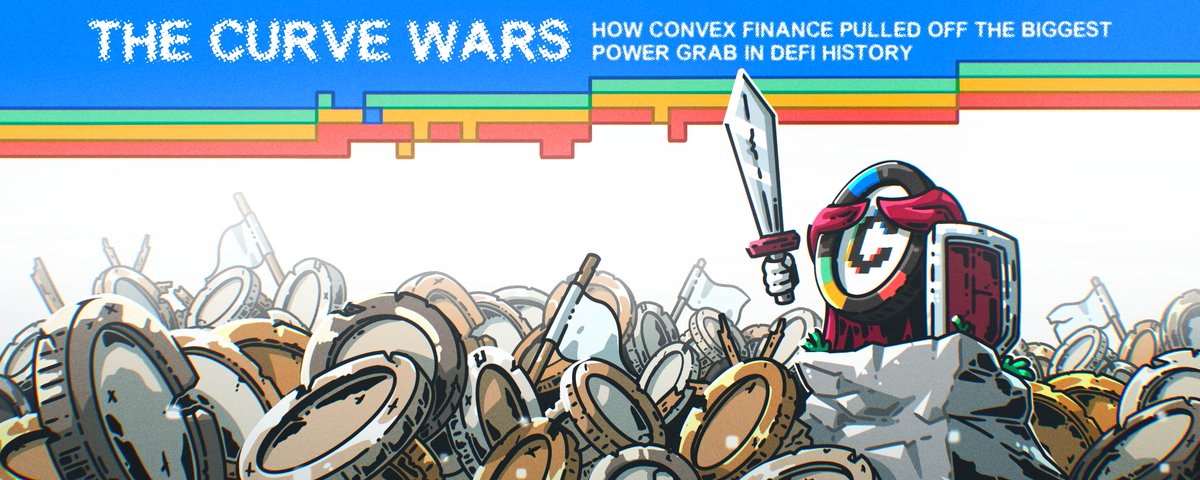
For a deeper look at the interactions, optimizations, and side flows within the ecosystem around @CurveFinance and @ConvexFinance, welcome to my research: dewhales.substack.com/p/the-…

2
13
1,786
stsoen retweeted

Excellent breakdown of crypto neobanks by @0xfishylosopher.
There are 20+ crypto neobanks all essentially building the same product - differentiation is more critical than ever.
The clearest opportunities: (1) small, geographic monopolies through stablecoin banking, or (2) novel credit primitives, such as undercollateralized lending models or unique private credit opportunities.


stsoen retweeted

My gut feeling is that crypto natives are selling now because they expect a 1929 style crash.
We're all watching Ray Dalio warn about the Big Cycle ending. We all see AI bubble posts. Watch same unemployment numbers, same WW3 fears etc.
Then S&P doesn't dump. But crypto does. We're selling to each other.
We're just vibe traders, always online, front-running each other.
Being terminally online helped us be early on NFTs, memecoins, AI vibe coding before everyone else.
But it also means we all trade the same direction at the same time.
We FOMO as one and then we panic dump as one.
Like in Pluribus on Apple TV, where a virus turns humanity into a hive mind. Everyone thinks and acts as one.
That's basically us, just a dumber version.
Boomers and institutions don't scroll CT 14 hours a day. They just hold.
ETFs were supposed to bring in different time horizons with different types of holders.
It hasn't happened. Crypto is still retail dominated.
We think we're contrarians. But when every contrarian has the same thesis, that's just consensus.
Maybe next cycle will be different.


stsoen retweeted

1/ Scaling is finally working: Ethereum usage is up, but its footprint is down.
For years, L1 and L2 activity were tied together: more usage meant more congestion, but that link is officially broken: post-Fusaka, they are negatively correlated (r = −0.67).
🧵Here is the visual proof that Ethereum has solved its scalability dilemma.


In fact, there could be many similar stories. At one point, there were dozens, if not hundreds, of crypto VCs loudly proclaiming themselves.
But now it seems that things have quieted down. Where are all these VCs? Shima's story seems to shed light on their “quiet departure.”

The crypto VC firm that quietly went away: Shima Capital.
3 weeks ago, the SEC filed a complaint against Shima Capital and its founder Yida Gao, alleging he "engaged in a scheme to defraud" certain investors.
Screenshots of an email Gao sent to portfolio company founders, shared with me by a source familiar with the situation, show that Gao is stepping down from his role and winding down the fund.
"I deeply regret my misguided decisions and apologize for letting you down," the email reads.
Shima Capital launched back in 2021 with $200M, and invested in numerous crypto projects including Berachain, Monad, Pudgy Penguins, Sleepagotchi, Gunzilla, and many others, according to its website.

1
66

