

Structural IC @GeisingerHealth. alumnus @endeavorhlth @UofCincy | IM & CVD alum @WrightcenterGME @RossMedSchool @TempleUniv 🇺🇸🇵🇰🦉🦅
Joined February 2019
- Tweets822
- Following3.3K
- Followers857
- Likes2.2K






Najam Us Saqib retweeted
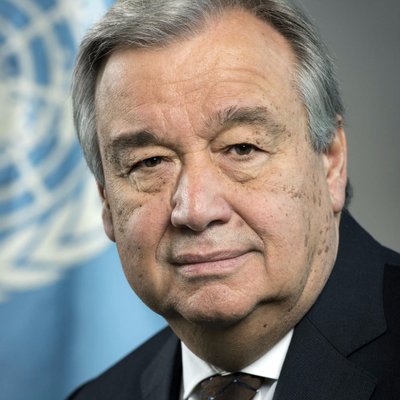
For over two decades in different roles, I have seen Pakistan as a source of solidarity & solutions. But what has always stood out to me is the resilience of the Pakistani people & their determination to build a better future.
My message is simple:
The @UN stands with the people of Pakistan. And I thank the Pakistani people for standing up for the world.

“We should think very carefully before designing that conversation out of medicine.”

Radiology used to have something that was almost invisible because it was so routine:
The reading room consult.
Rounding teams came down.
Surgeons pulled up their cases.
Internists brought the scan that didn't quite fit the clinical picture.
Sometimes the radiologist solved the problem.
Sometimes the clinician supplied one piece of history that completely changed how the images were interpreted.
And usually everyone simply walked away a little sharper.
But something else was happening during all of those conversations.
We were learning each other.
As a radiologist, I learned what individual physicians cared about.
I knew which findings mattered to a particular surgeon.
Which measurements an oncologist was following.
Which details a specialist wanted emphasized.
What questions they were really asking, even when the order just said "pain."
And they learned me.
They knew who was reading their study.
They knew they could walk in, point at something, challenge an interpretation, or ask, "What do you think?"
That relationship created context.
It created feedback.
It created trust.
And over years, it created a kind of institutional knowledge that never appears in the medical record.
When radiology becomes a report produced by someone hundreds or thousands of miles away, we don't just lose proximity.
We risk losing that entire feedback loop.
The report may still be technically excellent.
But the radiologist knows less about the physician.
The physician knows less about the radiologist.
The radiologist sees less of what happened after the report.
And both sides lose opportunities to make each other better.
The reading room was never just a room.
It was where imaging became part of the clinical conversation.
We should think very carefully before designing that conversation out of medicine.
Inspired by a conversation yesterday with @PaleoOnc . Also @909One and @brianchiong .

Najam Us Saqib retweeted

International Day for Interventional Cardiology: the first coronary #angioplasty
On 16 September 1977, Andreas Grüntzig & his team made history, and changed the lives of millions of patients forever.
Standing on the shoulders of the giants that came before him, this transformative vision led to an entirely new field of medicine.
What began nearly five decades ago with coronary angioplasty has grown into the broad field of interventional cardiology, transforming cardiovascular care through research, innovation and technological progress.
As the field has evolved, so has the need to learn from experience, share knowledge and shape what comes next. Join us in 2027 at #EuroPCR to mark this landmark moment!
📅pcronline.com/Courses/EuroPC…
#medicalhistory #interventionalcardiologist #cathlab #cathlabteam
@NievesGonzalo1 @CuissetDr @nicolasdumonte1 @EmanueleBarba13

Najam Us Saqib retweeted

BIG NEWS: CMS final TAVR coverage decision, biggest change to TAVR coverage since 2012.
Here’s my summary from the long 105-page statement:
- Symptomatic severe aortic stenosis is now covered as standard care. No mandatory registry enrollment.
- Asymptomatic severe aortic stenosis is newly covered, but only for patients enrolled in Medicare-approved studies.
- The heart team stays. Every patient still needs input from both cardiac surgery and interventional cardiology (can be done through chart review), plus an in-person visit with one TAVR operator before the day of the procedure.
- The two-operator requirement is gone. Now one qualified operator can do the case alone.
- Two operators are still covered if the heart team decides they’re needed and that can be in any combination: surgeon + interventional cardiologist, two interventional cardiologists, or two surgeons.
- Volume requirements now apply to the operator, not the hospital: at least 20 transcatheter valve cases a year (15 of them TAVR).
- Hospitals still need on-site cardiac surgery program.
@6ayyeboon @AlkashkariWail @mirvatalasnag @BinAbdulHak_A @amrmohsen213 @MarwanSaadMD @aelsab @MusaSharkawi @MohammedQintar @mhammadah @JDDCFratti @acamajmd @Almanfi_Cardio @scottiejj12

Najam Us Saqib retweeted

TRIC-I-HF trial: Transcatheter tricuspid repair plus medical therapy achieved a superior win ratio for mortality, HF hospitalization, and KCCQ improvement over medical therapy alone in patients with severe TR. Download slides here: clinicaltrialresults.org/wp-…


Najam Us Saqib retweeted

Presented at #ESCCongress:
In patients with severe tricuspid regurgitation and heart failure, transcatheter tricuspid-valve repair plus medical therapy was superior to medical therapy alone in reducing hospitalizations for heart failure and deaths. Full TRIC-I-HF trial results: nej.md/4ilZJGr
@escardio

ALT Three graphs showing Kaplan–Meier estimates for prespecified events as adjudicated by the clinical-events committee at 3 years. Panel A shows freedom from death from any cause or hospitalization for heart failure (second coprimary end point), Panel B survival, and Panel C freedom from hospitalization for heart failure.
Najam Us Saqib retweeted

The Fifth Universal Definition of #cvMI, released by 🌏 CV societies, provides a 🆕 clinical classification of MI that is based on pathophysiology, aligns w/ clinical evaluation of patients & incorporates objective diagnostic criteria.
🔗 bit.ly/4y53W63 #ESCCongress

Lots of good science. 🧪

🚨 Just Announced! Be among the first to see landmark research with the potential to change clinical practice and shape the future of cardiovascular care.
🔬 New Evidence💡 Fresh Insights ❤️ Clinical Impact
Explore the newly revealed late-breaking sessions and register today for #TCT2026! ow.ly/jIIp50ZFPTF
#CardioX #CardioTwitter #CardioEd #CardioResearch @BurkhoffMd @djc795 @ColletCarlos @georgedangas @jgranadacrf @mbmcentegart @Drroxmehran @sahilparikhmd @PopmaJeffrey @triciarawh @mirvatalasnag @TCTConference @TCTMD

Najam Us Saqib retweeted

In the RAPID-POP RCT (n=607 #STEMI patients), pressure-optimized stent inflation improved reperfusion vs conventional inflation-deflation (WIN ratio 1.42; P=0.004), with less post-dilation & a trend toward lower 30-day #MACE (2.0% vs 4.1%). jacc.org/doi/10.1016/j.jcin.… #JACCINT #PCI

Najam Us Saqib retweeted

Out in JSCAI today, our study examines 25 years of aortic stenosis–related mortality in the United States.
While overall aortic stenosis–related mortality has declined modestly, important disparities persist — particularly among men, adults ≥85 years, residents of nonmetropolitan areas, and individuals living in the Midwest.
Our findings highlight that improving outcomes in aortic stenosis is not just about advancing treatment — it is also about earlier recognition, timely referral, access to care, and addressing disparities in cardiovascular health.
Grateful to Drs. @mj_ricciardi and @AqamarMD for their guidance and mentorship!!
Read: doi.org/10.1016/j.jscai.2026…

Najam Us Saqib retweeted

A faculty member cut her research effort in half over three years. No one told her to. The comp plan did it for her. RVU-only compensation has destroyed more research capacity at academic medical centers than any funding cut.
Najam Us Saqib retweeted

Successful TAVI implantation relies on much more than accurate valve positioning, it requires an understanding of the relationship between the prosthesis and the cardiac conduction system.
@TAVRBot #cardioed #cardiotwitter
Najam Us Saqib retweeted

Proposition - OPTIMA-CTO Leaves No Doubt: CTO PCI Improves Symptoms
This was the title of my talk at #CICT2026 last week. I was debating good friend and fellow CTO enthusiast, @jbspadoni.
I only had 8 minutes - so a sophisticated analysis a la @SripalBangalore, @djc795, or @ihtanboga was out! 😅
Here are the slides...


Najam Us Saqib retweeted

#inspiris implanted 6 years ago. There is very little clinical data to suggest this valve will be as durable as it's predecessor, Magna or MagnaEase. But certainly more expensive. @tomcnguyen @DrZeigler1 @Abedeanda @APolancoMD

Najam Us Saqib retweeted

@BrettSperryMD and I are starting a new medical journal:
OpenSource Cardiology
opensourcecardiology.org
Learn more here 👇🏻


Academic publishing is overdue for reinvention.
Introducing OpenSource: Cardiology—a physician-led, nonprofit, fully open-access journal built by and for the cardiovascular community.
Better science. Broader access. A fairer system.
opensourcecardiology.org
surgical collateralization theory: has the beautiful hypothesis been killed by the ugly facts? academic.oup.com/eurheartj/a…

This is a thoroughly engaging and informative read.

PARTNER 2A at ten years is a genuinely important paper. Extending a randomised TAVI-versus-surgery trial to a full decade, in an elderly intermediate-risk cohort, is hard, expensive, and exactly the long-horizon evidence the field has lacked. So this isn’t a critique of a flawed study — it’s a note on why two of its headline numbers, both pointing the same way, carry different evidentiary weight.
Start with what the authors did well. Reintervention was analysed as a cumulative incidence function with Gray’s test, accounting for the competing risk of death — precisely the right estimand in a cohort with ~83% ten-year mortality. They even report the naïve Kaplan–Meier (16.1% vs 2.7%, HR 4.26) transparently as a sensitivity analysis, flagging it as the one that overstates risk by treating death as independent censoring. The model isn’t the issue.
The limitation lies upstream, and the authors are candid about it. Nonfatal outcomes did not use the vital-status sweep. Mortality was recovered to ~90% completeness from public records — an impressive salvage. Reintervention runs on the on-study cohort alone. At year six, mortality has ~380/396 patients at risk per arm; reintervention has 174/159. After the five-year reconsent cliff, the durability endpoint is estimated on less than half the randomised population.
What’s worth adding is how much that missingness matters. Among surgical patients alive at five years, 59.3% (270/455) declined reconsent and left at the start of years five to ten — the very window the paper flags as vulnerable for bioprosthetic failure. The 1.6% surgical estimate rests on eight events, three in that late window, while the cohort most likely to generate late events is largely unobserved. Dropout was differential (more in surgery). Reconsent that tracks health is informative censoring, which can bias the CIF itself, not only its variance — and the asymmetry favours surgery looking more durable.
To put a number on it: reconstructing the published CIFs (Aalen–Johansen, validated to reproduce 6.3% / 1.6% and a p-value near the reported Gray’s test), how many unobserved surgical reinterventions would change the conclusion? About ten erase significance; ~25 reach parity. Across the ~425 surgical study-leavers, ten events is a reintervention rate of only ~2–4%.
The literature says that’s a low bar. Around 15% of the trial’s surgical valves were Mitroflow and Trifecta — known early failures; Mitroflow reintervention at ten years ran ~22% Annalsthoracicsurgery. Even durable comparators show late attrition: in NOTION at ten years, with near-complete follow-up, surgical severe structural deterioration was ~10% and bioprosthetic valve failure ~14% PCRonline nih. Reintervention also undercounts failure, since frail octogenarians are often never reoperated — as the authors note. So 1.6% is a floor on a partly observed denominator.
In statistical terms this is a fragility issue, not a flaw: a four-fold relative claim resting on eight events, in an arm that shed ~45% of its follow-up non-randomly, is hard to lean on — however well Gray’s test was applied. The direction is believable; the XT device genuinely predicts more TAVI reintervention (second-generation frame, no CT-based sizing, no 29 mm valve for the first 42.5% of enrolment). What the data can’t pin down is the magnitude.
Contrast the mortality endpoint, where the paper is strongest: HR 1.13 (1.02–1.25), ~90% complete via the sweep, concordant in the ITT sensitivity analysis. That holds up. Its nuances — RMST over years five to ten non-significant, the excess confined to TA/TAo while transfemoral was neutral — are matters of careful reading, not missing data.
So the honest summary is generous: a landmark, methodologically sound trial that delivers a robust mortality result and a directionally sound but quantitatively soft durability signal. The two rest on different foundations — one recovered, one necessarily incomplete — and the authors give us everything we need.

Najam Us Saqib retweeted

✅Excited to receive NIH R01 award to study rapid/simultaneous initiation of GDMT in CKD
📌Usual practice is slow initiation which can take years. RAPID-CKD trial will see if rapid administration of GDMT in CKD is feasible, safe and effective
@JavedButler1 @f2harrell #TShafi
Najam Us Saqib retweeted
My Toolkit 🧰⚙️🪛: Self-made steerable catheter to cross the aortic valve in severe aortic stenosis
🔗pcronline.com/Cases-resource…
In this article, @Obisht, Won-Keun Kim and Robert R. Flieger describe a self-made steerable catheter system using a 6F EBU guide and the stiff back end of a 0.035″ wire, combined with a hydrophilic straight-end crossing wire, to facilitate crossing of severely stenotic or calcified native or prosthetic aortic valves during TAVI.
The technique is particularly useful in horizontal aortas, bicuspid valves, and massively calcified tricuspid or bioprosthetic valves, where the conventional technique repeatedly fails.
Reviewed by Moritz Seiffert
#interventionalcardiology #CardioEd #cardioX

Najam Us Saqib retweeted

I congratulate President Donald Trump on his extraordinary efforts to pursue peace and for holding a very useful and productive telephone call earlier today, with the leaders of Saudi Arabia, Qatar, Turkiye, Egypt, the UAE, Jordan and Pakistan. Field Marshal Syed Asim Munir represented Pakistan in the telephone call and I greatly appreciate his tireless efforts during the entire process.The discussions provided a useful opportunity to exchange views on the current regional situation and how to move the ongoing peace efforts forward to bring lasting peace in the region. Pakistan will continue its peace efforts with utmost sincerity and we hope to host the next round of talks very soon.