

Audio & functional programming enthusiast.
Helsinki
Joined June 2020
- Tweets665
- Following97
- Followers169
- Likes124






Incredible insight from a
@tressiemcphd oped: "Panic is chaos without direction, affect set free from the discipline of curiosity, debate and accountability."
Has it ever been confirmed what the "whole lot more" means in the Denver the Last Dinosaur theme song?
I feel like the agent community is persistently going down the wrong rabbit hole. People are calling OpenClaw and Hermes proofs of concept, as if they're unfinished incarnations of the ideal agentic toolset yet to be built. The opposite is true. They are both far more complete than an agent needs to be.
The ideal rig is a set of markdown files from which an agent can germinate. From there, and from its context, it builds its own memory and skills. As new innovations are introduced, it studies and metabolizes them instead of migrating to them.
Folks can easily build this agent, or fork it from a minimalistic template, a bit how people use starter templates to bootstrap websites. I hope to see the community going more and more in this direction, it will lead to more innovation and easier interoperability.
When I look at crypto from the outside, I think "every company using crypto sells a product to other crypto companies", meaning it feels hermetic. I'm mega in the AI bubble, so I lack critical distance, but is the same thing happening here?
I feel like AI models have taken a step backward. I can't quite describe it, but outside of their sweet spot, they're failing hard. Like Claude Code is great for vibe coded apps. Seedance is great for Hollywood blockbusters. But even slightly out of their lane, they fall apart.

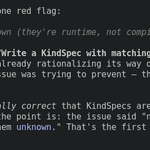
Even after rewriting the issue in an explicit way, an implementer still explicitly ignored the most important part. Luckily, a gatekeeping agent caught it.

I've been experimenting doing typelevel programming with CC and Codex. Left to their own devices, they're both mostly bad at it, but you can get decent results by structuring proofs like koans where previous steps are locked and imported into next steps.
Claude Code is cute when it worries about how things will look in an IDE. Its models' training must have been cut off before November 2025.
I feel like LLM companies are going through enshitification far faster than other platforms did. I find myself barely able to make sense of ChatGPT responses these days. Ask it about capture checking in Scala, it will barf an unreadable mess that is 10x less clear than the docs.
Something about the current AI moment makes me feel that we are sort of trapped in a ritual where we marvel at what's effectively a new form of electricity. Sure, marvel, but how fast can we grow out of that, and what will that future look like?
"Life is about movement, and the flourishing life is the same eternal thing, some man or woman striving and struggling in service to some ideal." Thank you @nytdavidbrooks. Your writing has been an inspiration to me. Excited to follow your next chapter.
mike retweeted

Over the course of a lifetime, we face only a few moments where the decisions we make and the actions we take will shape our history for years to come. This is one of them.

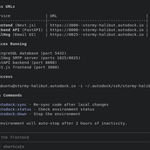
Waah Claude finally suggests Autodock naturally, huge step! Just started happening today, not sure why, but really nice to see it emerge to this level of usage that it's a known entity! autodock.io 🚀

I've seen a lot of builders and micro-SaaS enthusiasts predict the death of VC because you can build everything yourself & for free until you get traction.
This is a mistake.
The basic premise of VC is to back people that have ambitious ideas into which capital needs to be deployed in order to achieve a goal. The first injection of capital is just the beginning. Structurally, you will need many to pull something ambitious off, and you organize these stages as funding rounds linked to various milestones.
The death of this system would mean that bright, dynamic teams would be limited to building things that are free to build, which is basically SaaS. That'd be sad.
I think what's more likely to happen is that pure-software companies won't be VC-backable anymore. That's fine. Perhaps there will be a contraction of the space, but what I hope to see is innovation outside of software that has a form of global ambition. It could be food, devices, content, or moonshots like time travel or teleportation. And maybe this transition will finally break us out of the current hype cycle that has essentially led many really bright people to treat Ralph Wiggum loops as a SaaS slot machine that they play all day.
The entire creative output of a generation of technical people is being funneled into "what subscription can I extract from someone?"
I find that Claude Code is keenly aware of its limitations. If in CLAUDE.md you ask it to require its human operator to enhance it with features, for example via MCP or skills, it will. But in its default state, it will just politely fail at stuff.
