

Banking sector research | Credit quality, deposits, and earnings trends across U.S. financials.
Guaporé, Brasil
Joined February 2009
- Tweets28.4K
- Following2.8K
- Followers1.3K
- Likes320


Aisha Jackson retweeted

“The 10 year is beginning to recognize the economic damage from restrictive rates and persistent energy inflation. If that deterioration broadens, yields may have further to fall.”

The Bond Market Is Beginning To Price The Economic Damage Ahead
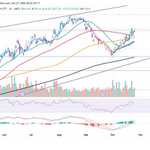
The 10 year Treasury yield has fallen toward 5.06%, reversing roughly 27 basis points from its recent peak near 5.33%, despite producer inflation of 6.3%, persistent energy disruption and a Fed that recently raised rates.
The bond market may be reassessing what expensive financing means for investment, profitability and future growth.
What the Bond Market Is Telling Us
Between October 5 and October 15, official Treasury data show
• Nominal 10 year yields fell 21 basis points
• Real 10 year yields declined 17 basis points
• Implied inflation compensation declined just 4 basis points
Roughly 81% of the decline came through real yields rather than inflation compensation. Investors are demanding less real yield to own Treasuries even though inflation remains elevated, consistent with concern about future growth and investment returns.
On October 15, the 10 year fell roughly 10 basis points while the 2 year declined less than 5. This bull flattening suggests demand for duration protection before markets fully price aggressive Fed easing.
Why the AI Selloff Matters
Microsoft, Alphabet, Amazon and Meta are spending enormous sums on data centers and AI infrastructure. Oracle and CoreWeave face particularly acute scrutiny over debt financing and cash flow. OpenAI and Anthropic are major buyers whose future commitments depend on revenue growth and funding.
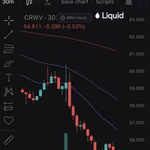
Credit protection costs have risen sharply for Oracle and especially CoreWeave. Investors are questioning whether enormous upfront investments can generate enough cash to justify their financing.
The stress is international. South Korea’s KOSPI plunged 7.57%, Samsung fell 9.5% and SK Hynix declined 11.1%. These semiconductor companies are highly exposed to global AI infrastructure spending, including demand associated with NVIDIA.
AI spending has not collapsed. But higher financing costs and weaker expected returns may eventually force reductions in capital spending, equipment orders and hiring.
The Larger Macroeconomic Problem
The Fed has raised rates into an energy shock that monetary tightening cannot resolve. Diesel producer prices are up 115.2% annually, while freight expenses, refinancing burdens and household purchasing power remain under pressure.
Higher rates cannot restore refining capacity or reopen shipping routes. They can suppress consumption, investment and credit creation, especially among leveraged borrowers.
This echoes elements of the 2000 technology downturn and the credit deterioration preceding 2008, when Treasury yields fell as investors reassessed future growth.
Today’s rally does not confirm anything yet. Major AI firms are still investing, and broad credit stress remains less severe than the problems facing individual borrowers.
But if corporate spreads keep widening, real activity weakens and AI valuations deteriorate, the bid for Treasuries could become much more persistent.
Under those conditions, I believe the 10 year could move toward 4.70% to 4.90% over the next several months.
Falling Treasury yields do not necessarily mean easier financing. Government debt can rally while credit becomes more expensive for vulnerable companies.
My read is that the 10 year is beginning to recognize the economic damage from restrictive rates and persistent energy inflation. If that deterioration broadens, yields may have further to fall.


Aisha Jackson retweeted

These 3 AI stocks are positioned to potentially MORE THAN DOUBLE over the next 1–2 years‼️
🧵👇
1. $FPS | Forgent Power Solutions 🔵
• Electrical Equipment
• Rapid manufacturing ramp and faster delivery driving huge growth amid surging power infrastructure demand.
My Fiscal Year 2028 PT: $77 (+138% upside)
$2.20 EPS | 35× earnings

Aisha Jackson retweeted

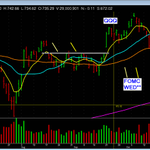
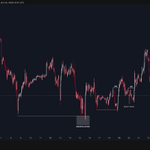
To be bullish we need CPI to really pump the market . and it needs to be a big move . If we fail new highs or do no rally from here . its very bearish and a fast move down is coming soon
tradingview.com/x/AaP2LLTV/


Aisha Jackson retweeted

$BTC recap
8 trades, 8 wins ✅
Pretty good month so far, despite the chop.
Almost every move caught on the 4 hourly.
All publicly called, with conviction and elaborated with extensive updates.
(couldn't fit every tweet in one picture so first two are missing).


Aisha Jackson retweeted

The Hormuz Shuttle moved the oil. It did not bring back the tankers.
Crude flows have recovered in the Middle East. But freight is now $30 a barrel. Why isn't that price pulling more tonnage into the trade?
My latest: Shipping Is the Bottleneck.
Enjoy
open.substack.com/pub/alexan…

Aisha Jackson retweeted

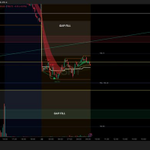
@AcdcCrypto Walking through $NQ setup
Live with the community 💞
a 100-point win on $NQ 🔥
Andrew took a long at OTE fib level shared live in our room.
We recently taught a class on fibs. Today, members saw the lesson play out in real time 👏
Learn with us 👉 superluckeee.com


Aisha Jackson retweeted

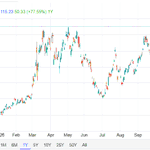
$PLTR Break the $195 wall, and especially break the $200 psychological round whole number wall, and this name is off to fill that $207.50 ish ATH gap from last year, easily.


Aisha Jackson retweeted

Yes, SCHD has had strong total returns over the years-
But what’s perhaps just as impressive is how small the pullbacks have been when the market has down years.
2022 is a great example.

Aisha Jackson retweeted

Every time we see an inverted yield curve paired with a flattening Fed funds rate, the U.S. economy is heading into a recession.
When the Fed starts cutting rates and the yield curve flips positive, we're on the brink of a recession and a major market crash.
This market currently has an 85% correlation to the summer of 2007.
This time is no different.



Aisha Jackson retweeted

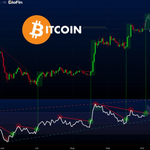
Bitcoin dominance has broken out of its 5-month downtrend.
Short-term pain ahead for alts, but it'll be a buying opportunity.

Aisha Jackson retweeted

The gap between stock and bond returns has never been wider.
Last 7 years:
S&P 500: +16.9% annualized
US Bonds: +0.4% annualized
That's a nearly 17% spread, the largest on record. Investors shouldn't expect a repeat over the next 7 years.
Video: youtube.com/watch?v=5LUZatUE…

Aisha Jackson retweeted

The Nasdaq fell 78% from 2000 to 2002. But that's not how anyone experienced it.
They experienced this:
– A 35% rally. Then new lows.
– A 12% rally. Then new lows.
– A 25% rally. Then new lows.
– A 41% rally. Then new lows.
– A 45% rally. Then the bottom, 30 months after the top.
Five times the market screamed "it's over." Five times it lied.
Former colleagues of mine lived through it on a trading floor. They told me what the routine became: by Thursday, you started praying for Friday afternoon. Not for the weekend. For the close. Two days where you couldn't lose money.
Then you walked out of the office with your head down.
That is what a real bear market does. It doesn't scare you out at the bottom. It exhausts you out, one false dawn at a time.
Bear markets don't end when the sellers are done. They end when the buyers are.


Aisha Jackson retweeted

$BTC dominance is hitting channel resistance again.
If it gets rejected here, money could start flowing back into altcoins.
Altseason watch is on.
