

Strategic Learning is a @StimsonCenter project offering comprehensive online courses on strategic dynamics with a focus on Southern Asia.
Washington, DC
Joined March 2017
- Tweets6.3K
- Following371
- Followers7.7K
- Likes204




Pinned Tweet
🚨NEW WEBSITE LAUNCH🚨
Strategic Learning is excited to launch our new and improved website! You can now easily access our free online courses, educational videos, and multimedia explainers, more of which are upcoming!
Visit the site here: stratlearning.org

Think you know how nuclear deterrence works? Test yourself. Our free courses break down missiles, submarines, and crisis risks in South Asia, taught by leading experts. Sign up now at stratlearning.org
Trump and Xi just met in Washington to manage US–China competition, including over arms sales. But, China is already competing in the weapons market, using Pakistan as a showcase for its submarines, ships, and jets. See more below in this reel from retired Air Marshal Rajesh Kumar.
India and Pakistan don’t have ambassadors in each other’s capitals, and even their cricketers won’t shake hands. With doctrines like “quid pro quo plus,” how do you keep the next crisis from spiraling? Watch retired Air Marshal Rajesh Kumar’s remarks on it here.
AI can now sift through metadata to build kill lists, and drones may soon decide who lives or dies. Supporters say it reduces human error. Critics say the promise of precision has failed civilians before. Watch this reel from James Patton Rogers to learn more.
One of Pakistan’s new Hangor-class submarines recently completed the live firing of a missile for the first time Like Pakistan’s Agosta-90B submarines, the Hangor-class uses air-independent propulsion (AIP). But what is AIP?

What is the process for attributing cyber-attacks? Sameer Patil (@SameerP_IND identifies three stages in this short video.
Nuclear deterrence, naval rivalries, cyber threats: South Asia's security challenges are complex. Want to understand them? Learn from leading experts through free online courses at stratlearning.org.
India and Pakistan have agreed not to attack each other's nuclear facilities. But does that agreement cover cyber-attacks or command and control systems? Watch to find out Sameer Ali Khan’s (@m33r_6 opinion:
Last year’s India- Pakistan crisis showed that the best air defenses are only as good as the networks behind them. Find out more about the systems required in this short video from Tanzeela Khalil (@TanzeelaMirxa).
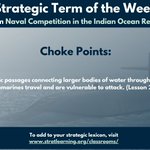
About 20% of the world's oil used to pass through the Strait of Hormuz. Diesel prices spiked amid the Iran war because of the Strait of Hormuz is what’s known as a choke point.

From drone strikes to naval rivalries, South Asia's security landscape is changing fast. Want to understand the concepts behind the headlines? Sign up for Strategic Learning's free courses on nuclear and naval competition: stratlearning.org
Ever wondered how drone warfare actually works? James Patton Rogers explains the way that algorithms are implemented in drone strikes in this short video.
With cyberwarfare becoming more relevant each passing year, check out this reel by Haleema Saadia to learn about techniques used in offensive cyber operations.
Drones dominated South Asia this week. Pakistan struck 10 sites in Afghanistan it says launched drone attacks, and a US drone firm signed an MoU with the Pakistan Army. Unmanned systems are fast becoming central to the region's security competition. But what is an unmanned vehicle?

Has Pakistan become a testing ground for Chinese weapons? Retired air marshal Rajesh Kumar explains the situation:
What is preventing India from fully integrating its military command structures? Find out what Anil Raman thinks:
Can India’s growing military power translate battlefield gains into lasting political effects? Retired brigadier Anil Raman explains his views:
