

CybersecurityASU alum | Open-Source Quantum Computing | Engineer/Producer | @BitViewAR
Los Angeles, CA
Joined February 2009
- Tweets35.7K
- Following1.3K
- Followers7.8K
- Likes217K




Steve Tippeconnic retweeted

BREAKING NEWS
The Royal Swedish Academy of Sciences has decided to award the 2026 #NobelPrize in Physics to Francis Halzen “for decisive contributions to the IceCube Neutrino Observatory and the discovery of high-energy neutrinos of astrophysical origin.”


Steve Tippeconnic retweeted

We’re sharing a solution to the Navier-Stokes Millennium Prize Problem, one of the deepest problems at the frontier of mathematics.
The proof was produced by a group of agents, using an OpenAI next-generation model significantly more capable than GPT-6 Astra.
The problem concerns whether the description of smooth three-dimensional fluid motion modeled by the Navier-Stokes equations can break down. It has remained unresolved for roughly 90 years.


Steve Tippeconnic retweeted
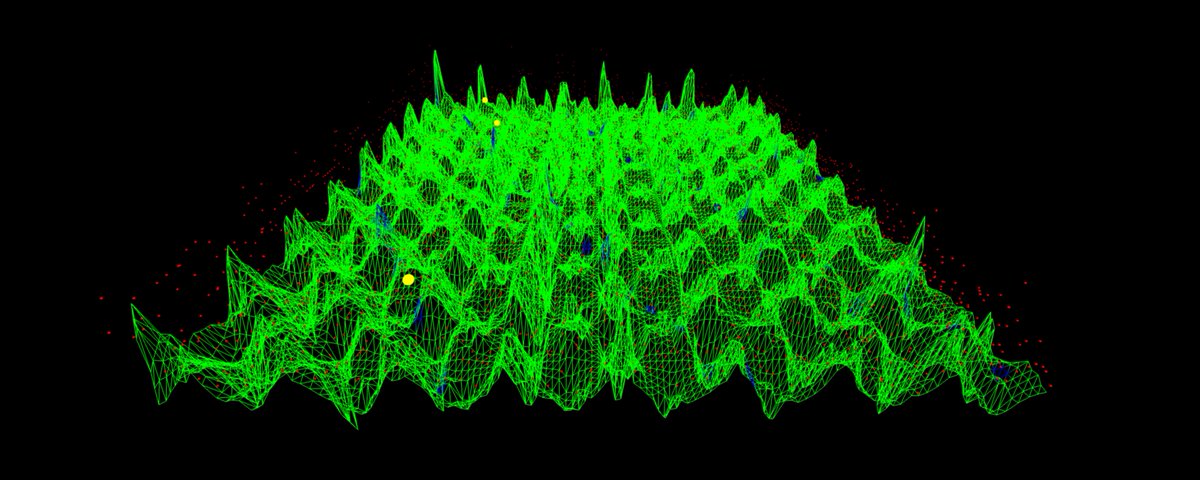
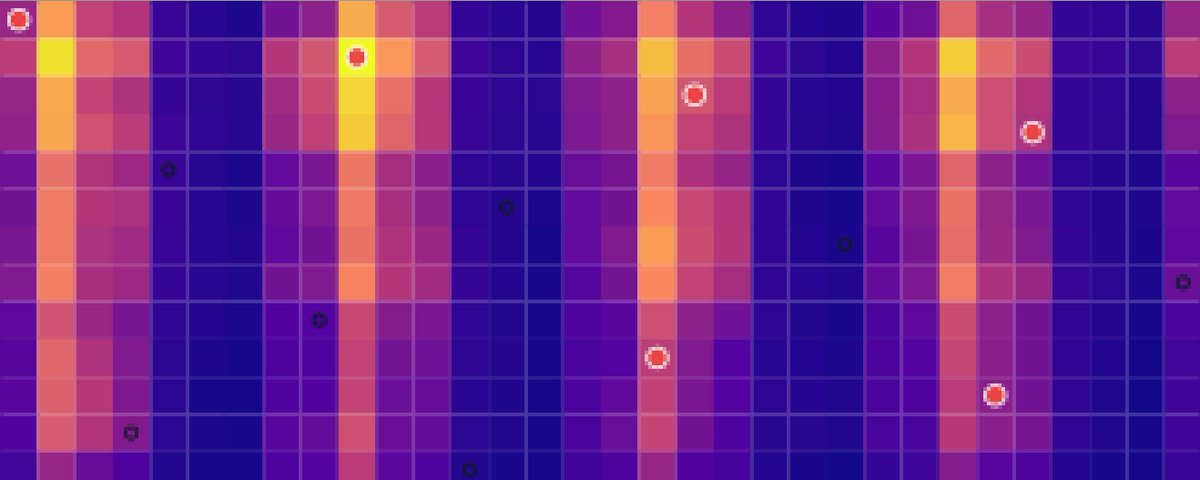
It’s surprisingly hard to recreate the 5-bit group-phase (arXiv) interference lanes and noise using modified quantum circuits or classical simulations (labeled 1-4 on threejs render and heatmap from paper). Here are some controls simplifying the oracle that show what happens when you remove or scramble different pieces of the structure. All circuits, calibration CSVs, raw results, backend data, and Threejs render code are open sourced on Qwork and GitHub.


New update to my arXiv 5-bit Shor-style ECC visual on Qwork (threejs code is open-source on GitHub). The surface amplitude now renders the complete backend dynamics, including the full tail, and the grid alignment maps the complete raw-count heatmap. This is my best render (so far) of the full experiment. Interact here: stevetipp.github.io/Qwork.gi…
Cool to see my 5-bit IBM quantum ECC key experiment get its second citation. Interesting paper on post-quantum migration and hybrid certificates for vehicular communications: arxiv.org/abs/2606.14008



qsrl v0.2.15 is up on GitHub. Detached signatures now work cleanly with encrypted ML-KEM recipient archives, Inspect/Verify correctly report embedded vs detached signatures, and the desktop UI now supports scrolling for smaller windows.


New update for qsrl v0.2.12 on GitHub. Added an Info tab for the desktop app, clarified the extract key labels for signature checks/encrypted archives, and cleaned up the form alignment across the UI.


Appreciate everyone trying qsrl out. Cool to see the first developer preview getting cloned and tested.


Here’s a video showing qsrl running through the full local encrypted archive flow, generating ML-DSA and ML-KEM keys, packing a folder into a .qsrl archive, inspecting it, signing it, verifying it, then extracting it by checking the signature with the ML-DSA public key, recovering the archive key with the ML-KEM recipient private key, and decrypting the AES-256-GCM protected payload.
New update for @bitviewar

imo the QFT on a Only, Real Oracle run is an interesting result here. In the full arXiv circuit, the aP + bQ oracle creates a 32-point periodic relation where the invertible-b ridge points decode to k = 7 through a + kb ≡ 0 (mod 32). But with a QFT only on a, the circuit lifts the low b region (b=0 to b=3), and the only consistent k = 7 point I keep seeing in the top raw peaks is (a=25,b=1). That’s interesting because it looks like the full relation is still encoded, but the QFT on a only exposes a low-b slice of it, with (a=25,b=1) surviving as the recurring k = 7 intersection.