






Steve Rayson retweeted

Which? magazine urges people to stop using Booking.com on the grounds they are hopeless at detecting scams on their site. Quite right too. Use Booking.com at your peril.

Steve Rayson retweeted

The biggest, and stupidest, myth in European politics, particularly popular in France, is that Europe suffers the consequences of "austerity" and "neoliberalism". In the biggest 5 countries in Europe, more than half of the population makes its income from the state, less than half from the private sector. This is what makes the problem of reducing the welfare state so impossible: more than half of the voters are net recipients. No surprise that Italy's budget has not been balanced in 100 years, France's in 50 years (ooh la la, l'austérité!!):
-France: 30 million from the state versus 21m private sector workers. State spending is 57% of GDP, taxes more than half the economy. The budget hasn't been balanced in the lifetime of most French (since 1974).
- Germany: 35 million adults from the state, versus 34 million from the private sector. 10% of the population is registered as severely disabled. Public spending is over half of GDP. Germany has had a continuous budget deficit since 2019.
-Italy: 23 million from the state, versus 20.5 million private-sector workers. Public spending is 51% of GDP. Italy has had a budget deficit every year since 1925, for 100 years.
- Spain more people get their income from the state since 2024: 18.21 million from the public sector versus 17.9 million people working in the private sector. Since 2025, Spain also had more government employees than self-employed workers (autónomos) for the first time in history. State spending is at 45%, budget has not been balanced since 2007.
- UK: 54% of households now receive more in state benefits than they pay in taxes. State spending is 44.5% of GDP, taxes (40%) are at their highest since 1950, the budget hasn't been balanced since 2001, and 1 in 5 new cars is paid by the government through a bizarre state disability scheme (Motability).

Steve Rayson retweeted

Of course it did--the USA is helping Putin. People need to accept that.

Exclusive: The order to limit a satellite system used by Ukraine for battlefield communications and drone operations came from inside the White House reut.rs/4i3T4iz

Steve Rayson retweeted

There's no more pretense.
The shameful truth is now clear.
By withholding critical Intel and Internet services, and lifting sanctions on Russia to replenish Putin's war machine, @realDonaldTrump & @elonmusk are now fully complicit. They're on Putin's side.
nytimes.com/2026/10/14/world… via @NYTimes


Steve Rayson retweeted

Some thoughts on the Budget

With weeks to go, all signs point to a ‘Phoney Budget’
John Healey’s first budget as chancellor looks set to be an anticlimax – here’s why
Read @BenZaranko's latest newsletter:
bit.ly/3WoA1Ij

Steve Rayson retweeted

🚣Burnham now seriously rowing back on Brexit/Russia in the Commons
He says: "It is a matter of record, Mr Speaker, that Russian actors sought to interfere in the 2019 general election, and we think it is inconceivable that this was the first time."
But on the Rest Is Politics he said: "I asked the question coming to Downing Street, was there interference in the 2016 referendum from Russia? And I've had the clear answer that yes, there was."
But "we think it's inconceivable" is very different to "clear answer" of successful interference.
Steve Rayson retweeted

NEW: The Chancellor’s fiscal ‘headroom’ could be larger than many expect, but spending pressures will be a key challenge for John Healey at the Budget.
🧵 Here are the main findings from our 2026 IFS Green Budget, funded by @NuffieldFound in association with @BarclaysCIB:




Steve Rayson retweeted

Government keep telling us they're getting a grip on this, but these numbers suggest otherwise.


Steve Rayson retweeted

£100,000 invested 20 years ago would need to be worth about £188,000 today just to keep pace with inflation.
Real profit: £0
Potential capital gain: £88,000
Investors are being taxed on non existent profits.

Steve Rayson retweeted

Proper journalism: how tagging works – Madeleine Spence, Sunday Times thetimes.com/uk/crime/articl…

Steve Rayson retweeted

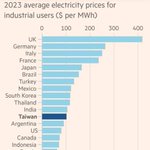
It isn’t credible to blame the rise in electricity prices since the mid-2000s on overseas conflicts. Industrial electricity prices rose by 30% in inflation-adjusted terms between 2010 and 2020 alone – ie between Iraq and Ukraine – while the wholesale price of gas fell.
Industrial electricity prices more than doubled between 2000 and 2020 while wholesale gas prices, even pre-Covid, had dropped by the end of that period to almost where they were at the start of it.


I want to be honest about how we’ve got to a place where British billpayers are paying some of the highest energy costs in Europe.
Over the past 40 years, we’ve given up control of our necessities, outsourced our essentials and privatised the basics. Water, transport, housing. And of course, energy.
Now the public are paying the price. We haven’t invested in the infrastructure we need. Conflict overseas has pushed up energy costs and it’s hurting our businesses and families.
That’s why we need to take back greater control of our energy system.
This week, I announced Great British Grid, which will speed up connections and push down bills.
We’re also giving mayors, local leaders and communities a stronger role. With funding for People’s Power projects, communities will be able to build solar panels on libraries and town halls, hydro schemes in rivers or publicly owned windfarms on local land.
But it’s not just energy we need stronger public control over. It’s also water, housing, transport and care.
So we’re repealing the ban on public ownership of water companies. We’re building more council homes than this country has seen since the end of World War Two.
We’re reforming the leasehold system so families aren’t squeezed for every penny. And we’re opening up home ownership for first time buyers who can’t rely on the bank of mum and dad.
This week I also announced my determination to introduce a National Care Service, to put people above profit and to give pensioners peace of mind.
Together, we’ll rewire the country from top to bottom so that it works for all people in all places.
That is the only way to put Britain back on the right path. It’s the only way to put power back in people’s hands. And it’s the only way we will bring hope again.
Steve Rayson retweeted

**EXCLUSIVE**
Manchester City chairman Khaldoon Al Mubarak met a senior UK government minister to discuss the UAE’s investments in Britain just days before the club’s guilty verdicts were announced.
Al Mubarak asked to meet Business Secretary Jonathan Reynolds on 14 September in his capacity as CEO of Mubadala Investment Company, the Abu Dhabi sovereign wealth fund, sources tell Bloomberg.
The pair held a private meeting in Downing Street on that date, the people said. Al Mubarak talked about current and future UAE investment in Britain, they said.
The conversation covered the full range of the relationship including defence, security, intelligence and trade, they said.
Eleven days later, on 25 September, the Athletic reported Man City had been found guilty of breaking Premier League rules.
On 29 September, the Premier League confirmed Manchester City had been found guilty of artificially boosting its balance sheet by more than £900 million.
The fact of the meeting so close to the verdict will raise further questions about the UK government’s handling of the case.
Andy Burnham has faced criticism, including from his own ministers and officials, after he publicly suggested Man City’s Abu Dhabi owners should not be disqualified from running the club because of the investment they bring to Britain.
Earlier, Bloomberg reported that Emirati officials have warned the UK government that the severity of the ruling could undermine their appetite for future grand-scale commitments in Britain.
bloomberg.com/news/articles/…

Steve Rayson retweeted
Nice country you've got here, would be a shame if something happened to it

Exclusive with @AlexDooler @DNair5
UAE officials have warned the UK government that the severity of Man City’s punishment could undermine their appetite for future grand-scale commitments in Britain, according to people familiar with the matter
They consider the Premier League’s actions to have an influence on the bilateral state relationship, the people said, asking not to be identified discussing undisclosed information
The extraordinary pressure comes after Andy Burnham faced criticism, including from within government, for saying Man City’s Abu Dhabi owners should not be disqualified specifically because of the investment they bring to Britain
bloomberg.com/news/articles/…

Steve Rayson retweeted
Exclusive: Andy Burnham has tasked Louise Casey and John Healey with plugging a multi-billion pound hole in his social care plan, after aides warned it could be delayed until the end of the next decade
The Treasury estimates that changes to the state pension outlined by Burnham will only raise around £5 billion a year by the end of the next parliament in 2034, according to people familiar with the matter
That is well short of what’s needed to pay for a free-at-the-point-of-use personal care service. The £15b a year savings from scrapping the triple lock only arrive in 2040
Burnham has asked Casey and Healey to look at how to fill the funding gap until then. He’s ruled out tax rises and more borrowing
Currently, there is no plan to pay for the care policy before 2040, government officials told Bloomberg. Without one, the implementation would have to be delayed to the late 2030s, they said
Another problem is that Burnham will simultaneously have to raise tens of billions of pounds to meet Britain’s NATO obligations to spend 3.5% of GDP on defence by 2035
The IFS has said that in order to meet the commitment the UK will need to find an additional £25 billion each year by 2035 in today’s terms
That leaves tens of billions of pounds of extra spending in the next parliament that will need to be funded
Burnham suggested in an interview with @BethRigby on Wednesday that the care plan could be delayed or phased to make it affordable
bloomberg.com/news/articles/…

Steve Rayson retweeted

Britain has an infrastructure costs problem. But what's causing this and how can we fix it?
HS2 will cost up to £102.7bn for 140 miles. Spain built the second longest high speed network in the world, 2,500 miles, for less.
It isn't just HS2 though.
Underground extensions cost twice the per-mile average of France or Italy, and six times Spain's.
Heathrow's third runway, excluding new terminals, is expected to cost 10 to 70 times more than other runways.
British trams cost more than double the European average.
Why are these projects so expensive? There are eight key reasons:
1. Planning: it took 14 years, £300m, and 360,000 pages for the Lower Thames Crossing to go from being designated a national priority to receiving permission.
2. Environmental and Habitats Regulations: these gave us the £216m bat tunnel and the fish disco, as well as an 18,000 page environmental statement to re-open just 3.3 miles of railway on an existing alignment.
3. Judicial review: of 36 legal challenges to approved major projects, only four forced a re-decision. All four were approved again, but fighting a legal challenge can add £120m+ to a project's cost and mountains of paperwork.
4. Funding: the Treasury pays, but cannot directly control a project's spend, so it instead requires long business cases. Once given funding, promoters don't have the incentive to build more cheaply.
5. Procurement: currently generalist teams rely on consultants and are more focused on social value than past performance and value for money.
6. Regulation: quangos and departments create regulation that they don't bear the costs of. E.g. new tram projects must pay for 92.5% of the cost of moving utilities, which means utility companies demand a completely new set of pipes and wires.
7. Lack of state capacity: Madrid trebled its metro at a tenth of London's cost led by nine in-house engineers. The DfT has the second highest staff turnover of any department and cannot effectively oversee a project from design through construction.
8. Centralisation: Mayors cannot fund and approve their own infrastructure. If they could, they'd have strong electoral incentives to build quickly and cheaply, as seen in France and Spain.
The good news is that every one of these is a policy choice, which can be reversed. Some fixes need only a letter from the right minister and none require significantly more spending.
My new @CPSThinkTank report lays out these fixes and how to lower infrastructure costs. If we implement them, Britain could once again build the infrastructure it desperately needs. cps.org.uk/wp-content/upload…


Steve Rayson retweeted

Burnham quotes make me worry he doesn’t understand how getting rid of triple lock can “fund” social care. Says no tax rises needed. But change to triple lock doesn’t mean spending falls, just rises less quickly. You can’t have free care without tax rises.
giftarticle.ft.com/giftartic…
