
Director in Microsoft's AI & Research group. Focused on medical imaging, imaging informatics, and bringing AI/ML to bear to solve difficult healthcare problems.
Kirkland, WA
Joined April 2009
- Tweets3K
- Following1.2K
- Followers1.8K
- Likes1.7K

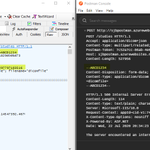







Shady companies out there... @useapolloio seems to be one. I get many cold calls from people who tell me the info is from Apollo.io. But the info is wrong - even my name. And Apollo doesn't have a way to fix it, except to point me to a form that doesn't work!


I just used a usage limit reset on #ChatGPT. I was a diehard Anthropic user, but I've moved almost 100% to OpenAI.
Steven Borg retweeted

I have watched this half a dozen times since @Nekodificador posted it.
"You think I use AI because I'm lazy? It's because it's fun. I'm not claiming that's art. I'm claiming it's fun."
I feel sorry for the artists who can't enjoy these new tools.
Steven Borg retweeted

The Great Inversion: AI Is Quietly Draining the Public Internet of Thought
Something profound is happening to the Internet, and almost no one is naming it clearly.
I have been cataloging it of the last 4 years.
For decades, the web’s most valuable resource wasn’t bandwidth or servers. It was the messy, public give-and-take of human questions and answers.
I was a Top Writer on Quora for nearly a decade as well as a massive pre-crazy Wikipedia contributor — I lived in the space of that give and take.
Someone would hit a wall, open a forum, type out the problem, and a conversation would form. Ideas were stress-tested in the open. Nuance appeared. Dead ends were marked. Better questions got refined in real time. That entire process — the friction, the disagreement, the collective thinking — was left behind as searchable, linkable, durable public knowledge.
That flow has reversed.
The same questions, the same moments of curiosity or confusion, are now more routed into private AI interfaces. A person opens a chat window, types the prompt, receives the output, and the entire exchange vanishes into a closed ecosystem.
The assumption we must make (because it is true) is that the AI company stores both the prompt and the response. The thinking that once would have become part of the shared human record is instead locked inside a corporate training silo.
This is not a minor shift in user behavior. It is an inversion of the Internet’s original knowledge architecture.
Public discourse is being systematically stripped of its higher-signal material. As the internet’s data gets more and more noisy in a very really way it is growing quiet.
The questions that used to generate the richest threads the ones that forced people to clarify assumptions, admit uncertainty, or synthesize across domains are the ones most efficiently answered by AI. What remains on the open web is increasingly the residual: lower-effort posts, performative arguments, recycled takes, and the questions that still feel too social or too ambiguous for a model.
AI then trains on that thinning residue, while the better thinking is captured privately and never returns to the commons.
The result is a strange feedback loop. The public Internet becomes less thoughtful precisely because the thoughtful interactions have been privatized. And the models, trained more and more on what is left behind, risk becoming increasingly fluent in the lesser exchanges that now dominate the surface.
This is not the usual complaint about “AI is making people dumber” or “forums are dying.” Those are symptoms. The deeper phenomenon is structural: the migration of human cognitive surplus from a public knowledge commons into private, non-reciprocal data reservoirs.
The Internet is no longer primarily a place where thinking is externalized and shared. It is becoming a place where thinking is extracted and contained.
The novelty of this observation is that it reframes the problem away from content moderation, engagement algorithms, or even AI capability. The core issue is architectural. We have inverted the direction of knowledge flow. What once leaked outward into a shared substrate now drains inward into silos that do not, by default, give back.
The long-term consequences are massive under-discussed as not noticed.
How does a civilization maintain a high-quality public epistemic environment when its best questions are no longer asked in public? What happens to the training data of future models when the richest human reasoning is locked behind commercial walls? And what cultural muscles atrophy when the habit of thinking out loud, in front of others, becomes rarer?
This is the silent inversion of the Internet. The data once destined for the commons is now shunted into AI. The thoughtful exchanges are disappearing from the surface, and the models are learning from what remains.
That is the novel dynamic. Everything else is downstream of it.
Steven Borg retweeted

For me, this has unseated ‘the young homeowners becoming their parents’ commercials as the best commercial on earth.
Steven Borg retweeted

Vibe coders everyday struggle in 15 seconds.
Readers added context they thought people might want to know
The original creator of the video is Nathan Doan, from Nathan Doan Comedy on YouTube, and the present watermark is not affiliated with him. The video is stolen and will result in losses for the original creator.
youtu.be/83cDUAJnyR4
Steven Borg retweeted

If the socialists had their way, Elon would have had his paypal profits taken and redistributed for the greater good.
The world would never have seen Tesla, nor SpaceX.
And the world wouldn't know it, because they were uncreated, and thus unseen.
Imagine the companies that don't exist, because Washington destroyed them before they were born.
Steven Borg retweeted

Programmers were asked to make the worst volume control for a contest
xitter.cf/fluxfolio_/status/1972…

Ouch! Alaska Air has had a bad stretch of IT issues recently (while integrating) Hawaiian. Website degradation &issues with the iPhone app. Then the IT outage grounding their entire fleet last week. And today there's an Azure outage that's impacting their website again. Oof.
Steven Borg retweeted

Engineering is the art of efficiently applying physics.
SpaceX Raptor v3 rocket engine is the epitome of the engineering mantra “The best part is no part” — Can't wait to see this marvel of aerospace engineering in action on Starship and Super Heavy Booster 🚀

Steven Borg retweeted

Want to know more about FHIR in your region? #Simplifier has introduced #FHIR jurisdiction overview pages so you can explore country-specific regulations & content 🚀
Head to the Simplifier website and click on any country on the map to try it out 👉 eu1.hubs.ly/H08-S0n0
Steven Borg retweeted

Everyone has a Test environment.
Some teams are just lucky enough to have a separate Production environment.
#devops #programming #agile
Steven Borg retweeted

I’m not crying, you’re crying
This is the most memorable 2 minutes you will spend today
Thanks, @JamesMaguire, for the opportunity! Generative AI has an amazing short term and long term future. It's quite the wave we're all getting to ride! #eweekchat

Thanks all! This has been another excellent #eWEEKchat. Serious insight about #GenAI – great to see this monthly gathering. Stay tuned for next month’s chat!
A8: Very, very fuzzy forecast! No one expected being radically connected by the internet would create an epidemic of loneliness, but it has. Likewise, gen AI will have many unforeseen effects – both positive and negative. #eWEEKchat
Q8. Your longer term sense of the future of generative AI? Say, even 2-4 years ahead? #eweekchat
Chip manufacturers, both major players and startups, are creating LLM-on-a-chip products. Although they will be locked in time (assuming offline updates), when fed with source data they will be very powerful edge tools. #eweekchat
Q7. How will generative AI influence related technologies, like edge computing or data analytics? #eweekchat