




Stefano Cacciatore retweeted

Optimizing Blood Pressure Care in Patients With Resistant Hypertension: 2026 ACC Expert Consensus Decision Pathway: A Report of the American College of Cardiology Solution Set Oversight Committee | JACC jacc.org/doi/10.1016/j.jacc.…

Very grateful to the @UF Institute on Aging for featuring my upcoming #GSA2026 presentation on redox balance and functional decline, using data from the Muscle Iron Flow Study 💪
Glad to have been selected for this competitive opportunity and looking forward to sharing the work as one of my two presentations at this year’s meeting, with support from the UF IOA Trainee Travel Grant and the GSA Health Sciences Section Travel Stipend.
🔗 tinyurl.com/ye2arbwb

Calling all my Boston-area connections interested in #robotics, #medicine, #medtech & #innovation 📢
🫀🤖 Inside Out: How Robotics is Reinventing Medicine
@SwissnexBosNYC, together with the @ETH Alumni Association, is hosting a seriously cool evening in Cambridge on the future of medical robotics.
📍 Cambridge, MA
📅 October 1 | 6–8 PM
🥂 Networking reception to follow
RSVP: swissnex.org/boston/event/in…
Definitely one to check out if you’re around!
@swissnexNetwork @ETH_en @MIT

Tomorrow #EuGMS2026 begins!
Wishing all friends and colleagues attending a wonderful few days together, filled with inspiring science, meaningful discussions and the pleasure of reconnecting with the EuGMS community.
Enjoy every moment of the Congress!
eugms2026.com/

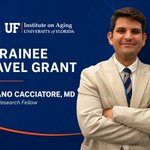
I’m very happy and grateful to the University of Florida Institute on Aging for awarding me a travel award to support my participation in the upcoming Gerontological Society of America (GSA) Annual Scientific Meeting 🏆
And just a few days ago, I received another great piece of news: I was also awarded the Health Sciences Section Travel Award directly from the Gerontological Society of America
aging.ufl.edu/2026/09/01/ioa…

The September issue of Longevity Brief is out! This month, I am looking at prevention across the life course.
linkedin.com/pulse/long-game…

Intrinsic capacity is a simple but powerful shift in how we think about aging.
Rather than focusing only on what is going wrong in the body, it asks what a person is still able to do: move, think, see and hear, maintain energy, resilience, and psychological well-being.
The question is not only: How long can we live?
But: How much capacity can we preserve as we live longer?
My interest the WHO Healthy Aging Framework began in 2023, when a lecture on the potential of secondary data analysis led me, during residency in Rome, to revisit a cohort of community-dwelling octogenarians through this lens. Since then, I have published work examining different layers of the construct, from its clinical and functional consequences to its links with inflammation and frailty.
I’m glad to see this concept circulating beyond academic and policy circles.
Ideas start to shape practice when they start to circulate.
🔗 nytimes.com/2026/08/26/well/…
#IntrinsicCapacity #HealthyAging #Longevity #Healthspan #Geroscience

How does treatment with GLP-1 and GIP/GLP-1 receptor agonists affect protein intake during substantial weight loss? Our new review on protein intake and the potential implications for muscle health and secondary sarcopenia is now published in Advances in Therapy 💪
🔗 rdcu.be/fBYGX
@KostasProko

🧩 The problem
Incretin-based therapies can produce substantial weight loss through reduced energy intake. However, in older adults, appetite suppression may also reduce absolute protein consumption at a time when adequate protein intake is particularly important for preserving muscle health.
🔬 What we reviewed
We examined the available evidence on dietary protein intake during treatment with GLP-1 and dual GIP/GLP-1 receptor agonists, and its potential implications for lean mass, muscle strength, and physical function.
Key points
🥩 Protein intake as a proportion of total energy appears generally preserved with liraglutide, but this does not necessarily mean that absolute protein intake remains adequate as total energy intake falls.
📉 Available studies suggest that absolute protein consumption may decline during incretin-based therapy, with preliminary evidence indicating more pronounced reductions with tirzepatide.
💪 Changes in lean mass should not be interpreted in isolation. Muscle strength and physical performance are essential to understand whether changes in body composition are clinically meaningful.
👴 This may be particularly relevant in older adults, who have greater protein requirements and reduced anabolic responsiveness, yet remain underrepresented in current trials.
🔎 Evidence remains limited, especially for semaglutide and in older populations, highlighting the need for studies integrating dietary intake, body composition, and functional outcomes.
Very grateful to receive the Trainee Travel Grant supporting my participation in the 2026 GSA Annual Scientific Meeting! A special thank you to the University of Florida Institute on Aging for the support 🏆
#GSA2026 @UF @geronsociety
🤖 Made with AI

How do sex hormones relate to muscle health during midlife, and does the relationship differ between women and men?
Our latest study, “Sex-specific associations of serum estradiol and the testosterone-to-estradiol ratio with handgrip strength and appendicular lean soft tissue in US adults aged 40–59 years”, has just been accepted for publication in Experimental Gerontology.
🧩 The problem
Sex hormones play an important role in skeletal muscle biology, but we still know relatively little about how estradiol and androgen-estrogen balance relate to muscle strength and muscle quantity during midlife, particularly from a sex-specific perspective.
🔬 What we studied
Using NHANES 2013–2014 data from 1,350 US adults aged 40–59 years, we examined sex-specific associations of circulating estradiol and the testosterone-to-estradiol ratio with handgrip strength and DXA-derived appendicular lean soft tissue index.
📌 Key points
👩 In women, lower estradiol concentrations were associated with more than twice the odds of low handgrip strength in the primary adjusted analysis.
🔄 This association was attenuated after additional adjustment for sex hormone-binding globulin, highlighting the complex interplay between circulating hormones and their bioavailability.
👨 In men, initial associations between estradiol, the testosterone-to-estradiol ratio, and muscle outcomes were substantially attenuated after accounting for adiposity and other demographic, behavioral, and clinical factors.
⚖️ Overall, the testosterone-to-estradiol ratio did not show an independent association with low handgrip strength after adjustment in either sex.
🧭 These findings suggest that sex hormones may be better understood as part of a broader metabolic and physiological context rather than as isolated determinants of muscle health.
Full article: doi.org/10.1016/j.exger.2026…
@KostasProko, Virginia Boccardi, Joseph McLean, Paolo Piaggi, Morten Tange Kristensen, @MathiasSchloegl

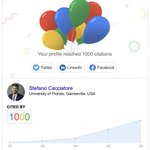
Goodhart’s law teaches us that when a measure becomes a target, it ceases to be a good measure.
And, after all, a number is just a number.
Still, it’s hard to ignore an email with colorful balloons 🎈

I am happy to introduce Longevity Brief, a new monthly editorial project built around a simple idea: science should help people live not only longer, but healthier lives.
Each issue will offer a concise and carefully curated selection of recent research on healthy aging and longevity.
The aim is to highlight a small number of studies that help us understand how people can maintain health, resilience, participation, and independence across the life course.
The first issue, From Biological Aging to Everyday Independence, is now available on LinkedIn.
It moves across several levels of aging, from molecular changes in skeletal muscle and blood to frailty, disability, mobility, and participation in daily life.
I hope Longevity Brief can become a useful space for clear, evidence-based discussion about the science of longer, healthier lives.
linkedin.com/pulse/from-biol…

Stefano Cacciatore retweeted

A new pubmed article led by #DavidSulman and @stecacMD on #CarotidPlaqueScore in @RCMjournal ☀️. Thanks all coauthors, and to the editorial team @Twinkle_IMR @SusieSu11733465 et al


How are GLP-1 receptor agonists and SGLT2 inhibitors actually being used in cardiovascular practice?
Our study “GLP-1 receptor agonists and SGLT2 inhibitors in cardiovascular practice: insights from a national survey of French cardiologists”, led by @SABOURETCardio, is now available as a preprint in Archives of Medical Science @ArchMedSci
🧩 The problem
GLP-1 receptor agonists and SGLT2 inhibitors have become central components of cardiovascular, renal, and metabolic care. However, less is known about how cardiologists initially incorporated these therapies into routine practice and which barriers influenced their use.
🔬 What we studied
Through the nationwide French GLUCOSE survey, we examined the prescribing habits and perceptions of 165 French private-practice cardiologists regarding GLP-1 receptor agonists and SGLT2 inhibitors.
📌 Key points
💊 Among cardiologists who regularly prescribed or recommended glucose-lowering therapies, SGLT2 inhibitors were the most frequently used agents.
❤️ SGLT2 inhibitors were mainly preferred in patients with heart failure or chronic kidney disease.
⚖️ GLP-1 receptor agonists were more frequently associated with weight reduction, established atherosclerotic cardiovascular disease, and inadequate glycemic control.
🚧 The main barriers to GLP-1 receptor agonist prescription included limited familiarity with injectable therapies, insufficient consultation time, and the perception that these treatments should primarily be prescribed by diabetologists.
🕰️ Since the survey was conducted in 2022, these findings should be interpreted as a snapshot of the early adoption of these two drug classes rather than as a description of current prescribing patterns.
These results provide interesting insights into how cardiologists differentiated the roles of GLP-1 receptor agonists and SGLT2 inhibitors during their early implementation and highlight the importance of education and multidisciplinary collaboration in contemporary cardiometabolic care.
Full preprint: doi.org/10.5114/aoms/226415
@MarcoBernardiMD, @LuigiSpadafora, @gbiondizoccai, @jamundus20, @giuseppe_ando, @maciejbanach


