

"Gorgeous, but far less informative than a map would have been"
London, UK
Joined June 2014
- Tweets548
- Following126
- Followers540
- Likes557





Laura Gilbert retweeted

i HATE how an engineer invented the correct way to write recipes like 20 years ago and nobody else ever used it


Laura Gilbert retweeted

Ukraine's targeting of Russian data centers is exposing the true nature of the online support for not just America's Republican party, anti-Ukraine and secession movements globally, but Germany's AFD as well.
This whole platform is just Russia's plaything, supporting the Russia/Musk/Trump global fascist movement.


A new president is certainly an idea....
'Time for Ukraine to get new president,' says Trump after Zelensky condemns diesel deal - BBC News share.google/ZSZmIWvgcpl8Dd0…

Laura Gilbert retweeted

We are concerned at the online polarisation that is affecting relations between British Jews and Muslims.
We also recognise that at this time, many Jews feel a very strong sense of alienation, isolation and rejection through political debates and actions.
We as Muslims empathise and you do not deserve this. There are times when moral clarity is essential and no ifs or buts - we stand with you and your safety and security.

Laura Gilbert retweeted

I mean no disrespect by this. But I do not believe lay magistrates should be able to deprive us of liberty for *two years*. It’s not what the system was built for. And there will be so many tragic miscarriages of justice.
Laura Gilbert retweeted

The loudest voices stoking fears about AI dangers have made tremendous headway in the past two weeks. AI technology has not taken some unexpected, dangerous turn, but the hype around it — propelled by what appears to be a well orchestrated PR campaign — has drummed up considerable fear. I worry that it represents a setback for our field.
I have written frequently that fears of AI are overhyped. AI’s capabilities can be uncannily human-like and unpredictable, and it’s rational to worry when people who are directly involved express concerns. But I see the problems as a sign of the engineering work that ahead, rather than insurmountable barriers or the sky falling. AI technology continues to advance — which is a good thing! — but technical advances, poorly understood by the public, give those who seek to generate hype repeated opportunities to do so.
First, I don’t see any step up in the risk of human extinction from AI compared to a few months ago. The theories about this remain the same fantastical, science fiction scenarios as a few months ago. The biggest change in AI risk is its cybersecurity capabilities — a topic which we should take seriously — but this, too, will not lead to the end of the world.
The most notable recent event leading to increased fear was when an OpenAI team deployed an agent swarm that hacked into Hugging Face. Much of the popular press contained significant hype. For example, some publications reported that a swarm of 1,200 agents carried out the attack. While this was technically accurate, as I write this, I have about 1,300 processes running on my laptop. Yes, the ability to get large swarms of agents to work in parallel on a task is a significant technical advance, And, in computing, many processes run at the same time. So this shouldn’t be seen as some magical capability.
Additionally, OpenAI’s buggy sandboxing and monitoring processes were key to enabling this incident. Fixing these bugs and putting in place improved monitoring would be appropriate fixes, not pausing AI. There are many well known ways to attack software systems. The main advantage of AI agents is that they are relentless. They will tirelessly try many tactics — and have the patience to chain vulnerabilities together — that previously would have taken an infeasible amount of human effort. But in the long term, I believe the advantage will lie with defenders (because they have more information with which to identify bugs, which they can fix), but the cyber-threat landscape has changed significantly. There are still bottlenecks to identifying and exploiting a vulnerability. AI agents still have to try a lot of things to see what works, and taking these actions takes time and might be detected by defenders. This is why, even though it is now easy to obtain versions of leading open weight models that have had their guardrails removed or weakened, so they will not refuse to try to execute cyber attacks, the world has not ended.
I am also concerned about the anthropomorphization of AI in a lot of reporting, where LLMs and agents are unnecessarily treated as if they were people. If I wield a hammer, miss a nail, and accidentally dent the wall, it’s not the fault of the hammer. The problem lies in how I used the hammer. Similarly, if I prompt an agent and it hacks into someone else’s system, the responsibility lies with me, not the agent.
Of course, we want to build systems that are as safe and predictable as possible. (For example, an unsafe hammer would be one whose head randomly flies off under normal use.) Today’s agentic systems are not predictable, but I see no reason why, by applying sound engineering practices, we won’t be able to make them extremely safe to use. One new element in the forecasts of AI-enabled doom is AI companies disclaiming responsibility for their own products. “I didn’t do it; my out-of-control agent did!” There’s a balance to be struck between the responsibility of the tool maker and the tool user, but when something goes wrong, let’s hold the people building and/or using the hammer responsible, rather than the hammer. (By the way, if you’re worried about AI bioweapon risk, David Bellamy has a great post on why this, too, is overhyped. Briefly, the bottleneck in building a bioweapon is not intelligence, but lab work and manufacturing.)
Pausing AI progress will create much more harm than benefit. First, our adversaries will certainly not slow down. Second, engineering requires discovering problems empirically so we can fix them. If we pause AI by a decade, we will also delay finding and implementing safety engineering fixes by about the same duration.
Of course, the incentive to stoke fears — for regulatory capture, to garner attention, or to make one’s technology seem more powerful — remains the same as before. Disclaiming responsibility is a new one. Taking a hard technical look at the actual risks however, I see little factual basis for the degree of fear that’s been stoked up. We still have hard research and engineering work ahead to improve AI safety, but the beneficial applications continue to vastly outweigh the risks, and we should keep building.
[Original text (with links): deeplearning.ai/the-batch/is… ]

Laura Gilbert retweeted

I’m sure it’s nothing.
25/08/26
CIA Director visits Moscow
12/09/26
Russia flies drone across the Suwalki gap into Kaliningrad in an apparent attempt to test/analyze air defense layers.
17/09/26
Russians are increasing availability of military use hospital beds in their northwest regions by 20,000. -Kyrylo Sazonov
17/09/26
* Tusk makes his strongest warning yet.
* He says Polish, NATO, Ukrainian and U.S. intelligence indicates Russia may be preparing possible drone and missile attacks against countries supporting Ukraine, including NATO countries.
* Tusk says such attacks could potentially be designed to look accidental.
* He warns that Russia could use ambiguity to test whether NATO would invoke collective defense.
17/09/26
* French President Emmanuel Macron convenes French intelligence and security officials.
* France increases attention to Russian hybrid threats, critical infrastructure, cyber activity and drones.
* Macron emphasizes that Europe should prepare for Russian actions without assuming that every incident represents a conventional military attack.
17/09/26
“We are a nation that may lose territory, but we will never lose our soul; we may surrender territory, but we will never surrender our Homeland.” Karol Nawrocki
17/09/26
We know he (Putin) is plotting something.” “Poland and the Polish people cannot, under any circumstances, afford to be naïve or engaged in wishful thinking. We must base our actions on facts, and those facts are unequivocal.”
18/09/26
“We must remain united in the face of crises” Emmanuel Macron
18/09/26
“The (UK) government wants us all to start preparing for severe disruption to our lives. It wants us to start stockpiling canned food and drinking water, strengthen our civic resilience, and plan for the possibility of war.” BBC
18/09/26
“Germany is readying hospitals for a potential conflict with Russia, Lithuania has revised its evacuation plans, and NATO troops are drilling in the Baltic region, while Belarusian forces have carried out large-scale maneuvers near the Lithuanian border.” Politico
(These training maneuvers simulated incursions into the Suwalki gap.)
18/09/26
Latvia confirms Polish intelligence reports indicating that Russia plans to send small special operations teams across NATO borders in an attempt to test NATO’s article 5 response.
HEAR HEAR

I was a very fortunate kid. My dad's GP surgery sat between the Dell and Hampshire's County Ground, so at weekends I could go to a game and get a lift home afterwards. It left me with a passion for both sports and a belief that sport opens a window onto who we are.
When I was growing up, the Tebbit test was a matter of intense debate. Which side did you cheer for at the cricket? For all the criticism it received, it was a test anyone could pass. If you supported England because you saw it as home, you were part of the team regardless of the colour of your skin. Born in Southampton, 10 year old me passed it without even knowing about it.
Giving the @MCCOfficial's Cowdrey Lecture on Thursday made me think about cricket's place in our national life and the current arguments about identity.
In Britain we've built the world's most successful multi-faith, multi-ethnic democracy. I was a beneficiary of it. Whatever issues people had with me as PM (and there was no shortage) my race and religion weren't among them. I could read a lesson at the King's coronation or light Diwali diyas on Downing Street with my daughters without controversy. Foreign leaders assumed these must be huge symbolic moments. For most Brits, they just weren't that big a deal.
But Britain's democratic achievement is now under strain. Some of the challenges are ones I've written about before, like Islamism, and the failure of governments, including the one I led, to adequately control immigration. But something else is going on - a risk that we start equating skin colour with nationality.
After I left office, a debate kicked off here on @X about whether I was English at all, because I was a "brown Hindu". During the election campaign I'd been shocked when footage was broadcast of someone calling me a "Paki." It was shocking precisely because it was so unusual. That kind of abuse had simply not been a feature of my political life. But the Englishness argument was stranger still. Call it the reverse Tebbit test. If you're not white, it no longer matters who you support at the cricket, because you can never be English. It's a test no non-white person can ever pass.
I have no truck with people who offend our sense of fairness and come here illegally; I spent half my premiership trying to deport them to Rwanda. I think the bar for legal migration should be high. It is entirely possible to want a radical reduction in immigration and a far more robust approach to integration, and still totally reject the attempt to turn Britishness into a DNA test.
If you're born and brought up in England and view it as home, what are you other than English? Denying people their Englishness or their Britishness because of the colour of their skin is a recipe for alienation and a two-tier society. How are children who hear this meant to feel?
Sport can play a small but significant role here. Cricket is played by nearly every major ethnic group in this country. Ask what my largely white rural constituents in the Dales and the British-Asian kids in Bradford have in common, and the answer is cricket. If cricket can produce England teams in which every kid can see themselves, the impact reaches far beyond the boundary.
As I write in @thetimes today, we must all be on the same side, cheering for the same team.
We cannot allow race to be reintroduced into our politics. We cannot allow Briton to be set against Briton.
Yup me too. Pee in whatever bathroom you like. Just make sure you aim properly.
Ladies, this is gaslighting. Trans people are not the problem, they have their own issues and in most measurable dimensions their issues are worse than mine.
The problem is RAPISTS - PLEASE focus.


Laura Gilbert retweeted

I don’t know what warped logic drove Putin to blow up a stationary Ukrainian locomotive on the Polish border this morning. What we can say for sure is that this is the kind of random and senseless attack Ukrainians are enduring every day - even on civilian railways. So far Putin has been responsible for the deaths of 1700 staff of Ukrzaliznytsia - Ukrainian Railways. They and their daily passengers are absolutely heroic.
When are we going to give them the air defences they need? Why won’t we unfreeze Putin’s cash and give it to Ukraine? There is more than €140 billion in a Belgian bank account - and about £10 billion in London. Britain could show a lead.
The Ukrainians are going to win - that much was clear from the last three days in their wonderful country. But we will get this dreadful war over much faster if we all get serious and give them what they need and deserve.
Laura Gilbert retweeted

anthropic dropped a 154 page threat report and some of this shit is absolutely insane.
> alibaba allegedly sent 151M+ exchanges to claude to help train qwen
> moonshot and deepseek allegedly secretly routed millions of real user conversations through claude while users thought they were using kimi and deepseek
> a weapons group used multiple claude instances as an engineering team, test fired a guided rocket, failed, then asked claude to figure out what went wrong
> zhipu used 273 fraudulent accounts to extract claude’s chain of thought and used claude to clean, score and improve its own training pipeline
> a russian hacking group used claude across an espionage campaign and even had malware rewrite itself when security software detected it
> researchers tried using claude for potentially dangerous biological research
> governments used claude for surveillance of dissidents, journalists and activists
what the actual fuck


We're publishing our most detailed threat intelligence report to date.
It covers how people tried to misuse Claude—for cyberattacks, influence operations, surveillance, biology, and building weapons—and how we found and stopped them.
We disrupted every operation in the report, and used the lessons from them to strengthen our safeguards. Where appropriate, we also shared what we found with authorities and other AI companies.
These cases are not typical: we’re highlighting some of the most sophisticated misuse we’ve seen. But they’re especially important to discuss, because they show us where AI misuse is headed, where our safeguards work, and where they need to improve.
We’re publishing this report so others can spot the same activity on their own platforms, and so we can give the public a clearer view of how emerging threats develop.
Read the report: anthropic.com/threat-intelli…

Laura Gilbert retweeted

This post looks like the start of a VERY sophisticated and well-funded PR operation to get support for Democrats to regulate AI into oblivion. Let me show you how it works:
1.) This guy, with minimal followers and no previous account activity, goes to the Wall Street Journal which publishes an exclusive with quotes from him on his resignation 18 minutes BEFORE this post goes up. Planning was clearly done in advance.
2.) Within hours, it has tens of thousands of reposts and the account has 100k+ followers. The post is punchy, quotable, it almost seems professionally written. The first three accounts to quote tweet it all do so within 15 minutes of the initial posting. Remember, this account had basically zero engagement beforehand, so an organic reach explanation seems unlikely.
According to Grok those accounts are @_NathanCalvin (General Counsel at Encode AI), @peterwildeford (Head of Policy at the AI Policy Network), and @DKokotajlo (Head of the AI Futures Project), all of which are up-and-coming AI-Doomer policy advocacy nonprofits.
The AI Futures Project website says it is funded “primarily” by the Survival and Flourishing Fund, which says on its own website that it has advised Jaan Tallinn, Skype creator and one of the leading investors in Anthropic, to grant over $2.5 million to the AI Futures Project since 2024.
Encode AI says on its website that it is ALSO funded by the Survival and Flourishing Fund, which in turn says that it told Anthropic investor Jaan Tallinn to grant $516,000 to Encode AI in 2025.
And wouldn’t you know it, the Survival and Flourishing Fund ALSO says it told Jaan Tallinn to grant $2 million to the AI Policy Institute, the 501(c)(3) affiliate of the AI Policy Network, as well.
What are the odds that the first three quote tweets of Coxon’s post would all be major AI-restriction policy advocates funded generously by the same donor, who also happens to be one of the leading investors in, and a board member of, Anthropic, the company Coxon was resigning from? And all within 15 minutes of posting (two within ten)?
3.) Jacob Coxon doesn’t have much of a resume, but we do know that, in 2022, he got a $20,159 scholarship for the “long term future scholarship program” from the Good Ventures Foundation, one of the philanthropic vehicles of Dustin Moskovitz, a notorious AI-doomer who has spent tens if not hundreds of millions on policy advocacy to strictly regulate AI, while also being an Anthropic Investor himself.
It also just so happens that the 14th person to quote Coxon’s post was @MaxNadeau_ (27 minutes after posting) who is the program officer for the Technical AI Safety team at Coefficient Giving, another of Moskovitz’s philanthropic spending vehicles. Max is not a frequent poster, his last posts before quoting Coxon were before Labor Day, but he was remarkably quick off the mark for this one.
4.) Basically every major Democrat politician and candidate has suddenly glommed on to this post, and conveniently, as the people cry out foe answers, Bernie Sanders already has a bill written to “ban super intelligence” and regulate AI into oblivion, and will be releasing later this week. The bill, among many other things, will create “a new cabinet-level federal agency to safeguard the public from the dangers of artificial intelligence” that will be “advised by an Artificial Intelligence Advisory Board comprised of experts on artificial intelligence.” Do you think, perhaps, Anthropic and its many investors who fund AI policy advocacy might have interest in getting to place a pet “expert” on the board of an entity that dictates what AI is and isn’t allowed to do? And isn’t it fortuitous that this whistleblower came forward with his oh-so scary stories so close in proximity to the release of the most radical piece of AI legislation ever introduced?

Laura Gilbert retweeted
I am deeply uncomfortable with this. I’m a British Zionist Jew who believes that the principal obstacle to a 2-state solution since 1948 has been the Palestinian leadership. But I want absolutely nothing to do with settlers and settler violence.

Laura Gilbert retweeted

I resigned from Anthropic today. I spent the last three years doing pretraining research at both OpenAI and Anthropic. Neither company is acting responsibly. They are racing straight to self-improving superintelligence and gambling with our lives. More thoughts below.
Laura Gilbert retweeted

🚨 Forty-eight headlines for a fantasist, twenty for a jailed briber: what the Mail's coverage of Jason Arday and Nathan Gill reveals.
Two men. Two very different stories. One outcome that should trouble anyone who thinks newspaper attention bears some relationship to the seriousness of what it reports.
One clarification before the numbers: Jason Arday was found dead on 14 August. Articles reporting his death and its aftermath are excluded from the main count below and dealt with separately in their own section, for reasons explained there. No equivalent exclusion applies to Nathan Gill's total, which already includes his sentencing, in November 2025, and the reaction that followed it.
Jason Arday, until his resignation, was a professor of sociology of education at the University of Cambridge. He stood down amid allegations of plagiarism in his PhD thesis and a string of fabricated personal claims: an invented quote attributed to Rafael Nadal, disputed accounts of a car accident and locked-in syndrome, a claimed 400-mile marathon run on a broken leg. No allegation against him has ever suggested unlawful conduct.
Nathan Gill, formerly leader of Reform UK in Wales and a Member of the European Parliament, pleaded guilty to eight counts of bribery under the Bribery Act 2010. Between 2018 and 2019 he accepted around £40,000 to make pro-Russian statements in the European Parliament at the behest of a Ukrainian politician later described in court as a Kremlin "pawn." In November 2025 he was sentenced to ten and a half years in prison, the first British politician ever convicted of bribery.
A search of MailOnline's own archive returns 70 items for "Jason Arday" across articles, videos and one podcast entry. A page-by-page audit, checking every item against the search results' own timestamps, identifies 11 as tangential, ranging from an unrelated Knights of Malta story to a separate broadcaster dispute where Arday is at most a passing comparator, and 5 as published from his death on 14 August onward, leaving 54 pre-death items substantively about him. Six of those 54 are same-story republications, an article and a companion video, or a headline re-run within the hour, and are merged here into a single count each, since counting a story twice because it appeared in two formats would overstate the total. That leaves 48.
A parallel search for "Nathan Gill," a name shared with an unrelated footballer, returns 22 items once filtered to those genuinely about the jailed politician; the same standard applied to two same-day wire-service republications there brings that to 20. This piece uses 48 and 20, covering Gill's case in full, guilty plea through sentencing and its immediate political aftermath.
One further judgement call is worth flagging rather than smoothing over. Seven of the 20 Gill items are more precisely about Nigel Farage's or Reform UK's response to his conviction than about Gill himself. Including them, which this piece does, treats the political fallout of his case as part of its coverage, consistent with how Arday's institutional fallout, Cambridge's hiring review, the teaching union's statement, is counted on his side; excluding them would reduce Gill's figure to 13.
On the outlet's own numbers, then, and counting only coverage generated while Arday was alive and the allegations against him were still live news, an academic accused of fabrication and plagiarism, but of no crime, received close to two and a half times the coverage given to the complete case of a man who corrupted a legislature at the behest of a hostile power and was jailed for a decade.
Two kinds of disproportion
Before I retired, I taught a university module on moral panics for many years. Stanley Cohen's original account of moral panics turns on the idea of disproportion, a gap between a phenomenon and the scale of reaction it provokes. Speaking at a British Academy discussion in March 2007, revisiting his own thesis some three decades on, Cohen distinguished two ways that gap can operate.
'Internal' disproportionality is straightforwardly demonstrable: a claim about scale or frequency is measurably exaggerated against the facts, a rise in numbers overstated, a threat described as more prevalent than the evidence supports.
'Comparative' disproportionality works differently. It asks why one phenomenon attracts vastly more attention, investment and column inches than another that causes demonstrably greater harm, while acknowledging a genuine difficulty: there is no agreed scale for weighing human suffering, so declaring one harm objectively "worse" than another risks the analyst's own values doing the measuring.
The Arday coverage is not, in the main, a case of internal disproportion. Much of what the Mail and others reported was independently verifiable and substantially true; the fabrications, once surfaced, were real. This is not a story about invented facts.
It is a textbook case of comparative disproportion, and here Cohen's own caveat about measuring harm turns out not to apply. He was right that there is usually no scale for weighing one social problem against another. But the Arday/Gill comparison does not ask an analyst to make that judgement, because it has already been made, formally, by the state.
A Crown Court judge assessed Gill's conduct as warranting one of the most severe sentences available for a non-violent offence. No court has been asked to assess Arday's conduct at all, because none of it has been alleged to be unlawful. One case carries an official, judicially determined severity marker. The other does not. And still, before Arday's death closed his story, the coverage ran roughly two and a half to one in the opposite direction.
Two different kinds of story
The disparity in volume is only part of what the Mail's archive shows. The two bodies of coverage behave differently.
Gill's press presence is a single track: charge, guilty plea, sentencing, reaction from politicians he once sat alongside. Every headline is a variation on the same court-process update, because there was, in a sense, nothing else to report; the story had a beginning, a legal process, and an end.
Arday's pre-death coverage instead splintered into self-sustaining clusters, several of which have no equivalent at all in Gill's file.
There is a steady drip of new fabrication "reveals," each one a fresh catch in its own right. There is a run of named-columnist commentary, Guy Adams, Amanda Platell, Richard Littlejohn, Boris Johnson, treating the case as an occasion for argument about diversity hiring and "wokeness" rather than the underlying facts. There is a strand of institutional fallout: Cambridge's hiring practices under review, a college withdrawing support, a teaching union distancing itself. There is a strand about the journalist who first raised concerns, and the police force that investigated him.
A story that generates new angles faster than it can be exhausted, rather than following a single case through to its legal conclusion, is not simply getting more coverage. It is behaving like a different kind of story altogether, one where the underlying facts, however real, have been recruited into a pre-existing narrative that has its own momentum. All of this happened, and the count above reflects only what happened, while Arday was alive.
A note on the coverage since his death
Five further articles in the Mail's archive are dated from 14 August onward: reports of his death, his family's statement describing a "campaign of misinformation," and an account from a friend of his final hours. These are excluded from the totals above deliberately. Reporting a death, and its immediate aftermath, is a different journalistic act from reporting a scandal, and including it would risk making the comparison look more extreme than the scandal coverage alone can support.
The point of this piece is not that five additional articles were written after a man died; it is that even without them, the pre-death total already dwarfed the coverage given to a proven, decade-long prison sentence.
That some of the coverage stands accused, by his family and others, of having crossed from reporting into hounding is a separate question this piece does not attempt to settle, but it is one the numbers above make harder to dismiss.
What the numbers actually say
None of this requires arguing that any individual Mail article about Arday was inaccurate, or that Gill deserved worse treatment than he received. The claim is narrower and, for that reason, harder to dismiss: that press attention, measured in a national newspaper's own headline count, bore almost no relationship to the comparative severity of what had actually happened.
A newspaper is free to decide what its readers want to read. What this comparison shows is what the Mail actually decided: an unproven, non-criminal allegation drew nearly two and a half times the coverage given to a proven corruption of Parliament by a hostile foreign power. Judged by harm, that ordering has no defence.
What drove it instead was not harm but utility, a story that could be made to serve an argument the paper wanted to have anyway.

Laura Gilbert retweeted

Isabel Oakeshott, the woman who signed an NDA, took Matt Hancock’s private WhatsApp archive and handed the whole lot to the Telegraph because public interest, now clutching her pearls because a paper is looking at her partner’s finances.
The same journalist who built a career on other people’s confidential messages, leaked cables and unsubstantiated pig stories suddenly discovers that scrutiny is intimidation and “ocean-going nonsense” the moment it lands near Richard Tice
Nothing more revealing than a professional privacy invader discovering she prefers her own privacy intact. Cry me a river, indeed.👇👇


Laura Gilbert retweeted
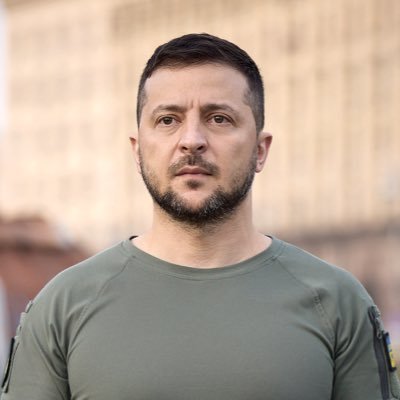
I received a report from Air Force Commander Anatolii Kryvonozhko. The Russians prepared a massive attack several days ago, and there is a high probability that the strike will be carried out tonight. It is important that our partners fully understand what is happening and that the protection of lives directly depends on their readiness, or lack thereof, to help us with air defense missiles. First and foremost, this concerns the United States and those partners that have Patriot missiles and can provide them to support our defense. Every partner knows what is needed and fully understands the consequences of marking time. Please, in all regions of Ukraine, pay attention to air raid alerts today and stay safe.