

MTS @FactoryAI slinging caffeine at https://xitter.cf/t.co/ZCDCTBUBvu
Joined September 2024
- Tweets223
- Following255
- Followers392
- Likes6.3K








Pinned Tweet
Been seeing some SF coffee tier lists floating around, and coffee is like 50% of my personality so heres mine. SF has maybe the best coffee scene in America, mostly because of the density of talented baristas (SF consistently places top 5 in the US barista championships!)

Shashank Sharma retweeted

As the world’s largest alternative asset manager, @Blackstone requires the highest standards of deployment flexibility and governance.
Factory made it possible to operate agentic software development within Blackstone’s own data centers without compromising model choice or workflows.
Shashank Sharma retweeted

how I scaled my design workflow for a global billboard campaign that is live in NYC, Tokyo, London, and cities around the globe using coding agents in @FactoryAI 🧵🧵🧵
this thread is focused on using coding agents to reformat design assets for dozens of billboard panels that are often grouped, cropped, and placed in unexpected ways and less about designing the original motion graphics concept (which was created using a combination of generative AI video footage, and overlay graphics created with code / figma). Before coding agents, formatting all of these panels to spec would take hours / days of non-creative work...
Since this blew up, self plug for the only objectively and not at all biased S+ coffee popup in SF (and we have some great bagels too): instagram.com/mint.manor/

Some glaring omissions, I apologize I just completely forgot:
- St. Frank: A tier, and Juniper is probably my favorite bakery in SF atm (operated by st frank!)
- Spro: Wild fox is just better spro (also operated by the same people)
For the best pour overs, go to Kope House or TCM. For vibes, hedge has a gorgeous space. The pop up scene in SF is also great and showcases the care people put into the craft of coffee (self promo follow instagram.com/mint.manor/). Other favorites in the bay include The Crown in Oakland and the best cortado ive ever had was at Kaizen in San Mateo. All of these places deserve a try, the coffee here really is just that good.
Pictured: @walk_hild helping a drone in our office find its way to its own cloud environment


Shashank Sharma retweeted

Factory is a product company. In a year when a lot of smart money is betting on neoservices that is starting to sound contrarian.
The AI wave makes it tempting to sell outcomes and deliver them with people. We think the bigger opportunity is software that gets better every time it's used. That's what we build for our customers, and it's how we run Factory.
The products we build should help our customers build their own capacity to ship better software, faster. We think of the product as everything from the first time you hear about Factory through your Nth renewal.
Building the right product starts with the old advice: listen to your customers' problems, not their solutions. In 2023, many people believed we should have built autocomplete. We understood that we instead had to build toward self-improving software and software factories, since that is what would come next.
That is our product goal: self-improving software, which continuously improves from the data feedback loop of its users. Self-improving software doesn't happen on its own. You have to be data-backed and optimize the signal → deploy loop. That requires a software factory operating continuously and evolving alongside the software it produces.
The factory also has to know what good looks like. It has to help the organization extract its tacit knowledge and embed it into the software that operates the business. Taste is not sufficient. You must enforce the unique decisions that define your product. And it doesn't stop at the product. The entire company is going to be defined by software that listens to the rhythm of the business and enforces it. The clear goal of a leader is to ensure the quality and correctness of these systems.
We run Factory this way. Our unique product and technical decisions are codified as customizations to our harness, automations, CI/CD, lint rules, etc. Factory agents sit in our shared Slack channels, where they build context and execute tactical work on demand.
It also changes how we organize. Your Engineering, Product, and Design team will ship your org chart, so you must design an organization where incentives are maximally aligned. Our pod structure maps directly to our product taxonomy, which gives each pod deep expertise and agency. We work carefully to make sure the product feels cohesive and not like multiple disconnected teams. This is not easy, and we still haven't perfected it. We keep the minimal number of layers between leaders and the organizational lines. 1:25 is not unreasonable for a true people manager.
Our product operating system is itself self-improving software. It aggregates feedback, tracks launches across the team, and organizes our work. With it, our Head of Product @TaylorTheSavage runs a product surface that would otherwise require an army of PMs with just a handful of high-ownership, high-leverage ones.
When an org is designed this way, its impact scales with software, not headcount. That is the real difference between a product company and a services company. Selling outcomes is right. Delivering them with people is services. Neoservices arbitrage the gap between how fast the technology moves and how fast buyers adopt it, and some will become large businesses. But that gap closes every time a product company sells the same buyer a better long-term solution. The market already knows how to value services: Infosys does about $20B in revenue and trades at roughly 2x, not 50x, and it's down about 40% this year.
Being a product company is harder. @danlovesproofs once told me something I very much agree with. Product companies are like movie studios. You have to keep producing blockbusters, and that helps you build talent, brand, and resources. Gone are the days when you could coast on one hit. Do that, and you'll be acquired by Bending Spoons at a fraction of your value. The war is always being waged, and no winner is ever truly ahead by much. And demand for the movies is up.
That's true even against the model labs. There is a value gap between the models and outcomes for users. Anyone can close that gap, and there's no reason to believe any company has an automatic right to win the products that matter most. If anything, access to the full pareto frontier of cost and quality gives model-independent, product-focused companies a focus, cost, and quality advantage.
If someone asked me what to build today, I'd say go build a product company. It is harder, but the biggest outcomes are only possible through product.


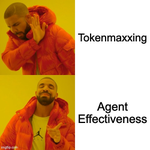
Automations are sick! As Factory's Chief Vibes Officer, my performance review measures the number of laugh reacts I can farm in Slack. To help me nail my quarterly KPIs, I have a very carefuly curated meme automation that reads our slack and news about factory (been a busy week for some reason) and uses droid's image gen to make memes, and it learns from its previous posts. Try em out now

Shashank Sharma retweeted

Great day to deliver shareholder value :)
Use Factory to automate the low-leverage work and building becomes so much more fun.
And the auto-model router means I don't need to remember which of the 10 models that came out this week is best.
Shashank Sharma retweeted

this is like drake v kendrick for people who know what embeddings are

You are a struggling second tier competitor that is more unethical and lying just because you have no decency or sense of proper behavior and shows your desperation. Straight out lying about if Chris being fired I thought would be below even you.
Readers added context they thought people might want to know
Khosla is an investor in both Cognition and Factory. khoslaventures.com/category/enter…
Shashank Sharma retweeted
We are terminating Chris Degnan for unethical conduct involving Cognition.
The last few months have seen incredible progress in AI capabilities. San Francisco has flourished as new companies that solve new, more ambitious problems are finding great success. Generally, it is a wonderful time to be building.
We at @FactoryAI have seen overwhelming interest in our model-agnostic coding agents and our software factory product. Our team has 10x’d in size, while our revenue has 100x’d year over year. This momentum has been unprecedented.
A much larger competitor, Cognition (makers of Devin) has fallen behind us on the capabilities that matter most to customers: cost, quality, and security. Instead of competing in the market, Cognition engineers feigned interviews with us to pry information about our product. Not finding what they were looking for, Cognition has decided to throw their weight and money at people with direct knowledge of our most confidential plans.
It feels as though ethics is being thrown out of the window in the AI era. People are willing to do anything, including exploiting privileged information and violating ethical boundaries. I think this is unique to our time, and I don’t think it’s right. Integrity still matters.
Yesterday, I made the decision to immediately terminate Christopher Degnan’s roles as a Board Observer and Advisor to Factory, after over a year of service.
Prior to this decision, Chris told me he had a casual conversation with an executive at Cognition AI. When I questioned his intentions, he reassured me that ethics aside, he had “made too much money” and was “too lazy to go work for Cognition,” which I trusted and believed.
On Monday, Chris spent time advising the Factory team on a handful of confidential board-level matters. That evening, he called me to say that the conversation that was initially described as casual and one-off was actually formal and recurring. For weeks, while he sat in our board meetings and advised our leadership team, he was also confiding with executives of our largest competitor. Chris was subject to confidentiality obligations in connection with his work with Factory. We do not know the extent of the information he shared, but it puts his timely questions about our product roadmap and what the parity gap involves into a new light.
It is sad to sever a relationship with someone who has been a trusted advisor - and even a close friend - for over a year. But Chris’s conduct is unacceptable to me. Trust in Board Membership is one of the sacred bonds in the Silicon Valley, one that helps the startup ecosystem thrive. With it comes an enormous responsibility. That trust was violated.
Competition is good. I respect and in many cases admire our competitors. San Francisco is a beautiful, singular place where the bold and ambitious go to defy the norms and precedents of the past. But certain principles that must remain. Violating ethics to seek advantage turns what should be positive-sum into zero-sum.
We all love technology. And we all love to compete. But we must hold ourselves to a higher standard. The future of software engineering comes with abundance that will impact every person on Earth. Building that future comes with immense responsibility. We must build and compete with integrity.
Extremely proud of the team we've hand built over the years. I joined factory almost exactly two years ago, and it has been one of the biggest privileges of my life to work on such a hard problem with the smartest, but also nicest people I have ever worked with (fun fact, the engineering team at factory has had almost 0 churn since I joined, which you basically never see happen among tech startups)
Were hiring across all roles, come join the team helping define what software engineering will look like over the next decade
We've raised $200M at a $5B valuation to scale self-improving software development in the enterprise.
The round brings our total funding to over $400M and more than triples our $1.5B valuation from April.

ALT Bold graphic with red background features a Factory logo, highlighting fundraising of $200M and valuation of $5B, on the way to pioneer the self-improving software category.
