

Radiation oncologist, hospice physician, thoughtful Christian, musician, and monthly columnist for The Lufkin Daily News on topics of health and faith
Lufkin, Texas
Joined November 2010
- Tweets1.5K
- Following114
- Followers259
- Likes949



Sid Roberts, MD retweeted

This is a map representing how Texas counties voted on the question of secession back in 1861. I've been studying it for several days and cogitating and have these observations:
The map is almost a perfect overlay of Texas’s cultural fault lines in 1861. What jumps out first is how strongly the plantation belt of East Texas voted to leave the Union. From the Red River down through the Brazos and into the coastal counties, secession support is nearly continuous. These counties held the highest concentrations of enslaved people, in some cases 30–50 percent or more of the population. Their wealth, political leadership, and social structure were deeply tied to slavery, so their vote reflected both economic self-interest and political alignment with the broader Deep South.
In striking contrast, the strongest pockets of Unionist sentiment appear in the Hill Country, especially Gillespie, Kendall, Comal, and surrounding counties. These areas had large populations of German immigrants, many of whom came to Texas after the failed European revolutions of 1848. They tended to oppose slavery on political or moral grounds and had little economic stake in it. But there's also this: they had only recently settled the frontier and often depended on the U.S. Army for protection from Comanche raids. Secession meant the likely withdrawal of federal troops, which many saw as a direct threat to their survival.
There's also a belt of divided or Union-leaning counties stretching across parts of North Texas, particularly along the Red River and westward. Much of this region was still frontier in character, with fewer enslaved people and a population made up largely of small farmers rather than plantation owners. These communities had weaker ties to the slave economy and often stronger attachment to the federal government, which provided military protection and infrastructure.
I think the above observations almost self-evident once you understand the demographics and the commerce patters. What is more curious to me is South Texas. Despite having relatively few enslaved people compared to East Texas, many counties there still voted for secession. This reflected the influence of large ranching elites and established political leadership, particularly in older Tejano and Anglo settlements. My impression is that loyalty to local power structures and political identity often outweighed purely economic considerations.
Finally, the yellow counties in the west and northwest show me just how incomplete Texas settlement still was. Many of these counties had only been created in the 1850s and had too few residents or too little organization to hold a meaningful vote. Texas in 1861 was still a frontier state, with its political geography shaped as much by settlement patterns as ideology.
Viewed altogether, it's clear that Texas did not move toward secession as a unified block. Instead, votes followed the invisible boundaries of slavery, ethnicity, settlement age, patterns of commerce, frontier dependence etc.... The strongest support for the Union came from newer, less slave-dependent, and often immigrant communities. The strongest support for secession came from older, wealthier, slaveholding regions tied culturally and economically to the Deep South.
Thanks to the Texas Almanac for providing this great map!

Sid Roberts, MD retweeted

This is quite an exchange with @DavidAFrench about whether we are witnessing the emergence of a "dual state."


Sid Roberts, MD retweeted

ACR announces 2026 Gold Medalists and Honorary Fellows | Newswise- Congrats to @banu_atalar for the Hon FACR award! @j_luh @ACRCARROS1986 newswise.com/articles/acr-an…


Don't Nobody Bring Me No Bad News | The Wiz (1978) | TUNE youtu.be/6pO83K6gqx0?feature… via @YouTube I’m just going to leave this right here…
2
107
Sid Roberts, MD retweeted

A must read, with very important insights from @PeterHotez
newyorker.com/science/elemen…

Are you obsessed with learning to love others better? If not, what god are you following? My latest (final?) @lufkindailynews column! drsidroberts.substack.com/p/…

1
1
66
It is early, and little information out still, but to be just diagnosed with Gleason 9 metastatic prostate cancer - as a President! - is perplexing. 🤔
1
2
118
What is the state of healthcare in Angelina County? Lack of physicians may be a canary in the coal mine. My latest @lufkindailynews column!
drsidroberts.substack.com/p/…

1
42
Sid Roberts, MD retweeted

New from Simul's blog today
Nice to see more and more people speaking out about the astounding regulatory capture and COI proposed in ROCR

Do you know someone who lives with chronic pain? There is no quick fix. Are you dismissive? Or are you empathetic — loving your neighbor as yourself? My latest @lufkindailynews column! drsidroberts.substack.com/p/…

2
14
Sid Roberts, MD retweeted

This is completely unhinged rhetoric. It's a problem that an unelected billionaire exercises immense power over the federal government. It's doubly a problem when that unelected billionaire is constantly mainlining (and regurgitating) the worst ideas and worst rhetoric online.

Excellent. The problem is, Trump Evangelicals don’t care. Lemmings… open.substack.com/pub/charli…
15
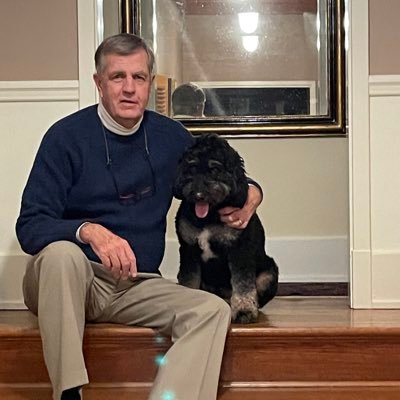


There’s a lot being written about alcohol the last few months. Do you drink or not? Your decision may not be right for others. Read my take in the @lufkindailynews on my Substack! drsidroberts.substack.com/pu…

18
Sid Roberts, MD retweeted

Congratulations to Benjamin Schrank, MD, PhD, of @MDAndersonNews on being awarded the 2025 Brown Award for Resident Excellence in Radiation Oncology! We are excited to see the impact you will continue to make in the field of radiation oncology! 🌟 @BenjaminSchrank

Sid Roberts, MD retweeted
🌟TRS Annual Meeting Featured Speaker Spotlight🌟We’re thrilled to feature Linda K Olson, MD, FACR as our Dr. & Mrs. @srob61 Ethics Lecture speaker. Don’t miss her session "How Many Arms and Legs Do You Need to Be a Radiologist?"#TRS2025
📅 Register here: zurl.co/J61wi
