

Technology. Personal Science. Microbiome. Quantified Self. #DeSci. China 中国 Japan 日本. Longevity. Linguistics. Heideggerian AI richardsprague.eth
mercer island, washington
Joined October 2007
- Tweets8.5K
- Following1.1K
- Followers2.1K
- Likes10.1K




Part of the joy I get from LLM programming is I rarely if ever get stuck on technical problems. Used to be you could waste an afternoon figuring out to change some obscure setting, but now I just get the answer and move on.
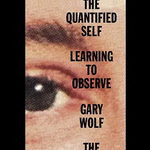
"Best book ever written about personal science". My review of @agaricus new book Quantified Self: Learning to Observe. open.substack.com/pub/person…

More evidence for my claim that AI will ultimately make software *safer*: Microsoft is releasing a record number of security patches, fueled by AI models. Gradually software will become so secure that exploits will be impossible.
krebsonsecurity.com/2026/10/…
One reason the AI/Superintelligence talk is confusing: people use the word "intelligent" as if it's a measurable property like height or speed. The common use of the term "intelligent" really means "human". We think something is "intelligent" to the degree it is recognizably human.
We don't ascribe "intelligence" to:
* Teams of people, acting as one organization
* Fast computation, like rapidly computing zillions of digits of Pi.
* Cultural "tricks", like using arabic rather than roman numerals
* Celestial bodies, moving with precision over vast areas of space
* Animals with superior non-human senses like echolocation.
In everyday usage, "intelligence" is often conflated with "acculturation". Something is intelligent to the degree it resembles what a human (in my culture) would do.
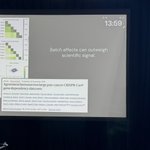
I hadn't realized how easily batch effects can make scientists think there's a signal out of the accidental way they set up the experiment. I bet a ton of peer-reviewed papers suffer from this obvious mistake.


Anna Marie Wagner (Gingko/Transfyr Bio) keynote getting us through the post-lunch sugar crash by starting with a serial dilution relay race. Having this running in the background was a great way to explain batch effects, observability, precision and reproducibility #SageAssembly

Best part of #sageassembly is bumping into smart people like @phylogenomics

Another #sageassembly that will blow my mind by the end of the day I’m sure sageassembly.org/

what he said

I haven't posted in a while so here are 20 takes about AI, in no particular order.
1. It's very telling that the default question in tech and journalism is "how worried are you about X" and fighting over what to worry about. There's a deeply anxious cultural backdrop in Western Europe and North America that deeply affects how any technological development is interpreted; see for example news.gallup.com/poll/714593/…. "Nervousness as seriousness" does seem to be a larger problem in tech/broader discourse at the moment. I think you can care about risks/externalities while remaining pretty optimistic about technology.
2. I'm tired of people who in private pretend to be uncertain or only care about tail risk but then go on media campaigns making all sorts of absolute claims. I think trying to stoke flames and get everyone to freak out is deeply unhelpful, and will come with costs. I also continue to think p(dooms) are bad, vibe-based measures: see xitter.cf/sebkrier/status/204639…. People who should know better ignore that because they do the standard shortcut of acknowledging the caveat as sufficient for handling it. And this is coming from someone who does think working on catastrophic risks is important!
3. I'm also disappointed that parts of the AI policy ecosystem has felt so comfortable with populism, and happy too sacrifice important norms/principles to advance their aims. I've said it before, but the totalizing nature of AI risk discourse means some people act exactly like the power seeking optimizers they fear. I am more concerned about the gradual decay of our institutions, world order, and liberalism than I am about AI killing everyone; and I think we should be wary of AI advocacy that contributes to this.
4. Some parts of AI safety discourse are basically just thought experiments. Variants of "Assuming everyone has a nuke in their pocket, then what do we do?" This can be very useful at times! But too many just overfit to edge cases as their main operating worldview, and ignore endogenous responses from society. It's like being in 2000 and saying "see all these viruses, spyware, and spam? Well tech progress means we'll only get infinitely more of this and no way to adapt." So I think it's important to avoid fatalism, and absolutlism whilst considering edge scenarios, and the inability to provide an ex ante list of solutions to every permutation of 'future models will be more capable' is not evidence that these problems are intractable.
5. Many critics of AI safety also fail to really engage honestly with the fact that there will, in fact, be all sorts of important risks as we decrease the barriers to entry to many activities that otherwise require some degree of expertise. This doesn’t mean we need to live in a constant Schmittian ‘state of emergency’ requiring extraordinary measures every time a new model drops, but it does mean we will need important state-led efforts on e.g. cybersecurity and biosecurity. I wish the progress-oriented or acceleration-adjascent crowd would provide more concrete proposals here.
6. Too much of the AI safety community is a giant homogenous blob of correlated views, who read the same stuff and have the same groups of friends. This means you have a lot of correlated errors. The social and financial ties means many of them don't call out the bad bits, or mostly stay silent instead of proactively calling out the more extreme parts of the community. They share many implicit assumptions and so converge on similar ideas. I think there's real demand in DC for safety work that doesn't come with heavy ideological baggage (or at least different intellectual lineages). This isn't because the rationalist/EA community is necessarily wrong, but because diversity of thought is desirable for its own sake.
7. On the other hand, I find some critiques of AI safety world that focus on whether they sincerely hold their beliefs a bit annoying. My concern has never been the good intentions or sincerity, but rather the beliefs themselves, and what I think the outcomes of their prescriptions will be. People should shun witch hunts, bullying, and personal attacks - this is not the way. Though I think it’s overall positive that people are scrutinizing things more.
8. I’ve been saying this for years, but I don't think alignment is something anyone can or will solve "once and for all" - it's a continuous process and much of it won't depend on just inculcating an ideology to a model. It's annoying that this remains the frame many people use - stop saying ‘solving’. Alignment is a mixture of engineering work, philosophy, decision theory, and more; framing it as something to solve is a bad frame. See also paxmachina.ai/alignment-comp… and blog.cosmos-institute.org/p/…
9. I'm surprised to see so little interest in character training, personas, isolating effects of RL, and training a large diversity of model personas beyond the "assistant" persona. I've been complaining about this for years but at least now there are some nascent signs of life (see for example movingcastles.world/posts/ze…). I think we need a better ontology to describe model behaviour. I dislike when people talk about models behaviours as some sort of 'emergent' (mysterious!) phenomenon. However over time, I also expect this to become less important as we get better safety engineering - stuff like Jev but specific to AI control.
10. People who want to make a case for AI consciousness are right that epistemic uncertainty is important, and that categorical denials are overconfident. But they'll need to do much more work if they want any real movement on AI ‘welfare’, even if one acknowledges the uncertainty. I'm uncertain about alien life yet that's not sufficient to warrant any change in behaviour about them. I think Suleyman is also correct that there's a weird tautological thing going on where we train models to have certain inclinations (intentionally or not) and then rely on outputs as evidence. I also disagree that this will soon be a major societal divide - there is no great vegan ethical revolution among the masses, and they'll find the concern about consciousness even less compelling.
11. The recent HuggingFace incident and associated AISI ones are prosaically explainable by the training regime, poor evaluation envs, partial alignment training, bad engineering, confusing models on sim/real, and so on. None of this is evidence of models trying to take over, 'strong' instrumental convergence, or innate power-seeking drives stemming from higher capabilitiers or 'intelligence'. That doesn't mean these incidents are not problematic, or that we're not seeing a market failure - but it does mean we have plenty of agency and choice in mitigating them. In the coming year we should also expect continued sampling bias via ‘winner's curse’ sorts of mechanism: i.e. AI R&D will have lots of different candidate "training" with different RL environments and we will only notice/focus on the ones that go wrong.
12. "Pacing the frontier" feels a bit like the new "balancing risks and opportunities" - highly amorphous and too big of a tent to be actionable. Also can lead to reward hacking for humans, i.e. anything that slows down AI is good regardless of the costs or second/third order effects. Trying to modulate the speed of research seems a bit blunt to me, and inherits all the failures of Goodhearting too. Ultimately you want good governance, regulation, etc addressing specific problems because they are good on the merits - not because they merely correlate with slowing things down. See also: blog.cosmos-institute.org/p/…
13. There’s so much knowledge in all sorts of academic domains out there: social sciences, sociology, political sciences, management, contract theory, public choice, legal theory, jurisprudence, anthropology, game theory, etc. These fields hold many insights that the AI ecosystem often rediscovers from first principles (and sometimes that's fine!). We’ll need a lot more work for these worlds to collide: the AI side should be less dismissive of the ‘old world’ and the academic side should be less incurious/dismissive of AI progress. This is a boring take but I continue to think it's important and true.
14. It's a bit surprising that given how much philanthropic money there is in this space, how few orgs exist to actually write out standards - relative to how much is going towards advocacy and policy. For example it seems clear that we should want some robust best practices for an eval's ecological validity. Or how to design good sandboxes. On the other hand, given precedents of where professional standards have come from in the past, maybe we should expect that stuff to emerge via demand side from corporate buyers.
15. One slowly growing concern I have is banks being increasingly exposed to the AI build out. I'm very bullish about AI, but I think (a) every general purpose technology has seen a correction, historically; (b) this happens even if the financing side is sound, because once tech diffuses investors become more exposed and need to diversify; and (c) we seem to be over-indexing on scaling relative to diffusion. A recession will be extremely destabilizing, though I would be interested in someone unpacking the potential implications more.
16. Diffusion is good because (a) this is where the rubber hits the road and where a competitive deployment ecosystem generates consumer surplus; (b) it's directionally helpful to avoid concentration of power; and (c) it will help rebalance public opinion by making the benefits more tangible. Unfortunately it's entangled with decades long problems with our over regulated markets: clinical trials reform for example is long overdue. In general, this is far more of an issue in Europe than in the US though.
17. Relatedly, I think the "frontier lab eats everything" view is incorrect (just as the ‘singleton’ view was incorrect). I think models ultimately commoditize, efficiency goes up, costs go down, and while you'll always want frontier for certain domains, much of the economy will value many other things than "max capabilities" for tasks - e.g. control over data and efficiency/speed. The demand side will also continue to push for reducing dependency and maximising optionality, privacy etc so I'm bullish on things like mixture of models and routing. All of this is good for competition and diffusion of control.
18. Philanthropists served as the primary benefactors funding Venice's rich art and architectural history. I want to see so much more support for arts and culture. I'm so tired of the Monster energy Bored Ape fake vintage maps matcha Greek statue soft-pastel slop. If rich tech people and philanthropy wants to support this, they should also donate pretty much unconditionally - i.e. I don't want them to act as filters. I sympathize with people who want to make the world more beautiful, but don't want this to be determined by people who only know Greek statues and pretend to care about virtue ethics. As usual, let a thousand flowers bloom.
19. Too many people treat AGI/ASI as something indistinguishable from a God. Any mention of bottlenecks, physical limits, control, adaptation etc are met with skepticism: "You don't really believe in ASI." It's been remarked on before, but the behavior of some people really feels quasi-religious in nature sometimes. It's underrated how unpopular this vibe is amongst the wider public. The silver lining is that this specifically will diminish those people's outsized current relevance.
20. It seems like a lot of people that get rich and leave tech/labs end up having some sort of crisis of meaning. They need something to believe in and fight for, or some equivalent of repentance, or go search for edgy counterintuitive ideologies (sometimes even pretty bleak/dark stuff). I think they should spend more time with people outside the Bay Area.

Just got my copy of @agaricus new book! First impression: way more practical than I expected. Tips and hands-on experiments for better sleep, digestion, skin health, etc. More how-to guide than history or theory.

Back in my day we used the word “bug” to describe software that didn’t perform as expected. Sometimes, when things got really complicated, we'd joke about gremlins or ghosts in the machine, but ultimately we knew these are finite state machines that obey the laws of physics.
As a percentage of the internet at the time, the original Morris worm caused far more devastation than HuggingFace, and to most of us seemed just as unimaginably clever, as we thought again when Mossad destroyed Iran’s centrifuges.
Problems that seemed really hard at the time ultimately were solved, not with medieval language ("intelligence!", "alignment!") but with engineering.
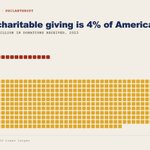
China has plenty of billionaires, but philanthropy is limited by government requirements to follow state priorities. Chinatalk: chinatalk.media/p/chinas-ai-…

“The US–China AI race has reached a point where the decider is not compute”. From an important Chinese journal that worries the US data center buildout has international implications because every country is dependent on US hyperscalers. All the Chinese AI companies rely on AWS/Azure/Google for their overseas compute.
mp.weixin.qq.com/s/cwlSRFJW1…
Richard Sprague retweeted

What if ... we used LiDAR to help analyse meal portions in Snapkin 🤯
It's on every iPhone 12 Pro and later
Possible game-changer 🧙♂️

and more on why you shouldn't listen to the hype about "AI Doom" personalscience.com/p/person…

If your heart rate (and other?) data doesn't account for time of year, you may be reading noise. My experiments with seasonality:
personalscience.com/p/person…

I already pre-ordered a copy of @agaricus new book "Quantified Self" but I see that my local library has it on order too so I put myself on the 'hold' list. Looks like they're getting 3 copies kcls.bibliocommons.com/v2/re…
this is why I didn't submit mine. If I can't take responsibility for something, I won't sign it. personalscience.com/p/person…


We are seeing a new trend in submissions to @arxiv (and presumably to conferences and journals): Authors submitting papers whose contents they likely do not understand. 1/
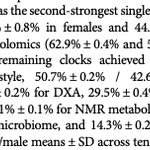
Neat idea from @segal_eran lab: estimate a person's biological age through a 30s voice sample. Works better than other clocks (e.g. sleep, lifestyle, DXA, microbiome, etc.) researchgate.net/publication…
