
Public Speaking Consultant, Professional Speaker, Influence Specialist & Storyteller with InfluenceOlogy https://xitter.cf/t.co/ZCkePOzme3
Mount Pleasant, SC
Joined October 2008
- Tweets3.5K
- Following100
- Followers1.5K
- Likes109


Comment SPEAK on Instagram and I'll DM you a free way to check where your attention goes when you speak.
6
Most experts discover storytelling, get excited… and go back to facts and bullet points. Someone has to be the Chief Storyteller Officer in their business. That person has to be you. Because if not you, who?
21
Teaching and influencing are not the same thing.
Influence: story first, then the point. Story lowers the walls. Point walks through.
Teaching: point first, then the story. Give them the anchor, then make it memorable.
Flip the order and the story fails.
18
Charleston → Atlanta.
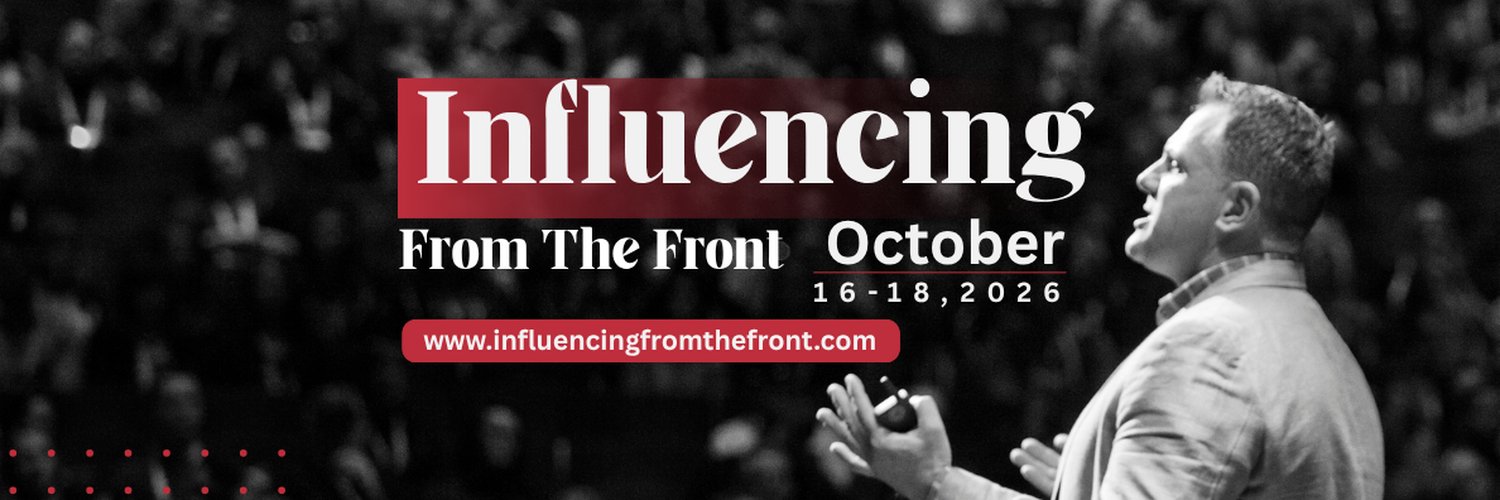
Heading to our Influencing From The Front event for the 17th year. Love helping top professionals become the best communicators in their industries through the art and science of storytelling, public speaking, and social influence.

1
1
17
Most people chase better skills and more motivation, but Bandura's research says your belief in your own capability predicts your performance more reliably than your actual competence does. The real ceiling isn't your ability. It's who you think you are.
10
The referral you didn't ask for has a prehistoric reasonYour brain flagged that ask as a threat before you even opened your mouth. That's not a sales problem. That's an evolutionary one. And now that you know it, you can override it.
8
The same script, same offer, same market yet every speaker produces different results. Behavioral science calls this the Messenger Effect. The audience feels who you are before they process what you say. You are the message. #sales #influence
11
Most speaking coaches teach technique. The best ones do something else entirely. They see the speaker you have not yet become and refuse to treat you as anything less. That belief changes your ceiling before you ever step on stage.
10
You got the yes. But the belief never moved.
You can get someone to act without ever changing what they believe. And when that happens, nothing sticks.
Get the belief. The action takes care of itself.
💬 Was it ever a belief problem?
#Persuasion #BehavioralScience
42
The situation you walk into is already persuading your client before you open your mouth. Milgram proved it in 1963. Most professionals prepare their pitch. The ones who win prepare the room.
1
1
22
Albert Ellis proved this in 1955, your emotional state on stage isn't created by the situation, it's created by the belief you formed about it. Most speakers don't even know what belief they're walking in with. Change the question, change the focus, change how you feel.
18
Walter Fisher called us "homo narrans", storytelling animals. We don't process facts, we process narratives.
27
Practice is important, but practicing the wrong strategy just makes you confident in the wrong thing. Like a rower with perfect technique going the wrong direction, the harder they row, the further they are from shore. Structure first. Practice second.
1
16
300 years before Christ, the Greeks were already training people in rhetoric. Because a person who could command a room could command their results. Your voice is still your most underused asset.
8
a claim triggers skepticism. a story triggers identification. by the time it lands, the belief has already moved.
6