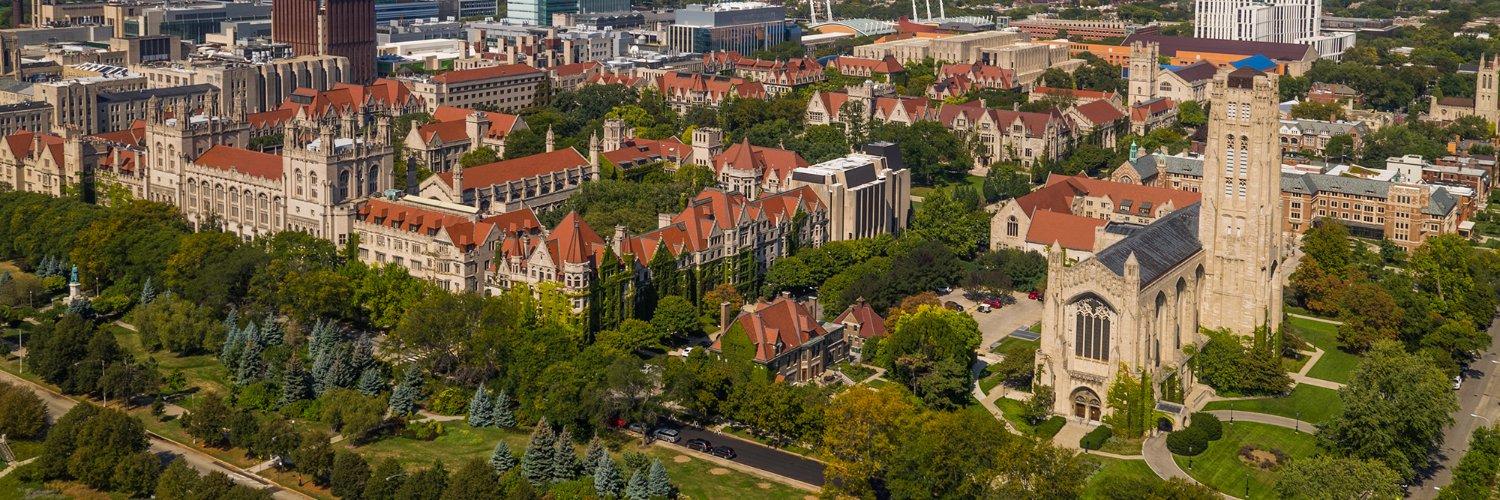

Tenure-Track Assistant Professor & Inaugural Phyllis and David Brasfield Endowed Faculty Scholar, UAB. Postdoc: UC San Diego. PhD: University of Chicago.
Birmingham, AL
Joined May 2014
- Tweets438
- Following6.4K
- Followers579
- Likes11.9K






Prof. Truong-Son Hy retweeted

This paper took us 13 years and is one of the longest papers ever in Cell. Check it out & judge for yourself
cell.com/cell/fulltext/S0092…


Just because epigenetic drift follows a predictable pattern doesn't necessarily mean it's causal in aging. Predictable patterns can form from stochastic reactions. Also you cannot fix all extracellular damages with cellular rejuvenation. More here: olafurpall.substack.com/p/wh…
Prof. Truong-Son Hy retweeted

Discover how generative AI and geometric deep learning are advancing protein science and drug discovery. Don’t miss DBIDS PowerTalks with Truong-Son Hy, Ph.D., this Friday at 10 a.m. CST.
Register 👉 uab.zoom.us/meeting/register…
@uabheersink
@sonpascal93

Prof. Truong-Son Hy retweeted
1. Schrödinger Equation
2. Dirac Equation
3. Einstein Field Equations
4. Navier--Stokes Equations
5. Planck's Law of Blackbody Radiation

Prof. Truong-Son Hy retweeted

LatentDE: latent-based directed evolution for protein sequence design
Enhancing protein function typically relies on directed evolution, where promising variants emerge by mutating an initial sequence and testing improved outcomes. Although widely used, these experimental screens can be time-consuming and expensive, prompting interest in machine learning approaches that search protein space more efficiently. However, operating directly in high-dimensional sequence space remains challenging, especially when only limited fitness data is available.
Tran et al. introduce LatentDE, a method that builds on a variational autoencoder to embed protein sequences in a compact latent space. This representation is guided by the state-of-the-art ESM-2 language model, ensuring that functionally related sequences cluster together. The authors regularize the VAE by incorporating fitness signals directly during training, so that latent representations preserve relevant evolutionary patterns. After training, they apply a two-phase strategy that first uses gradient ascent to locate promising high-fitness regions and then performs a directed evolution-like search, but entirely within the latent space. This allows them to generate multiple variants, decode them back to protein sequences, and evaluate fitness with either wet-lab experiments or large ML oracles.
By systematically testing LatentDE across eight protein design tasks, the researchers show that it surpasses various baselines in identifying sequences with enhanced fitness. The results highlight how latent space optimization leverages machine learning to overcome the discrete complexity of protein sequences, improving both accuracy and search speed. This approach underscores the promise of combining modern language models, generative architectures, and evolutionary concepts in pursuit of more efficient protein engineering.
Paper: iopscience.iop.org/article/1…

Prof. Truong-Son Hy retweeted

Advances in Protein Representation Learning: Methods, Applications, and Future Directions
1. This paper provides a comprehensive review of Protein Representation Learning (PRL), categorizing methodologies into five key areas: feature-based, sequence-based, structure-based, multimodal, and complex-based approaches. The review aims to provide researchers with a structured framework for understanding how these methods align with specific data types and research needs.
2. The paper introduces popular databases for protein sequences, structures, and functions, such as UniProt, PDB, AlphaFold DB, and ESMAtlas. These resources are essential for developing and evaluating PRL models.
3. The authors discuss key applications of PRL, including protein property prediction, structure prediction, protein design and optimization, and drug discovery. Benchmarks such as CASP and CAMEO are highlighted for evaluating protein structure prediction, while datasets like PDBbind and DUD-E are mentioned for drug discovery.
4. The review highlights recent advancements in PRL, including the integration of geometric deep learning techniques, multimodal representations combining sequence, structure, and function, and the use of pre-trained Protein Language Models (PLMs).
5. Challenges and future directions in PRL are discussed, including the need for improved generalization, model scalability, explainability, and extending PRL to other biological sequences such as DNA and RNA.
6. The authors emphasize the importance of developing scalable models, improving zero-shot and few-shot learning techniques for handling novel proteins and mutations, and enhancing model interpretability through Explainable AI techniques.
📜Paper: arxiv.org/abs/2503.16659
#ProteinRepresentationLearning #PRL #DeepLearning #MachineLearning #ProteinStructure #Bioinformatics #DrugDiscovery #ProteinDesign #AI

Prof. Truong-Son Hy retweeted
The photoelectric effect occurs when light strikes a material and ejects electrons from its surface. It revealed that light behaves as particles (photons) with energy ( E = h f ), where ( h ) is Planck's constant and ( f ) is the frequency. This discovery, explained by Einstein, revolutionized physics and confirmed quantum theory. ✍️

Prof. Truong-Son Hy retweeted
The Fourier Transform is a mathematical operation that transforms a function of time (or space) into a function of frequency. In essence, it decomposes a complex signal into its constituent sinusoidal components, each with a specific frequency, amplitude, and phase. This is particularly useful in many fields such as signal processing, physics, and engineering, because it allows for the analysis of the frequency characteristics of signals. The Fourier Transform provides a bridge between the time domain and the frequency domain, enabling the analysis and manipulation of signals in ways that are more intuitive and computationally efficient. The result of applying a Fourier Transform is often represented as a spectrum, showing how much of each frequency is present in the original signal.

Prof. Truong-Son Hy retweeted

Happy birthday Joseph Fourier, whose 1822 equation allows us to listen to mp3s today: bit.ly/22kbNfi


Prof. Truong-Son Hy retweeted

*Using Mathematics to Make Money* by legend Jim Simons.
8 page PDF free for download:

Prof. Truong-Son Hy retweeted

Linus Pauling is the only person to have received two unshared Nobel Prizes - in chemistry and peace.
He used quantum mechanics to understand and describe chemical bonding. Later he campaigned vehemently against nuclear weapons and spearheaded a petition to ban nuclear testing.

ALT Linus Pauling standing next to a chemical model.
Prof. Truong-Son Hy retweeted
"The most important numerical algorithm of our lifetime." — Gilbert Strang
(credit: @gabrielpeyre)

Prof. Truong-Son Hy retweeted

Support vector machines maximize the classification margin for linear decision boundaries. en.wikipedia.org/wiki/Suppor… en.wikipedia.org/wiki/VC_dim…
Prof. Truong-Son Hy retweeted
Generative AI-assisted Virtual Screening Pipeline for Generalizable and Efficient Drug Repurposing
• This study introduces a Generative AI-assisted Virtual Screening Pipeline, a novel method for drug repurposing that combines generative AI, binding pocket prediction, and similarity-based drug searches to rapidly identify therapeutic candidates.
• Key achievement: The pipeline enables blind screening for any protein target, requiring no prior structural or functional knowledge, making it highly adaptable to emerging health threats and poorly characterized targets.
• Core innovation: By integrating binding pocket prediction with generative AI, the pipeline generates high-quality ligand candidates and efficiently prioritizes them through similarity-based searches, drastically reducing the search space for potential drugs.
• It showcases exceptional generalizability, identifying approved drugs for diverse diseases like COVID-19 and HIV with high ranking accuracy, highlighting its utility in addressing global health challenges.
• Significant performance metrics: The pipeline combines generative ligand design with Deep Graph InfoMax-based similarity searches and multi-objective ranking strategies, achieving state-of-the-art performance in both computational efficiency and hit rate reduction.
• Practical applications: It prioritizes approved drugs such as Remdesivir for COVID-19 and Abacavir for HIV, demonstrating effectiveness in real-world drug repurposing scenarios.
@sonpascal93
💻Code: github.com/HySonLab/DrugPipe
📜Paper: biorxiv.org/content/10.1101/…
#DrugDiscovery #AI #GenerativeModels #VirtualScreening #DrugRepurposing

Prof. Truong-Son Hy retweeted

On this day in 1942, Enrico Fermi and fellow scientists achieved the world's first controlled, self-sustaining nuclear chain reaction. The experiment ushered in the Atomic Age—forever changing modern science. ms.spr.ly/6013WN917

Prof. Truong-Son Hy retweeted
The universe can have three possible geometries: closed, open, or flat, determined by the density parameter Ω₀.
A closed universe ( Ω₀ > 1) is finite, with curved space that loops back on itself.
Open (Ω₀< 1) and flat universes (Ω₀ =1) are infinite, with straight paths never returning to the starting point.

Prof. Truong-Son Hy retweeted
GROOT: Effective Design of Biological Sequences with Limited Experimental Data
• GROOT introduces a novel framework using graph-based latent space smoothing to optimize biological sequence design, addressing challenges of limited experimental data by generating pseudo-labels and refining them via label propagation.
• The method builds a latent graph from protein sequences and synthesizes new samples through interpolation, enabling the model to extrapolate beyond the training set while maintaining reliability within an upper bound of expected distances.
• In benchmark tasks like GFP and AAV optimization, GROOT achieved state-of-the-art results, demonstrating a sixfold improvement in GFP fitness and 1.3 times higher AAV performance compared to training baselines, especially under data-scarce conditions.
• Unlike traditional approaches that rely heavily on labeled data, GROOT leverages abundant unlabeled data, providing a robust surrogate model for guiding optimization processes with fewer than 100 labeled sequences in extreme cases.
• GROOT’s domain-agnostic design allows applications beyond protein engineering, such as DNA sequence optimization and other high-dimensional biological challenges, offering a scalable solution for diverse optimization tasks.
@sonpascal93
💻Code: anonymous.4open.science/r/GR…
📜Paper: arxiv.org/abs/2411.11265
#ProteinDesign #LatentSpaceOptimization #AI #Bioinformatics #SequenceEngineering

Prof. Truong-Son Hy retweeted
The discrete Fourier basis is a sampling of the continuous Fourier basis. They are both orthogonal. This is (almost) magic! en.wikipedia.org/wiki/Discre…

