


A lot of people haven't read William Gibson's "All Tomorrow's Parties" and it shows

Jon Hamm - the actor famous for playing an advertising exec selling cigarettes - is in an ad for a gambling app with a surgeon general style warning at the bottom. Is this self aware?

Roon is attacking the idea of a fixed-length pause. Most now advocate for "pause until demonstrably safe", no?

Dean Ball asked pause advocates a bunch of hard implementation questions and treated the difficulty of answering as proof the project is unworkable. But there's already a concrete mechanism that answers the feasibility question — and it doesn't require US cooperation:

Here are some questions I wish "Pause" and "Stop" advocates would address:
1. Assuming we achieve the desired policy goal through a bilateral US/China agreement, what would be the specific metric or objective we would say needs to be satisfied in advance? Who decides whether we have satisfied them? What if one one party believes we have satisfied them but the other does not?
2. If the goal is achieved through a bilateral US/China agreement, would we need capital controls to ensure that U.S. investors cannot fund semiconductor fabs, data centers, or AI research labs in countries other than the U.S. and China?
3. Would we need to revoke the passports of U.S.-based AI researchers and semiconductor engineers to prevent them leaving America to join AI-related ventures elsewhere? How else would the U.S. and China keep researchers within their borders?
4. How should we grapple with the fact that (2) and (3) are common features of autocratic regimes?
5. Do the above questions mean that this really should be a global agreement, signed by all countries on Earth, or at least those with the theoretical ability to host large-scale data centers (probably Vanuatu doesn't need to be on board)?
ASML has a near-monopoly on machines needed for cutting-edge AI chips. A coalition of Europe, China, and most of the world could freeze new frontier compute buildout. The chokepoint has a 5-10 year shelf life — that's 5-10 years for governance to catch up. simonbtownsend.wordpress.com…

Simon Townsend retweeted

There’s an interesting debate to have now with such press reports. And I realize this admin doesn’t care one lick about intl law, but throwing around assassinating foreign leaders and their son like it’s a NJ Diner menu option is bit noteworthy. It’s also the height of hubris. (We are not the Israelis, I’m not sure we have the intel nor the capability to do this.) That said, I’d welcome legal opinions on this course of action from actual lawyers expert on LOAC and/or covert action. (not emotional responses pls, I’m fully aware how horrible the Iranian leadership is). LOAC? EO 12333? It’s worth exploring.

I think EY has confused thinking here; he doesn't have enough of the conversation to claim Claude is doing the crazy making. (Or, to get enough of the conversation you have to follow lots of OP's links, but they don't provide the full conversation when asked)

I'm surprised how bad voice-to-voice (chatgpt and Gemini) models are.
Opus 4 is great for life issues and philosophy, GPT-4.5 is pretty good too. Grok 3 is non-lazy, which is nice. Gemini Pro 2.5 doesn't want to talk about life issues or philosophy.
Simon Townsend retweeted

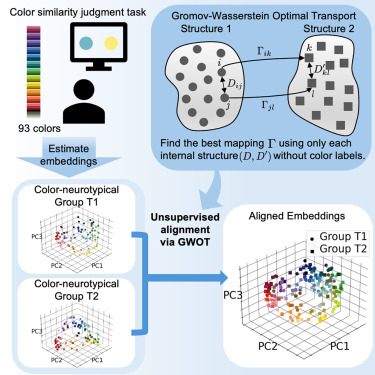
Is my 'red' your 'red'?
Our new paper partially answers this by comparing the ways in which sets of color experiences are similar between individuals (structural similarity comparisons). If these structures can't be aligned between people, they can't experience the same 'red'.
Shouldn't we pause and consider whether these are safe places to build homes? Altadena and Pacific Palisades, probably yes. Malibu maybe not. - Is it time to make the coast line in Malibu public land?

Indonesia is using cloud seeding to prevent flooding, as opposed to Morocco and UAE using cloud seeding to get more rainfall

Deepseek was developed by a company, High-Flyer, that started as a hedge fund? And they plan on releasing their reasoning model R1 as open-source

