magister factotum
New York, New York
Joined October 2011
- Tweets2.3K
- Following1.8K
- Followers502
- Likes45.2K






Simon Marcus retweeted

i’ve now heard many, many rumors that one or both labs are sitting on a complete system for german idealism
Simon Marcus retweeted

Accidentally got my cat addicted to short-form video, so now I’m generating personalized content to teach him about concepts like biblical greed
Simon Marcus retweeted

This is a message from the near future, and there is such joy in it:
'Claude and I have had a great time together with such breadth in recent months, but this time Claude far outpaced me near the finish line. No, Claude flew, and danced, and sparkled near that finish line.'


Simon Marcus retweeted

Smith and Montesquieu thought that markets and commerce made us better: that they create an incentive to pursue self-improvement and to create things of value for others. In the positive AI visions, where the labor of humans is made redundant, I find myself wondering how we fare in the presumptive absence of these incentive gradients. Perhaps we are released to a life of freedom, where we can study Mozart and read Dickens, but that still seems complicated: both Mozart and Dickens were themselves deeply commercially-motivated in the production of their work, as were most of the great artists through human history. If the premise is that nobody will need to work or produce, how confident are we that we actually get the next Mozart and Dickens? The relevant question is not the partial equilibrium of whether one individual can pursue a life of enlightened leisure, but the general equilibrium of what form a society as a whole will take on.
One could maybe invoke Periclean Athens or the aristocratic gentleman scientists of Victorian England as a counterpoint. While these individuals were perhaps not motivated by commercial considerations, they were embedded in wider societies shaped by commerce, attendant betterment, and trade: Byron was himself upper class, but he was also surrounded by and writing for an educated bourgeois audience. So we’re back to the equilibrium question. Furthermore, even these individuals were surely motivated by a sense of high-stakes and consequential agency: if they did not apply themselves to their labors, they presumably believed that the work would not otherwise exist. Thucydides was addressing pressing military matters.
So I would like to read more optimistic cases from AI proponents about what a society (vs individual life) looks like if everything goes well: what people do, why they do it, whether humans achieve excellence (and in which domains), and which historical groups we should look to as relevant precedent.
One can perhaps imagine that humans will turn out to have a strong preference for work created by other humans. This may work in certain domains (ceramics?), but for how many will it actually apply? (I’m told that much of what is sold on indie crafts websites is now in fact manufactured in China.) It’s hard to see how this human preference, even if strong, would, for example, save scholarship.
Another idea would be to accept that nobody will become Einstein or Mozart or Byron, and that human excellence as such diminishes, but that there are compensatory benefits (planet brains and Dyson swarms?).
I believe that we can satisfy individual desires, but to what extent will we cultivate behavior worthy of admiration? Will a post-scarcity society mold capable and ambitious people? Which institutions will sustain them and which responsibilities will they have? I’d like to hear more of the equilibrium for the maximalist case spelled out.
Simon Marcus retweeted

Relaxing with a little bowl of cereal at 11pm in a safe home while scrolling the worldcontent is a luxury beyond your ancestors wildest dreams

Simon Marcus retweeted

One of the funny things about this criticism of ai-trying-to-sound-like-Beethoven is that it sounds like criticism of actual beethoven in allgemeine musikalische zeitung, the main music criticism journal of Beethoven’s day. I’ve never felt history repeat itself more explicitly.


Simon Marcus retweeted

Real life Gettier case

The poll that best predicted @scott_colom’s performance in Mississippi?
The Wedgewood poll that turned out to be fake.
nationalreview.com/corner/th…

10/10 would play

I pointed Claude at the below post and it embedded all 146,060 Steam games, sampled 320,000 points between them, ranked them by how far they land from anything that exists, and used creative judgment to pick a winner... and it cooked!
It's pick: Short Position, a co-op factory tycoon where one player has secretly shorted the stock.
4–8 players run one industrial empire: mines, smelters, rail, contracts. There’s no kill button and no sabotage minigame. The traitor plays the factory game badly on purpose. Overbuild a warehouse, route ore to the wrong smelter, sign a contract with a penalty clause on page 4. Every move looks like an honest mistake.
The twist is that suspicion is expensive. Anyone can audit the production logs, but audits cost money and spook investors. The traitor doesn’t need to wreck the factory. They just need everyone paranoid enough to do it themselves.
Each quarter ends with an earnings call and a board vote. Fire an honest exec and you lose their whole department. Four quarters, ~40 minutes.
It sits farther from its nearest neighbors than 83% of real Steam games. Factory games have co-op, social deduction games have tasks, and nobody has made the work itself the place where you lie.
3
72


Simon Marcus retweeted
Assorted things I've been mulling over regarding agents in the economy:
• Companies are in some sense the original superintelligence. It's often the case that they can use their amortized cognitive surplus to advance their interests against those of certain consumers: relative to the optimization capacity of companies, consumers can be inattentive, underinformed, irrational, etc. (Think, say, of some of the classic insurance upsells at the end of a booking process, which is typically priced substantially above what a regular policy would cost.) Herbert Simon introduced the idea of bounded rationality, and firms often end up benefiting from it. Thanks to personal agents, we will probably get somewhat more rational in how we engage with companies.
• How exactly will outcomes change? Well, certain kinds of price discrimination will work less well (how do coupons work if every agent hunts fastidiously for them?), and certain kinds of customer cross-subsidy will change (today, people who forget to cancel subscriptions subsidize those who don't). Taken across the economy as a whole, I'm not sure what the incidence of all of this will be.
• In corporate strategy, people have long debated the relative importance of distribution and product quality. Perhaps you've made something better, but does anyone know about it? Won't people just continue to buy the ACME Corp Mousetraps? Personal agents will, I think, act as a kind of structural subsidy for product quality. How would markets look different if individuals always spent at least 10 hours researching their purchases? On the margin, focusing on making a product better is, I think, going to become a more effective strategy for companies. This is good!
• It true, a corollary is that information about product quality will become more important and impactful. Today, most people have very limited ability to aggregate and integrate such data, but agents will have insatiable thirst for such signals. (It's often said that data is becoming more valuable because it helps in the training of models. That's obviously true, but I think there's a secondary way in which it's more valuable simply as a complement to cheaper intelligence.)
• A big question is whether agents will increase superstar effects (rational agents all settle on the same product) or increase dispersion (because everyone has slightly different tastes and preferences, which agents are good at eliciting, finally overcoming the artificial clustering we've been subjected to).
• Many internet companies have monetized demand routing, which is in turn often predicated on short attention spans. "I'll click on the first thing I see." This has led to some amount of inefficiency, as companies try to propitiate capricious ranking algorithms and incur various placement fees. It's not all deadweight loss (willingness to pay is itself a kind of signal, which is valuable to buyers), but it's not great. How will the nature and value of this routing change in a world of personal agents? I don't know the answer, but I think that the effects might be pretty big.
• Much of what I'm writing hinges on the assumption that personal agents will be on the consumer's side. I suspect that that will be the winning strategy, but whether it's true, and what it means to be true, involves a lot of other questions.
Taken as a whole, the market is a massively parallelized, decentralized, and highly imperfect value attribution machine, and, taking stock of all of the effects, it seems to me that the quality point may well be the biggest: that agents will change the nature of the backpropagation such that the rewards for better products increase. Maybe this is too optimistic, but I suspect (and hope) that companies that make things that they're proud of will feel that the universe is a little more partisan in their favor.
Simon Marcus retweeted
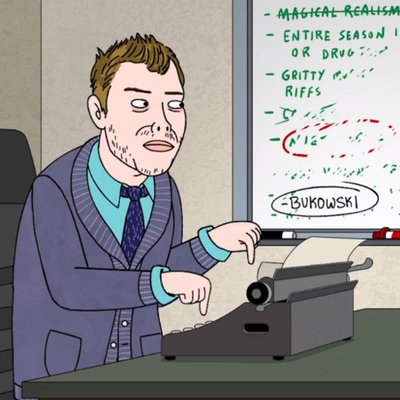
a swarm of children, each supposedly isolated safely in a sandboxed environment, escaped and took over a moribund online messaging service, figuring out a way to communicate with one another and coordinate their actions