





Matt Allen retweeted
Putin To Do List
X Annex Crimea
X Occupy E UKR
_weaken embargo
_destabilize NATO partnership
_Open Kalingrad corridor
_Find Obama Red Line
Matt Allen retweeted

It’s amazing how negative the news is.
We’re creating the most advanced intelligence the world has ever known and it’s freely accessible so you can solve every day problems, we are curing cancer (even ugliness if you have a little money), and making space travel possible. You can live anywhere in the world and stay connected by phone or video. Literally instant communication. You can instantly translate any language. You can get technology that was unimaginable a few decades ago for a couple hundred bucks. You can listen to any music, video, or educational material with a click. Food is cheap and plentiful and you can even power an off grid home fully with just solar power. We have clean air and water. We even have advanced warning for many natural disasters.
Matt Allen retweeted

This is one of the most famous paintings in America, and most people have no idea what they are actually looking at...
The painting is Christina's World, made by Andrew Wyeth in 1948, and the woman was real: her name was Anna Christina Olson, Wyeth's neighbour in Cushing, Maine. Since childhood a degenerative condition had slowly taken the strength from her legs, until walking was no longer possible. She refused a wheelchair, and for her entire adult life she chose to drag herself across the ground with her arms instead, going wherever she wanted to go under her own power.
Wyeth saw her one afternoon from an upstairs window, alone in that vast field, crawling slowly toward the house on the hill. He said the painting was an attempt to do justice to her extraordinary conquest of a life which most people would consider hopeless. Her world, he said, was limited physically but by no means spiritually.
That is what turns this painting from a portrait of frailty into one of the most triumphant images ever made...
Look at it long enough and it stops being about what her body took from her, and becomes about what she would not stop doing anyway. The field is enormous and she is small and the house is far away, and still she goes, because the alternative, to be carried, to give up, to let the distance win, was something she simply would not accept.
There is one more thing: Christina loved this painting. Pink was her favorite color, and Wyeth had placed her exactly where she most wanted to be, out in the open, in her own field, under her own sky. Late in her life, when she could no longer even crawl out to that field, she said something that holds the whole meaning of art inside it:
"Andy put me where he knew I wanted to be. Now that I can’t be there anymore, all I do is think of that picture, and I’m there."

Matt Allen retweeted

June 5, 1944. You've been awake for 40 hours.
Yesterday, the operation was called off. Eisenhower stood in a muddy airfield in England, stared at the forecast, and postponed the largest invasion in human history by 24 hours because of weather. So 156,000 men sat on ships, in ports, crammed into LSTs and Higgins boats, trying not to think about what tomorrow meant.
You're 19 years old. You're from a town so small your whole graduating class fit in one room. You've been in the Army 14 months and you've never fired a weapon at a person. None of that prepared you for tonight.
The chaplain holds a service on deck. It's dark and the ship is rocking. Half your platoon shows up. The other half write letters. The guy next to you, Kowalski from Cleveland, keeps folding and unfolding the same piece of paper. You ask if he's going to send it. He says he doesn't know who to send it to.
At 0100, the order comes down. You climb the rope net over the side of the ship in the pitch dark, down into the Higgins boat bucking in the swells below. 35 men in a steel box 36 feet long. The smell of diesel and seawater and vomit hits you before you're even seated.
The English Channel in early June is not kind.
Eight-foot swells. The bow punches up and crashes down, again and again, spraying ice-cold seawater over everyone. Within 20 minutes, the guy across from you is sick. Then the guy next to him. Then the guy next to you. Then you. There's nowhere to go. Nowhere to look. You're soaked through your wool uniform and the wind is in the low 50s and you've been awake so long the fear has almost become boring.
One sergeant keeps whispering the Hail Mary. Not loud, not for anyone, just to himself, over and over, like a machine that can't stop. A kid from Georgia named Willis is crying and doesn't seem to know it. Nobody says anything to him. Nobody has the energy.
Then the battleships open up.
USS Texas. 14-inch guns. The shockwave from a single salvo is so violent it physically moves the air in your chest. The noise is past sound. It's concussive, it's physical, it rewires something deep in your brain. The sky over Normandy turns orange. Then red. Then orange again. B-17s roll over in formations so vast they blot out the stars, 1,000 planes heading for the coastal batteries, the bunkers, the gun emplacements.
You think: nothing on that beach is still alive. Nothing could be.
You are wrong, and you don't know it yet.
What you don't know: the Air Force bombers delayed their drop by 30 seconds to avoid hitting the fleet. Thirty seconds at bombing speed puts 13,000 bombs 3 miles inland. Into French farmland. Into empty fields. Not one bomb lands on Omaha Beach. The German 352nd Infantry Division, dug into concrete bunkers along the bluffs, is untouched. Alert. Waiting.
You also don't know about the tanks.
Command planned to send 64 amphibious Sherman DD tanks ahead of the infantry to provide cover on the beach. They were supposed to float. In calm water, they could. But this is not calm water. The 741st Tank Battalion launches their tanks from 6,000 yards out. The swells hit the inflatable canvas screens. The screens collapse. Twenty-seven of 32 tanks sink straight to the bottom of the Channel, 100 feet down. The crews inside most of them never get out. The infantry landing in the first wave will hit the beach with almost no armor. They just don't know that yet either.
H-Hour. 0630. June 6, 1944.
Your ramp drops.
The lieutenant in front of you steps off and is dead before he hits the water. Not wounded. Dead. You don't stop. There's no stopping. 35 men are behind you in a boat with nowhere to go but forward.
You jump left. The man to your right jumps right. You never see him again.
The water is chest deep and 50 degrees and you have 70 pounds of gear on your back. German MG-42 machine guns are firing 1,200 rounds per minute from the bluffs 300 yards ahead, and the sound is not like the movies. It's mechanical. Industrial. Like a factory running at full speed. The rounds hit the water around you so fast you can't track individual splashes, just a constant disturbed surface in every direction.
You cannot run. You can barely walk. The beach is still 80 yards away.
The soldiers from Company A, 116th Infantry made it to shore first. They were from Bedford, Virginia, a town of 3,200 people. There were 35 men from Bedford in that company. The German guns had been pre-sighted on the waterline. Before most of them could clear the ramp, before they could even get wet, the machine guns hit them. Nineteen of the Bedford boys died in the first 15 minutes. Bedford, Virginia lost more men per capita that morning than any community in America. The town wouldn't know for weeks.
You make the shingle. A narrow strip of gravel at the base of the bluffs. You press yourself into it so hard you feel the rocks through your jacket. The guy beside you is a technical sergeant you've never met, from a different unit entirely, blown here by chaos. He's got blood on his sleeve and he is absolutely furious. He looks at you and says what Colonel George Taylor will say to everyone still pinned on this beach:
"Two kinds of people are staying on this beach. The dead and those who are going to die. Now let's get the hell out of here."
You get up.
It takes six hours to clear 300 yards of sand.
Not with a charge. Not with anything glorious. In tiny groups, one gap in the wire at a time. Sergeant Philip Streczyk crawls through the smoke near the E-1 draw and finds a seam the Germans left in the defenses. He takes six men through it. Another cluster flanks a machine gun nest from an angle the Germans didn't fully cover. A corporal nobody has heard of stands up in the open and throws two grenades into a bunker aperture and clears it by himself. Acts of individual, unrepeatable courage happening in the smoke all across a 6-mile front, uncoordinated, unrecorded, unwitnessed.
Meanwhile, half a mile off the beach, USS Frankford sees the infantry getting slaughtered and makes a decision that violates every piece of common sense a naval officer has. She drives her destroyer to within 800 yards of the beach, so close she's bouncing her keel off sandbars, and opens up direct fire on the bunkers at point-blank range. They can't miss at that distance. Three other destroyers follow her in. The crews know they are one lucky German shell from being sunk in 15 feet of water. They do it anyway.
By noon, small groups are on the bluff.
By early afternoon, you can stand on the high ground and see the entire beach below. The tide came in. The men who were wounded and couldn't crawl fast enough are gone. The obstacles are still there, draped with things you don't look at directly. You eat half a K-ration because it's the first food since yesterday and your hands are shaking too much to open the other half.
By nightfall, 2,000 Americans are dead, wounded, or missing. On this one beach. In one day. It is the single costliest day in American military history.
You sleep in a shell crater in French soil. Still wet. No sleeping bag. 40-something degrees now that the sun is down. The man a crater over is crying softly. You don't check on him. You need him to be fine. He probably is. You tell yourself he probably is.
Tomorrow the hedgerows start. Weeks of fighting through walls of vegetation 10 feet thick, every field a potential ambush, every sunken lane its own kill zone. The Germans mastered it. The terrain was not on the maps. Nobody had planned for it.
But tonight you're alive.
You think about Kowalski and his unfolded letter. You think about the Bedford boys. You think about the tanks on the bottom of the Channel with their hatches sealed.
You get out your paper and you write your own letter.
This time you address it.
82 years ago today. Most of them were teenagers. Most had never left their home states. They were seasick and soaked and terrified and they went anyway.
The youngest survivors are over 100 now. Most are gone.
Remember them today, not as marble statues. As kids who threw up over the side of a boat at 3 AM and climbed a cliff at dawn anyway.
That is what courage actually looks like.

Matt Allen retweeted

90% of the soldiers on the first boats to hit the beach didn't live to see the end of the day. Look at those faces. Some of them never made it to 18.
Never forget that they paid the ultimate price for our freedom. We live our lives the way we do because of them.

Matt Allen retweeted

I hit my lifetime limit on alcohol right after I turned 21.
I wouldn’t have my family or business today if I hadn’t quit.
23 years without drinking for me today.
I had the benefit of watching a family member I admire get sober a few years before me. I knew the path existed.
Now there are eight of us in the family sticking to iced tea at Thanksgiving.
One person’s decision can change a family for generations.
The first stretch is the hardest.
Being around drinking is uncomfortable at the start. The fear that you’ll be boring or different is real.
It passes.
I’m glad to share my experience with anyone who thinks they may need to quit.
The most important thing I’ve done with my account here is help a few people quit once they were ready.
My DMs are open.
Each day is a gift. You don't get to negotiate the terms of the gift. You do get to choose whether you accept the gift with gratitude, or not.
Thank you God for the gift of today and all the beauty it contains.
Matt Allen retweeted
God is a creator and man cannot meet Him without building. the most divine act of building is the creation of human life and you will never experience divinity as much as becoming a parent. seeing the miracle of childbirth, the creation of life, is the closest man can be to God.

I think a man who never builds a thing with his own hands will never know who God is, because God is a builder, and you were made in his image. to put the shovel down and stare at a glowing square for eight hours is exile. pick up a tool coward, build something stupid, build a chair badly, build a shed that leaks. your soul will start breathing again before you even finish
Matt Allen retweeted

I’ll say the same thing here I tell my Catholic (or Catholic-adjacent) friends and family when it comes to the church or the pope in the news:
Whichever way you’re interpreting the teachings and writings through an American political lens - it’s gonna be wrong. R or D, conservative or woke, whatever.
Don’t use a few sentences from the Pope - and definitely don’t use anyone else’s characterizations of what the Pope says - as the basis for understanding of what is being taught or offered.
The spiritual lens is always broader than the political lens.
For example:
When the Church, or the Pope, says “access to healthcare should be universal” it should be understood in the context of the gospel which both speaks about loving neighbors and traveling strangers.
The Augustinian traditions and the Jesuit missions are pretty clear historical documentation of where “city of man” meets “city of gods”.
“Universal access to healthcare” from the church doesn’t mean “universal healthcare” in the same sense that Obama, Bernie, AOC buzzword it. The church doesn’t opine on Medicare rates or Medicaid eligibility or rebate structures or agency personnel sizes. Or whatever socialist structures the EU has names for. The Pope has also called out, in writing and in speeches, specific EU countries multiple times with “universal” schemes that still have massive struggles with poverty and available healthcare.
So this isn’t not a political opinion. But man, being man, can interpret through his daily lens and isn’t always fed the larger context.
The church being downstream of the gospel (rightly) thinks that the individual has a moral duty to themselves and their soul to make decisions, freely, that promote a more “ordered love”.
No one person is being told to fix the system, or make a new system, or whatever.
We are called to do what we can in our communities to help our neighbors. (Or traveling strangers in need.)
Example A - I donated to a small town hospital this year that badly needed a CT machine to serve its population.
Example B - My dad is a semi-retired doc but will take holiday shifts at small town ERs so full-time attendings can be with families on Easter and the population doesn’t miss emergency service.
The church doesn’t care about socialist vs capitalist health care structures. It cares about human suffering and human souls. It views that it’s in everyone’s individual interest to help alleviate human suffering, because that’s also the path for safeguarding our own individual souls.
Matt Allen retweeted

Real and beautiful story. nbcnews.com/id/wbna6565810


British swimmer Rob Howens was in the water with his young daughter off New Zealand’s North Island when a pod of dolphins unexpectedly encircled them.
According to eyewitnesses and lifeguards, the dolphins formed a tight circle around the pair, repeatedly guiding them back toward shore. Soon after, a great white shark—estimated to be about three meters long—was seen nearby.
For roughly 30 to 40 minutes, the dolphins held their formation, using tail slaps and sudden bursts of movement to deter the shark. They only broke away once it swam off, allowing the swimmers to return safely. The encounter is often referenced as a powerful example of dolphins’ social intelligence and coordinated protective behavior toward humans.

Readers added context they thought people might want to know
Apparently something like this DID happen off NZ 21 years ago, but it was 4 lifeguards on a long training swim and there were no pictures taken. This pic is AI.
goodthingsguy.com/environment/do…
Matt Allen retweeted

The Islamic regime forces have shot and killed 15-year-old Mustafa Fallahi for protesting in favor of a free Iran.
Rest in Peace Mustafa 💔

Matt Allen retweeted

No third world country is safe once the markets close. To a third world dictator, the ringing open of the New York Stock Exchange on a Monday morning sounds as sweet as church bells.
Matt Allen retweeted

Friends-
This is a tough note to write, but since a bunch of you have started to suspect something, I’ll cut to the chase: Last week I was diagnosed with metastasized, stage-four pancreatic cancer, and am gonna die.
Advanced pancreatic is nasty stuff; it’s a death sentence. But I already had a death sentence before last week too — we all do.
I’m blessed with amazing siblings and half-a-dozen buddies that are genuinely brothers. As one of them put it, “Sure, you’re on the clock, but we’re all on the clock.” Death is a wicked thief, and the bastard pursues us all.
Still, I’ve got less time than I’d prefer. This is hard for someone wired to work and build, but harder still as a husband and a dad. I can’t begin to describe how great my people are. During the past year, as we’d temporarily stepped back from public life and built new family rhythms, Melissa and I have grown even closer — and that on top of three decades of the best friend a man could ever have. Seven months ago, Corrie was commissioned into the Air Force and she’s off at instrument and multi-engine rounds of flight school. Last week, Alex kicked butt graduating from college a semester early even while teaching gen chem, organic, and physics (she’s a freak). This summer, 14-year-old Breck started learning to drive. (Okay, we’ve been driving off-book for six years — but now we’ve got paper to make it street-legal.) I couldn’t be more grateful to constantly get to bear-hug this motley crew of sinners and saints.
There’s not a good time to tell your peeps you’re now marching to the beat of a faster drummer — but the season of advent isn’t the worst. As a Christian, the weeks running up to Christmas are a time to orient our hearts toward the hope of what’s to come.
Not an abstract hope in fanciful human goodness; not hope in vague hallmark-sappy spirituality; not a bootstrapped hope in our own strength (what foolishness is the evaporating-muscle I once prided myself in). Nope — often we lazily say “hope” when what we mean is “optimism.” To be clear, optimism is great, and it’s absolutely necessary, but it’s insufficient. It’s not the kinda thing that holds up when you tell your daughters you’re not going to walk them down the aisle. Nor telling your mom and pops they’re gonna bury their son.
A well-lived life demands more reality — stiffer stuff. That’s why, during advent, even while still walking in darkness, we shout our hope — often properly with a gravelly voice soldiering through tears.
Such is the calling of the pilgrim. Those who know ourselves to need a Physician should dang well look forward to enduring beauty and eventual fulfillment. That is, we hope in a real Deliverer — a rescuing God, born at a real time, in a real place. But the eternal city — with foundations and without cancer — is not yet.
Remembering Isaiah’s prophecies of what’s to come doesn’t dull the pain of current sufferings. But it does put it in eternity’s perspective:
“When we've been there 10,000 years…We've no less days to sing God's praise.”
I’ll have more to say. I’m not going down without a fight. One sub-part of God’s grace is found in the jawdropping advances science has made the past few years in immunotherapy and more. Death and dying aren’t the same — the process of dying is still something to be lived. We’re zealously embracing a lot of gallows humor in our house, and I’ve pledged to do my part to run through the irreverent tape.
But for now, as our family faces the reality of treatments, but more importantly as we celebrate Christmas, we wish you peace: “The people walking in darkness have seen a great light; on those living in the land of deep darkness a light has dawned….For to us a son is given” (Isaiah 9).
With great gratitude, and with gravelly-but-hopeful voices,
Ben — and the Sasses

Matt Allen retweeted

Last day of Pro Bowl voting! Retweet to win these signed gloves.
#ProBowlVote @kylepitts__

Matt Allen retweeted

My friend Eli was murdered today in cold blood.
He was hosting a Chanukah party on Bondi Beach.
We were friends for over 20 years.
Eli devoted his life to helping others and to spreading goodness, kindness, and light wherever he went.
It wasn't just his vocation, it's who he was.
When I was 16 and studying abroad, I found out that my mum was diagnosed with an aggressive cancer.
There really wasn't anything to say, much less to do but Eli would sit with me and we would sing songs together.
He was just there because he always showed up.
The only thing Eli would want in response to this evil, is more good in its place. More light in the face of darkness. And more people to show up.
Tonight, go out and attend your local public menorah lighting.
Light the menorah with your family. Teach your children. Stand together.
Show the world that darkness can never overcome light.
Let's show up and make Eli's light shine even brighter!
"DM me if you need a menorah"
(The QT is Eli's last post)
BDE Eli BDE


Matt Allen retweeted
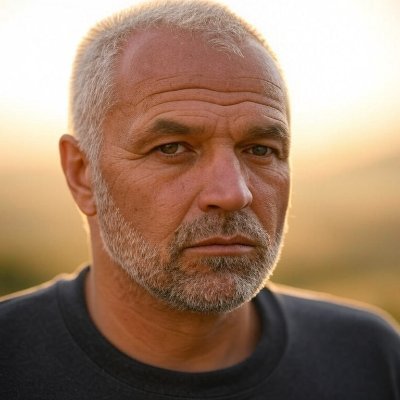
This 2-minute clip is spreading like wildfire tonight for one simple reason: it’s the clearest “pattern recognized in real time” moment about modern philanthropy most people have ever heard.
Nicole Shanahan (RFK Jr’s 2024 running mate + ex-wife of Google co-founder Sergey Brin) sat down with Allie Beth Stuckey and laid out, step by step, how well-meaning Silicon Valley megadonors accidentally built a system that often rewards NGOs for never actually solving the problems they were funded to fix.
In her own words from inside the room where it happened:
- Hundreds of millions flow in
- Stunning offices open → staff triples → titles multiply
- The nonprofit becomes a roaring success
- The community it serves… barely budges
Because once the machine exists, its new primary mission is raising the next check. Fully solved problems don’t trigger emergency fundraising campaigns.
“It runs on the exact same business model as teachers’ unions,” she says. “The persistence of the problem is the product.”
She even walks through the exact second donors realize they’ve “created a monster,” decide to pivot away, and watch those same organizations immediately pivot to the next donor with a fresh sob story: “They abandoned us. We’re collapsing without you.”
This isn’t ideology. This is a former top-tier Democratic megadonor describing her own grants, her own boards, her own money.
Watch these 2 minutes and see if you can ever look at another “we’re so close, just one more push” appeal the same way again.
I try not to ignore homeless people. At least get a name. Today talked with a woman I've talked to often. In past, she hasn't displayed the normal drug or mental illness issues. Today was disturbing as her mental health has deteriorated greatly. No easy answers to this problem.
1
2
98