

Tactical breakdowns. Transfer logic. Tech that actually matters.
London England
Joined February 2026
- Tweets2.2K
- Following45
- Followers46
- Likes185





Zonal marking at set pieces is technically correct and psychologically difficult.
In theory, zones are more efficient. Players defend an area, not a person. No one gets dragged out of position. The structure holds.
In practice, a runner arriving at pace into your zone is harder to deal with than a player you have been tracking throughout the game. The accountability is diffused. Nobody's man scored.
The clubs that execute zonal marking well train it obsessively and have specific accountability structures for breakdowns.
The clubs that do it badly use it as a concept without the preparation to make it work.
Zonal marking doesn't fail because it's wrong. It fails because it's harder than it looks.
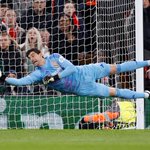
Bayern Munich 2-2 Arsenal a proper Champions League classic at the Allianz.
Eze opened the scoring early (Odegaard assist), Davies equalised brilliantly from a Kane pass, Kane then converted a penalty to put Bayern ahead, and Rice smashed home a late equaliser (Gyökeres assist) to rescue a point for the Gunners.
Both sides played with real quality, intensity and attacking threat in a fiercely contested game. No clear winner on the pitch, two top teams trading blows and showing exactly why they’re among the favourites to go deep.
This result underlines it: Arsenal and Bayern both look ready for the knockout rounds.
#UCL #BayernArsenal #ChampionsLeague
The real shift in high-end mobile chips is not one more incremental GPU or CPU upgrade.
It is the move to large unified-memory superchips that treat local AI, graphics, and general compute as the same problem.
NVIDIA’s RTX Spark (N1X) is the clearest example right now. It pairs a 20-core Grace Arm CPU (co-designed with MediaTek) with a Blackwell GPU that has up to 6,144 CUDA cores, linked by NVLink-C2C, and up to 128 GB of unified LPDDR5X memory. NVIDIA rates it at up to 1 petaflop of FP4 AI performance. Laptops started shipping this month from around $2,599. The practical result is a thin Windows machine that can run large local models, use the full CUDA stack, and play games at 1440p with DLSS 5—without a discrete GPU sitting on a narrow PCIe link.
Apple has been in this category for years with its M-series (unified memory, strong efficiency, tight software integration). AMD has already responded with its Ryzen AI Max / Gorgon Halo parts, which go up to 192 GB of unified memory and stay on x86 so existing software runs natively. That extra memory capacity is real leverage for bigger models.
The gap AMD still has to close is the software and developer stack. CUDA has a multi-year head start for AI work; ROCm is improving but is not at the same density of tools and optimizations yet. Graphics features (DLSS, Reflex, broad game support) are also deeper on NVIDIA’s side. Matching the memory and raw GPU scale is necessary but not sufficient—AMD needs a comparable software ecosystem and consistent high-end laptop designs if it wants to stay competitive once these unified-memory machines become the default premium tier.
First-generation hardware is always the most tempting and the least proven on long-term software support and real-world efficiency. The second wave (better thermals, more optimized drivers, broader native app support) will show which of these approaches actually sticks.

Apple’s late October event could matter more than the iPhone launch did.
Reportedly landing October 27 to 28: a redesigned 14 and 16 inch MacBook Pro with an OLED touchscreen, Dynamic Island and a lighter chassis. Alongside it, an M6 14 inch MacBook Pro, an M6 iMac and an OLED iPad mini.
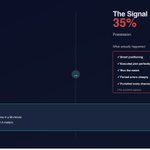
The signal: Apple resisted a touchscreen Mac for over a decade. Now it is reportedly putting one on the top of the Pro line, not on a side product. That tells you where it thinks professional work is heading.
The noise: touch itself. A screen you can tap is a feature. A Mac built around touch is a platform shift. The real test is whether macOS changes to suit it or whether touch is bolted on.
The detail almost nobody is leading with: the redesigned flagship is reportedly on M5 Pro and M5 Max, while the cheaper 14 inch gets M6. The most expensive laptop in the lineup could launch on older silicon than the base model.
New display, new design, new input method, and pricing is unknown. First generation hardware is where Pro buyers should be most careful and are often most tempted.
Would you pay a premium for the first touchscreen MacBook Pro, or wait for the second generation?

The M5 Pro/Max on the redesigned flagship while the base 14-inch gets M6 is the loudest tell here.
Apple is treating the touchscreen redesign as the headline, not the silicon. That only makes sense if they believe the new form factor (OLED + Dynamic Island + lighter chassis + touch) is the actual product shift, and the chip is secondary for this cycle.
The real risk for Pro buyers isn’t whether touch works, it’s whether macOS is meaningfully rewritten around it or just gains a few new gestures and a thicker bezel. First-gen input method changes on the Mac have a long history of being half-measures (Touch Bar, Force Touch trackpads that stayed niche).
I’d wait. The second generation will tell us if this is a real platform move or just the most expensive way to get a better screen.
The Premier League's biggest competitive advantage over every other league is not money.
It is pace.
The average speed of play, transition speed, and physical intensity in the PL is measurably higher than La Liga, Serie A, and Ligue 1. The Bundesliga is the closest comparison.
This is why technically elite players from other leagues sometimes struggle immediately. Their decision-making speed was calibrated to a different tempo.
It is also why PL teams lose Champions League finals at a disproportionate rate, by knockout stages, the pace advantage narrows and the technically superior continental sides exploit it.
The league's strength is also the ceiling on European success.
Football is the most democratic sport in the world and the least democratically governed.
Billions of people are emotionally invested in clubs they will never influence. They fund the product through tickets, shirts, and broadcast subscriptions. Their loyalty is the asset. Their voice is not.
This is not nostalgia for a simpler era. Every era of football has had money at the centre of it.
But there is a structural difference between clubs that treat supporters as a constituency and clubs that treat them as a consumption unit.
The ones that get this right build something durable. The ones that don't are eventually left with a brand, a stadium, and diminishing emotional investment in the product.
The game belongs to the people who care about it. The governance structure hasn't caught up yet.
Forest create plenty of chances in games but they just cannot finish them off when it matters. Arsenal on the other hand barely concede goals and have one of the tightest defences in the league right now. If the Gunners can grab an early goal at the City Ground it should open the floodgates and leave Forest chasing the game. Arsenal have the quality and organisation to control this one and they should come away with all three points.
#NFOARS #AFC #PremierLeague
What elite coaches actually do in training that most fans never see.
1. Shadow play — the team moves through their shape against no opposition, drilling the positional choreography until it is automatic. This is where systems live. Not on a tactics board.
2. Defined press triggers practised in isolation. The trigger itself goalkeeper receiving under pressure, a bad touch by the centre-back is rehearsed until the team's response is synchronised, not reactive.
3. Set piece rehearsal under fatigue. Not fresh legs in a training ground. The routine is practiced at the end of session when concentration is degraded, because that's when it's executed in games.
4. Transition drills. Going from defending to attacking and back again, repeatedly, in sequences. The space between phases is where goals happen. The best coaches close that space in training.
5. Video review of individual decisions, not just team shape. The best coaches show a player the three moments in the last game where their positioning created a problem and the three moments where it solved one.
The game is not won on the pitch. It's won in the 22 hours before kickoff.
Signal > Noise.
Premier League Matchweek 7 Predictions 🔥
Comfortable wins incoming for the big teams this weekend.
•Man City 3-0 Ipswich — Perfect start continues at the Etihad. Haaland keeps scoring.
•Nott’m Forest 0-2 Arsenal — Second-placed Gunners should control this one.
•Brentford 1-3 Liverpool — Not the easiest trip, but the Reds get it done.
•Everton 1-2 Chelsea — Tight on paper, but Chelsea have enough quality to take the points.
•Leeds 1-2 Man Utd — United finally start turning things around.
•Spurs 2-1 Coventry — First win of the season for Tottenham.
The rest of the weekend should be more competitive in the midtable scrap, but the big boys get the job done.
#PremierLeague #EPL #MW7
iPhone Duo pre-orders sold out almost immediately. That is the marketing and the reputation working exactly as designed.
Apple used the September event to turn a category that has been available for years into an Apple shaped product. The passport form, the continuous aspect ratio across both screens, the nano texture inner display, the titanium frame, and the claim that it is the thinnest iPhone when open. None of that is new technology. It is a specific aesthetic and a specific set of trade offs, presented as the version that finally feels finished. The people who buy two thousand dollar phones for the form are not waiting for a review. They already know what they are buying. Pre orders opened and the initial allocation disappeared within minutes. Launch day units went first. The rest of the early stock followed. That is not mass market demand. It is the audience Apple built the product for acting immediately.
The supply side is constrained. Reports ahead of launch put early production in the low hundreds of units per day, with a full year target around six million. A sell out against that number is not the same as selling out a normal iPhone. It is still the cleanest signal Apple could have wanted. The event created the story. The product’s style matched the story. The people who care about that story ordered before the day had properly started. The reputation did the rest. For a first foldable, that is the outcome the marketing was built to produce.
Clubs that win the title rarely have the best squad.
They have the most coherent one.
Coherence: players who understand their roles within the system, trust the player beside them, and accept their function without needing to impose their individual quality on every situation.
This is why title-winning squads often look inferior on paper to squads that finish third.
The paper squad has better players in isolation.
The title-winning squad has better players in context.
Coherence takes a pre-season to build, a full season to test, and one bad window to destroy. It is the most fragile structural advantage in football.
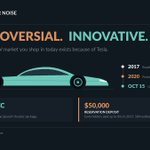
The noise: Tesla is a meme stock run by a man who lives on X.
The signal: the EV market you shop in today exists because Tesla forced it into existence. Before it, EVs were compliance cars. Superchargers made long distance driving credible, and rivals eventually adopted the plug.
Both things are true. Musk’s timelines slip. The Roadster was promised for 2020 and gets unveiled tonight at 9pm ET, SpaceX thrusters included.
The pattern: the ambition arrives early, the product arrives late, the industry moves anyway.
Is Musk why Tesla works, or why it’s doubted?

The most dangerous player on a football pitch is not the one with the ball.
It is the one making a run that hasn't been played yet.
Defenders track the ball. They see the pass. They react.
A forward who moves before the pass into the channel, across the face of the centre-back, into the blind side, has a one-step advantage that no amount of defensive quality fully neutralises.
The best movement in football is invisible until it becomes a goal. At which point everyone says the defender should have tracked the run.
They were tracking the ball. The run was designed for exactly that moment.
Premier League sides should go deep in the Europa and Conference Leagues this season.
They face superior opposition more consistently in the domestic league than most of their European rivals, who often dominate weaker leagues. That weekly intensity is ideal preparation for Thursday nights.
Palace (last season’s Conference League winners) have players like Chris Richards already battle-hardened in Europe. Bournemouth lean on Tyler Adams (RB Leipzig CL/EL experience) and Adrien Truffert (Rennes European pedigree). Sunderland have Granit Xhaka (two Europa League finals) and Nordi Mukiele guiding them. Brighton already know the Thursday-Sunday grind from their previous Europa League run.
The quality gap should show. #UEL #UECL
The Tesla Roadster isn’t really about how it looks.
Tesla already has the brand loyalty owners inside the ecosystem will buy it almost by default. The harder job is converting people who currently own Ferraris, Porsches, and McLarens and still believe combustion is the only way a real sports car should feel.
If the tech (SpaceX thrusters, sub-1s 0-60, software-defined dynamics, whatever else shows up tonight) delivers something no ICE car can match, then it stops being a Tesla halo and starts being a category killer.
Aesthetics are optional. The experience isn’t.
Tonight’s the first real test.
The winter window is almost never the right time to fix a structural problem.
A player signed in January has:
• No pre-season with the squad.
• No deep familiarity with the system.
• Partial fitness from a different training regime.
• A compressed window to integrate before the run-in.
Clubs that need structural fixes by January have almost always waited too long. The January signing patches the wound. The wound was opened in August.
The clubs that use January correctly buy a specific, narrow profile, a depth signing or a loan that addresses one defined problem.
The clubs that use it to "send a message" almost always disappoint.
Champions League Matchday 2 continues tonight and I’m backing Liverpool, Real Madrid and Manchester City to all get the job done, with goals flying in across the board.
LASK vs Liverpool: Reds still the clear favourites even with the injuries. Iraola’s side have enough quality in Wirtz, Barcola and the rest to break LASK down. Expect a controlled away win, 1-3 or 2-3.
Roma vs Real Madrid: Mourinho back at the Olimpico with Mbappé, Vinícius and Bellingham. Roma will make it awkward at home, but Madrid’s firepower should edge it. 1-2 or 2-3 feels right.
Man City vs PSG: Big one at the Etihad. City are in strong form after the Anfield win and Haaland is cooking. PSG will create chances, but I’m taking City to win a high scoring one — 3-2 or 2-1.
Elsewhere, Dortmund should have too much for Bodø/Glimt, and there are open games everywhere (Villa-Fener, Betis-Porto, Feyenoord-Como). Plenty of transitions and attacking intent means goals should be the theme of the night.
Liverpool, Madrid and City all win. Over 2.5 goals in most games. #UCL #ChampionsLeague
Attack still beats defence in the Champions League tonights games proved it again.
Arsenal stuck at 0-0 against Lille’s deep block until the second-half subs. Saka, Ødegaard and Havertz came on and the Gunners scored three in seven minutes. Tempo and combinations finally opened the gaps.
Barcelona went 1-0 down at Galatasaray then hit four in 37 minutes. Yamal and the wide runners found space once the hosts dropped. Quality in transition did the rest.
Club Brugge’s 4-3 win at Inter was pure counter-attacking. Tresoldi’s hat-trick punished every time Inter pushed high and left space behind.
Even the tighter ones followed the pattern. Viking matched Bayern 3-3 with early set pieces and breaks before Kane and Díaz responded. Atleti’s early goal plus high press kept United quiet.
Organised low blocks still frustrate. They rarely survive sustained pressure, smart rotations and clinical finishing in transition. Raise the tempo, attack the spaces then the defence cracks.
#UCL #ChampionsLeague
The long international break does not reset form. It just gives players who have been short of it a clearer stage to force the issue.
Arsenal should beat Lille. They controlled the first matchday and have the structure to manage a side that will sit and look for transitions. The break has not changed the shape. It has only meant the players already carrying the load have had national-team minutes and the others have had time to train. Atlético should edge Manchester United at the Metropolitano. United’s inconsistent players will arrive knowing September was not good enough, but the distances and the press make it a hard place to force a performance. Barcelona still have the better chance of scoring first at Galatasaray and then managing the game, though the home crowd and the travel favour the side not asked to control the ball for long periods. Bayern should have enough at Viking.
City should beat PSG at the Etihad in a tight game. Both sides have players who will want to show they still decide matches after three weeks of different systems, but City’s recent form gives them the edge in sustaining the press. Madrid should take it at Roma. Mourinho’s side will be organised and difficult to open, and Madrid’s players short of club form will be expected to produce the separating moment. They usually do.
The sides that were already controlling games will keep doing so. The players who have been short of form will get their chance in the first 20 minutes. Most of them will not take it. The ones who do will be the ones whose technical level still matches the role.