


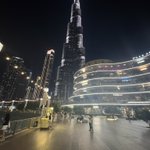


This is a war crime. Who should be directly held responsible for it?

Residents across several UAE districts, including Dubai (Deira, Al Nahda, Mirdif, Al Mizhar, and Mudon), reported noticing again an unusual fuel-like smell, with some comparing it to petrol, diesel, or kerosene. This situation coincides with maritime intelligence Windward indicating that the damaged VLCC-size tanker Gem No. 2 is leaking oil 25 km off Umm Al Quwain, sending an oil slick drifting toward the Ajman and Sharjah coastline that risks reaching desalination intakes and ports by October 22 to 23 if the leak is not contained.
We are finally getting to our better weather in the GCC…..
Buckle up - here start the road trips.
First up - the beautiful city of Muscat this weekend….
In 2021, I wrote an article titled “U.S. Withdrawal from Afghanistan: Will Anything Collapse,” drawing on years of consulting work in Afghanistan.
I made three predictions that earned me considerable criticism (and sleepless nights:). Five years later, they are worth revisiting.
1. From sub-state militancy to state consolidation.
For decades, Afghanistan was a breeding ground for militant proxies, used as instruments of foreign policy and destabilisation by global and regional powers. Taliban's return marked the beginning of a shift towards consolidating state authority over sub-state groups, and potentially from forever wars to strategic peace in the Middle East
This was not endorsement of the Taliban's domestic governance or its treatment of women. It was an assessment of the changing geopolitical utility of the Afghan state.
2. The beginning of the US military-industrial complex's regional retrenchment.
It was Afghanistan in 2001 that started the new era of American military interventionism in the region, a decade after the Cold War ended. Its 2021 withdrawal signalled the beginning of the end of the forever-wars model. This was based on three trends that were then just consolidating
a) US’s (Western Hemisphere’s) growing energy self-sufficiency – meant that the ME’s hydrocarbons were no longer existential for the United States
b) US’s constrained ability to guarantee its global security architecture due to escalating debt levels, rise of China and outsourcing of critical manufacturing
c) Global order evolution from US-led unipolarity to China and multiple 'Global South' mid-power nodes
3. A tacit convergence of great-power interests.
My most controversial proposition was that major global and regional stakeholders had effectively reconciled to Taliban rule, viewing it as the only force capable of consolidating authority across Afghanistan and containing cross-border militancy.
I now see extension of Afghanistan across the Middle East.
· Syria: An insurgent movement transitioning into state authority, integrating or marginalising rival armed groups.
· US military posture: Growing pressures on America's regional military footprint.
· Strategic convergence: A convoluted alignment of interests around stabilising the Middle East, South Asia and Africa - not through ideology, but economic necessity.
After all, these regions are becoming central to the next economic order: AI, energy, critical minerals, data centres and trade corridors.
That’s why I always say that Nothing in geopolitics happens in isolation. The butterfly effect is real. Follow the direction of changes, not individual events.
Link in the comments.....

A few people have asked me about the protests in France. I generally avoid commenting on Europe because any structural critique is immediately labelled left, right, Islamist or conspiratorial.
But my controversial hypothesis is that France is only the beginning of prolonged civil unrest across Western Europe, representing a global power transition. Europe is increasingly becoming a battleground for three powerful, interconnected forces:
1. Transnational financial capital: The progressive vassalization of Europe by global financial interests, including those centred in America. From self-defeating energy and industrial policies to immigration and China relations, European governments have increasingly compromised their own economic sovereignty.
2. The military-industrial complex: As the Middle East's decades-old forever-war model faces pressure from resurgent nation-states and growing 'Global South' power, Europe is emerging as a new centre of gravity for militarisation, rearmament and prolonged security confrontation with Russia.
3. The tech-industrial complex: Technologies of surveillance, digital control and algorithmic influence could increasingly be brought home into Europe's own civilian structures. Add platforms like Musk's X, which can amplify polarisation, and the potential for social fragmentation becomes enormous.
My thesis: Europe's coming unrest is not left versus right, or natives versus immigrants, though it will be projected like this. It is symptomatic of a much larger global power reset - from decades of US-led unipolarity towards an emerging, contested multipolar order. AND Europe is the biggest battleground.
France may be the opening chapter, not the exception.
US and China have far more to lose from a global financial crash than from a gradual transition to a multipolar world order. I suspect there's more tacit cooperation between their elites than we acknowledge.
Look at the semiconductor sell-off.
China's CXMT announces denser memory chips. Micron, Samsung and SK Hynix tumble. Korea's KOSPI plunges over 6%. Nvidia and Cisco's optical-networking announcement adds to the rout.
Ironically, even CXMT's own shares fell 5% on its own news.
Meanwhile, memory makers' record profits rest on shortages that aren't disappearing overnight.
I believe China has the rug pull to collapse the US AI-led stock market, bond markets and even the commodity ecosystem. But China is deeply exposed to the same financial and tech complex as the US.
My bet: A messy, managed transition to a multipolar, nodal world order rather than an all-out financial collapse.
The rivalry is real. So is the mutual dependence
What I admire about the UAE’s tech ecosystem is its regulatory sandboxing approach: test technologies in controlled environments, learn from real-world deployment, and adapt regulations as innovation evolves. Unlike the EU’s tendency to regulate upfront, often stifling innovation, or countries that react too late with knee-jerk legislation.
Dubai’s experiments with autonomous electric passenger pods are an interesting example. Imagine small, on-demand, driverless vehicles using AI, cameras and sensors to move passengers along designated routes, bridging the gap between conventional mass transit and personalised mobility.
The larger point is about the evolution of Dubai as a global city.
No city can become truly global while relying overwhelmingly on private cars. Affordable, accessible and efficient public transport is essential, not just for sustainability, but for productivity, liveability and economic competitiveness.
The future of urban mobility isn’t simply more roads or more cars. It’s smarter ways of moving more people with fewer vehicles.
And Dubai appears to be experimenting with precisely that.
reuters.com/article/lifestyl…

As the conference season gains steam in the UAE, I am getting a lot of questions on the volatile situation in Saudi Arabia and Yemen.
I will just say one thing ‘all is quiet on the eastern front for the moment.’ So Habibi come to Dubai:)
What do Saudi Arabia, UAE, Qatar, India, Turkey, Russia and, to a lesser extent, China have in common?
They are all sizeable mid-powers (barring China) seeking to influence and control the global power transition. And almost all are facing significant pressure on their economic and strategic foundations.
Gulf: Missiles and drones threaten energy infrastructure, aviation, trade corridors and investor confidence.
India: US trade pressure, energy shocks and domestic political tensions test its strategic autonomy.
Russia: Ukrainian strikes and Western sanctions target the energy revenues underpinning its geopolitical power.
Turkey: Inflation, currency pressures and financial volatility constrain its regional ambitions.
China: Slowing growth, weak domestic demand and energy disruptions complicate its global ambitions.
Different countries. Different vulnerabilities. Different adversaries.
But an interesting convergence: the very countries seeking a greater say in the emerging world order are facing pressures that could weaken their bargaining power.
Coincidence, systemic turbulence, or strategic pressure? Worth examining.
Middle East debates on social media have become a contest of loyalties: pro-Iran vs. pro-Gulf, proxy supporters vs. nation-state defenders. Everyone sees the other side's faults; few question their own heroes, and fewer still recognise how much geopolitics has changed.
Contrary to the popular hate, Iran did not create all the movements we now call its proxies. Hezbollah emerged amid Lebanon’s civil war and Israel’s 1982 invasion; Hamas during the Palestinian Intifada in 1987; and the Houthis from local religious and political grievances in Yemen in the 1990s.
All had genuine domestic roots, whatever their subsequent actions. Iran cultivated them into a regional network, but other global and regional powers also helped perpetuate conflicts. The proxy model offered strategic leverage, plausible deniability, contained escalation and helped sustain the region's external security architecture.
But something fundamental has changed.
The Middle East, particularly the Gulf, is emerging as a hub of global capital, energy, logistics and advanced technology. The India–Middle East–Europe corridor reflects this shift. With trillions in sovereign wealth, energy resources, critical minerals, young demographics and expanding data centres, the wider region (including Africa) has many of the ingredients needed to power the next wave of technological growth.
This new economic model is incompatible with perpetual instability.
Armed groups operating outside unified national institutions have become obstacles to stability and recovery. Lebanon, Yemen, Iraq and Syria demonstrate the costs of fragmented sovereignty, though responsibility extends well beyond the armed groups to the powerful nation-states in the region.
We may now be witnessing a gradual geopolitical recalibration: Hezbollah's weakening, Syria's political transition, renewed debates over militia integration in Iraq and escalations in Yemen.
The solution cannot simply be military defeat. These movements have constituencies and grievances that need political accommodation. The objective should be to integrate them into credible national political and security institutions, with negotiated settlements wherever possible.
My larger hypothesis is simple:
The old Middle East was shaped by proxy wars, divided societies and foreign military intervention. The new Middle East, built around sovereign wealth, global trade, energy and technology, can no longer afford to operate on that model.
What was the purpose of Elon Musk’s take over of X….? Let me start
To make us all the most radical version of ourselves so that we keep blaming each other for the games that the controlling powers are playing.
What’s your take?
When all hell broke loose in the Gulf in March 2026, I made three predictions about what would follow. This is a good time to take stock....
1. The UAE would increasingly “out-invest"
Keep its institutional and strategic core in the UAE, but expand its technological, energy, logistics and infrastructure footprint overseas. This creates geographic diversification and back-ups during emergencies at home - but also gives more countries a direct economic stake in the UAE’s stability.
2. At home, the UAE would accelerate automation.
AI-native government, agentic AI and manpower optimisation become even more important in an environment where conflict can produce sudden population and labour-market shocks. Technology cannot replace the strategic depth that people provide, but it can partially compensate for it.
3. The Gulf would not simply be collateral damage in the regional transformation - it would become an active player in shaping it.
The UAE absorbed much of the first phase of disruption. Saudi Arabia is now confronting the next phase.
Saudi Arabia and the UAE have perhaps the greatest structural incentive to push the region toward a more stable equilibrium. Their post-oil strategies depend on peace: data centres, AI, capital markets, tourism, logistics and the new Global South corridors cannot thrive amid permanent regional war.
So I would be careful about interpreting every escalation involving the Gulf as evidence of its decline. A return to normal is already evident in the UAE; Saudi already has stakes in the new Syrian and Lebanese governments, and it now needs to sort Yemen as a next step in the ME transformation.
The Gulf may be paying some of the price of the Middle East’s transition precisely because it has one of the largest stakes in what comes after it.
I remember a senior US military strategist once telling me there are two kinds of countries:
“Those that protect themselves through military might, often at the cost of economic development - and those the world has an interest in protecting because of their economic hard power.”
The Gulf increasingly belongs to the second category.

