

Advocate. When I'm not drafting petitions, I read fiction, study history, brew coffee, learn languages, admire art & daydream of becoming a writer.
By the Banks of Ganga
Joined November 2009
- Tweets8.5K
- Following441
- Followers1.3K
- Likes15.9K



Pinned Tweet
And while we are talking of deaths, mysteries and conspiracies around Shahjahanabad, let me also shamelessly replug my old piece on Shahjahanabad, a Mughal Prince and what killed him.
livehistoryindia.com/story/e…
Shashank शशाङ्क ششانک retweeted

How do we judge a film? By its craft? By its recall value? By the entertainment and spectacle it offers on the first watch? Or simply by the box-office collections it manages to secure?
A big-budget film led by a major star carries the burden of delivering numbers at box office.

Amul is basically living in the state of anarchy. There seems to be no central management or authority. Every employee comes up with their own unique product which never makes it to the market.


11
436


Shashank शशाङ्क ششانک retweeted

I remember cross examining this very officer in a POCSO matter. In a serious case of S.6 POCSO & 376D, she committed blunders.
- no site plan of the crime scene
- no chain of custody of the forensic material
- no CCTV footage seized
- no CDR/ IPDR records taken


Shashank शशाङ्क ششانک retweeted

The hunt for interpolations in Hindu texts is a fool's endeavor. The only thing you would find at the end of the road is a complete dismantling of Hindu textual tradition.
Shashank शशाङ्क ششانک retweeted

Karwa Chauth is a festival of Central-West UP, Delhi, Haryana, Punjab and parts of Rajasthan. It's a fast observed at personal level, all rituals are performed in home without causing any disturbance to anyone. But it's cultural impact is so strong, it has made an impression on women of regions where it isn't traditionally celebrated and this is something the chauvinists can't tolerate. Hence the hate, it's nothing but jealousy.
'We celebrate this instead of karwa chauth' Abbe toh wo manao, kaun mana kar raha.
Senior Members of the Bar urged the Bench to take a lenient view of what they felt was a unintentional and unconscious mistake. The Bench dropped the proceedings sensing the sentiment of the Bar and the courtroom.
Two years later, Ajay Bhanot rose to the Bench. (3/n)
1
83
Senior Members of the Bar appeared in favour of Ajay Bhanot and urged the Bench to take a lenient view for an unconscious and unintentional mistake. Eventually the court was compelled to drop the proceedings against Ajay Bhanot owing to the pressure of the Bar. (3/n)
1
69
Shashank शशाङ्क ششانک retweeted
What’s worse than Kumar Vishwas the poet?
Kumar Vishwas the lyricist.


Shashank शशाङ्क ششانک retweeted
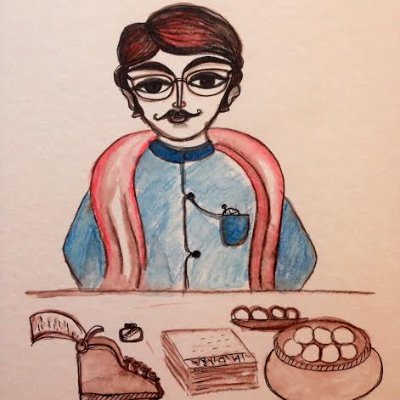
Had the pleasure of buying excellent phirni from Gabriel Garcia Marquez in Amritsar.

Shashank शशाङ्क ششانک retweeted

My views on Article 19(1)(b), because the question of “permission” for assemblies keeps coming up:
1. The provision gives citizens the right “ to assemble peaceably and without arms.” I read those words as making a prior-permission regime very difficult to defend, and my reasons are purely textual.
2. First, the form of the guarantee in Article 19(1) does not provide that the State may permit citizens to assemble. It provides that all citizens “shall have the right.” That language declares an existing entitlement. It does not confer something the State controls. Nothing in clause (1) contemplates a grantor, and a regime under which the citizen must first seek permission inserts a requirement that the text does not contain.
3. Second, the verb. The right is “to assemble,” which is the act of gathering. It is not a right to apply to gather. The protection attaches when people assemble. A requirement that makes assembling lawful only after an administrative step shifts the right to a position the provision does not mention.
4. Third, the qualifiers – the text places two conditions on the right: the assembly must be peaceable, and it must be without arms. Both go to the conduct of those assembling. Neither goes to approval by the authority. “Peaceably” is an adverb of manner, and manner can be judged only as the assembly proceeds or after it. A permit asks the officer to decide beforehand whether a gathering that has not yet taken place will be peaceable. The constitutional standard is conduct. The administrative standard is prediction. They are not the same.
The second point is a matter of construction. The framers listed two conditions. On the ordinary rule, expressio unius est exclusio alterius, that list does not admit a third condition of prior leave. Had one been intended, it would naturally have appeared alongside the other two.
5. The answer usually given is Article 19(3), which permits reasonable restrictions in the interests of public order. I accept that clause (3) permits restrictions. The operative words, however, are restrictions “on the exercise of the right.” A restriction on exercise presupposes that the right is being exercised. It regulates time, place and manner. A licensing requirement does something different. It keeps the right in suspense until the authority consents. In substance that is a prohibition subject to dispensation, and I do not think it fits comfortably within the word "restriction."
Article 19(6) makes the contrast clear. For trades and professions, the framers expressly allowed laws prescribing “professional or technical qualifications,” which is a precondition stated in terms. Clause (3) contains no comparable language. Where the Constitution intended to allow a precondition to the exercise of a freedom, it said so.
Shashank शशाङ्क ششانک retweeted
Next time the chaos of life gets you down, remember this quote from Cormac McCarthy: “You never know what worse luck your bad luck has saved you from.” Say it aloud. Feel it in your bones. Then just deal with the two feet right in front of you. It works.
Shashank शशाङ्क ششانک retweeted

I came across a theory that AI is starting to make more mistakes because the internet is increasingly polluted with AI slop. The idea of AI cannibalising itself into obscurity is one of my favourite things ever. I hope it is true and I hope it becomes impossible to fix.

