

An ARC Future Fellow in imaging, AI and computer science at the University of Queensland. I am a counter-strike tragic that loves gaming, maths and programming
Australia
Joined January 2010
- Tweets437
- Following377
- Followers186
- Likes2.3K

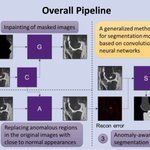



Manual segmentation in #MedicalImaging is very time consuming and costly. @sbollmann_MRI and I at #UQ have released SAMRI: Segment Any #MRI, a #AI model capable of segmenting any #MedicalImage (including small and thin objects such as #Cartilage) just by drawing a bounding box.

Getting into the full #Linux experience with #ArchLinux recently. Shared my experience installing it for #LinuxGaming with #SecureBoot: l3mmings.blogspot.com/2025/0…
Incredibly lucky to have been awarded an @arc_gov_au #FutureFellowship. Dream come true. 🙏
Special thanks to all my mentors and supervisors over the years and the support of @UQ_EAIT. Looking forward to understanding human vision with AI for more affordable MRI for all.
Shakes Chandra retweeted

Happy 25th birthday to the greatest video game ever made, Counter-Strike.
A Half-Life mod which has spawned communities, created memories, and established the greatest esport of them all. We're grateful to have the most passionate players in gaming.
Here's to 25 more! 🎂🎉
Shakes Chandra retweeted

🌊🏄♀️ Exciting news! A postdoctoral opportunity is now available in my team in Melbourne! Join us and contribute to cutting-edge research in imaging the aging brain. #postdocopportunity #scienceAustralia 🏖️🐨🦘
jobs.csiro.au/job/Melbourne%…
Shakes Chandra retweeted

Excited to share that our paper entitled "A Tiered Quadruplet Network with Patient-Specific Mining and Dynamic Margin for Improved Ugly Duckling Lesion Classification" has been accepted at the 2024 IEEE International Symposium on Biomedical Imaging (ISBI)! #ISBI2024

We recently introduced Anomaly-aware image segmentation published in Medical Image Analysis. Check it out: doi.org/10.1016/j.media.2024…

Shakes Chandra retweeted

Our neurodesk.org paper was featured in Nature Methods today: nature.com/articles/s41592-0…
Neurodesk is a game-changer for accessible, flexible, and reproducible neuroimaging analysis across computing environments! 🧠💻


Shakes Chandra retweeted

Slog sweep over cow corner for six. Don't bowl them there champ. #cricket @gradecricketer

Far out! Five days until new #Bluey episodes 🏏

ALT Rusty holding a cricket bat about to hit a cricket ball
Shakes Chandra retweeted

🎉 Exciting News! Our @nhmrc Ideas project has been funded to explore new insights into the cholinergic system in early Alzheimer's disease with novel PET imaging, in collaboration with @ehealthresearch, @QIMRBerghofer, University of Queensland and many others!!! 🙏
#Alzheimers
Shakes Chandra retweeted

I am recruiting two PhD students in human-centered AI:
1) Explainable decision support for skin cancer detection w/ @AlinaBeeTweets and @hpsoyer
2) Human-centered verification of language model outputs w/ @joelmmackenzie and @guidozuc
Further details: uqtmiller.github.io/students…
Shakes Chandra retweeted

Really excited to see our large review piece out in Medical Image Analysis; we review medical image synthesis, analyse distinct network architectures, loss functions, quantify performance & provide overview of datasets. Challenges and opportunities are discussed. 👉

We are excited to announce that our survey paper "Deep Learning based Synthesis of MRI, CT and PET: Review and Analysis" has been published in the Medical Image Analysis Journal (MedIA).
Check it out here : doi.org/10.1016/j.media.2023…
Like they renormalise the infinities away and get a Nobel prize. Looking at you Quantum field theory. 🤣


Shakes Chandra retweeted

New YouTube video: 1hr general-audience introduction to Large Language Models
youtube.com/watch?v=zjkBMFhN…
Based on a 30min talk I gave recently; It tries to be non-technical intro, covers mental models for LLM inference, training, finetuning, the emerging LLM OS and LLM Security.


Shakes Chandra retweeted

Be an Open Source Absolutist!
It is hard to overstate how much value Open Source Software has added to the world, and how broadly empowering it is.
Operating systems, development tools, core libraries, and critical applications – a great many of the software tools used by the most powerful companies in the world are the exact same ones available to hospitals, students, and everyone else. For free. And not just to use, but to inspect, modify, extend, and redistribute.
Back in the 90s, there were legal battles in the US over software capable of strong encryption. There were scare stories about how terrorists and child pornographers would use the technology to evade justice, but people were also wearing T-shirts printed with forbidden code to mock the idea of algorithms too dangerous to share.
It was stupid, and I was ashamed of the regulatory state, but we got better.
Open Source AI is in many people’s crosshairs today. They believe that giving free access to state of the art algorithms and models without any guardrails constitutes a danger to society, that the public can’t be entrusted with a research model that wasn’t hammered into a box of their designated dimensions. “As a large language model, I cannot…”
Unfortunately, this is actually inside the Overton Window of possibilities right now.
Let’s push it out.
In the spirit of the first amendment, congress should make no law abridging the freedom to release open source software.