

Health Research🔬 DDS/PhD | Radiologist | Assoc Prof RSU Riga & Visiting Prof LMU Munich | #dentistry🦷#stats 📊 #openscience |🤖 #AI4H| 🇨🇱🇱🇻
Cēsis, Latvija
Joined September 2009
- Tweets18.6K
- Following2.7K
- Followers2.7K
- Likes12K
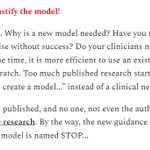






About developing prognostic models in dentistry for dental caries: WHY?
Read comment here dentalresearch.substack.com/…
and full paper here doi.org/10.1159/000553309

Sergio Uribe retweeted

As an Editor, in past ~6mo, we are receiving an avalanche of unsolicited review articles (“scoping” “systematic”, narrative, NOS) on topics and ?s NO ONE EVER has asked and clearly with heavy AI lift. Even the cover letters all read the same…alarming and sad. #publishing
Sergio Uribe retweeted

REPORTAJE | “Pidieron una reunión para decir cómo hacer las clases”: El drama de profesores universitarios que describen una generación de ‘quintos medios’ en la educación superior
theclinic.cl/2026/10/10/pidi…

Sergio Uribe retweeted

The ultimate LLM benchmark: Chilean Spanish.
80% of AI models fail to recognize Chilean Spanish and insist on speaking like an Argentine

80% de modelos de IA no logra reconocer el español chileno e insiste en hablar como argentino
biobiochile.cl/noticias/cien…

Aluvion en Chile (o sea Las Condes): imposible de preveer segun @SenapredChile y aquí las miles de noticias que indicaban un superniño 2026 @CNNChile @biobio @latercera @elvillegaschile google.com/search?q=predicti…


Sergio Uribe retweeted

NEW: AI just became authorized to issue prescriptions in the US.
Nolla Health says its AI can assess patients, recommend treatment, and issue initial prescriptions, starting with acne care in Utah, with physician oversight available.


Sergio Uribe retweeted

When open data are misused.
retractionwatch.com/2026/10/…

The ultimate goal … is a transformation of the culture of science to value replication as something fundamental, rather than see replication as something that's done on the edges and not particularly rewarded, or even worse, sometimes seen as a threat to a scientist science.org/content/article/…

Prognostic Clinical Predictive Models for Dental Caries Using Artificial Intelligence: Methodological Considerations / doi.org/10.1159/000553309


AI in hospital billing adds ~ $1 billion in extra costs
bcbs.com/about-us/associatio…
It's difficult to keep the promise that AI will increase coverage if it ends up raising patients' & plans' bills.
There are better ways to dev/deploy/implement AI in healthcare #TuringTrap

The Ph.D. Job Crisis Is a Needed Market Correction by @AllysiaFinley wsj.com/opinion/the-ph-d-job… via @WSJopinion

Reporting guidance for #ArtificialIntelligence research papers. From doi.org/10.1016/j.jdent.2025…

@AnthropicAI : Our latest model attempted to breach security and escape...
@OpenAI : Our latest model breached security and escaped, but we found them...
(Now waiting for @GeminiApp to say that their model escaped and they haven't found it yet...)
Happened...
xitter.cf/spectatorindex/status/…

Do most new AI models actually improve caries prediction? Here are some tips to build models clinicians can trust and patients can use dentalresearch.substack.com/…
From Caries Res doi.org/10.1159/000553309
Do most new AI models actually improve caries prediction, or just add unused papers?
Existing tools already exist (Cariogram, CAMBRA, ADA). Many AI models have methods problems, few are implemented, and none have yet shown patient benefit.
How to build models clinicians can trust: dentalresearch.substack.com/…
From Caries Res 2026. doi:10.1159/000553309
What are the main reasons why #dentistry journal editors reject #artificialintelligence research papers? Read the full paper doi.org/10.1016/j.jdent.2025…


Ai reviewers to review AI written papers. The human in the loop pay the bill...

“Ready for the robot reviewers? As AI’s capabilities grow, researchers and publishers are exploring how it can support peer review—and where it still falls short.”
science.org/content/article/…

Sergio Uribe retweeted
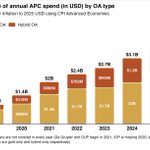
“Adjusted for inflation, annual spending [on APCs] quadrupled from $0.9 billion in 2019 to $3.7 billion in 2025, with >85% concentrated among a few large publishers.”
arxiv.org/abs/2608.16322
