

Понимать и менять | Розуміти та змінювати | Understand and change || Support at: https://xitter.cf/t.co/PtyDOOMg8H
Joined June 2022
- Tweets311
- Following24
- Followers3K
- Likes587


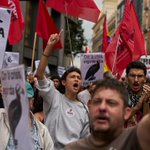





A week away from the second round, a new wave of revelations about Flávio Bolsonaro’s criminal links has swept across Brazil. Will Lula benefit from this?
The second round of the presidential election in Brazil will take place on 25 October, and its main backdrop is the case of Daniel Vorcaro, the former owner of the private bank Banco Master, which was wound up a year ago by the Central Bank of Brazil on suspicion of financial fraud.
In the first round on 4 October, Flávio Bolsonaro secured 47.03 per cent of the vote against Lula’s 45.16 per cent, although polls in September had shown the incumbent president with a comfortable lead. The proven link between Bolsonaro Jr and the banker – funding for the film ‘Dark Horse’ about his father and a new report by the Federal Police: he is listed as a user with the highest level of access (usuário master) to the offshore account of Alcazar Holdings, owned by lawyer Willer Tomaz. The offshore company owned a third firm, Fraction 024, which owned the aeroplane on which Flávio flew in January 2025. The aircraft was part of the fleet of Prime You, where Vorcaro was a partner until September 2025. Flávio and Tomaz deny having a joint account or any business relationship: Tomaz describes the trips as private and dismisses the claim of involvement in the company as pure speculation.
Vorcaro is being investigated on suspicion of human trafficking. A police investigation into him was launched in May, but no charges have yet been brought. The banker is suspected of pimping, sexual exploitation, running an establishment for these purposes, and operating an international human trafficking network. The case is based on WhatsApp messages published by the news portal UOL on 13 October, in which Vorcaro discusses with accomplices investments of at least 4.3 million reais, as well as the recruitment of young women from abroad, including Ukrainian refugees. To classify the offence as ‘human trafficking’, courts usually require evidence of violence or coercion, the existence of which has yet to be established.
According to UOL, Vorcaro also wielded considerable influence over the national press. The management of the Metrópoles portal would send Vorcaro articles in advance: at least 14 pieces, 11 of which were amended at his request. Banco Master’s advertising contract with the portal was worth 20 million reais (around 4 million dollars); there are also reports of negotiations for a deal worth 52 million. Master was also the main sponsor of the Valor Econômico Brazil–USA forum, organised by the media giant Globo.
Due to the scandal surrounding Vorcaro, Globo sacked the managing director of its print media and radio division, Frederic Kachar, who had worked for the group for almost 30 years: he had approached the banker to ask whether he would like Kachar to ‘request corrections’ to certain negative articles. When he was unable to influence editorial policy through managers, Vorkaru resorted to coercive methods. The reason for his arrest in March was the alleged staging of a robbery of O Globo journalist Lauro Jardim in order to silence him. In correspondence on this matter, Vorkaru calls for Jardim to have ‘all his teeth knocked out’.
In May, following the publication of reports about his links to Vorcaro, Flávio lost around six percentage points in the polls. It is difficult to predict the outcome of the second round: according to polls, Lula retains a narrow lead, so the result will depend on how successfully he manages to mobilise his supporters.
Against this backdrop, reports of foreign interference via digital channels have also become more frequent in Brazil: ranging from claims that Mark Zuckerberg’s Meta was promoting Bolsonaro’s campaign whilst simultaneously suppressing content supporting Lula, to reports that Flávio’s campaign team had enlisted the services of the American firm Elytron, which offered an AI-based system for spreading rumours, creating fake accounts and waging ‘psychological warfare’.
Pictured: Flávio Bolsonaro with Vorcaro's associate Luiz Mourão, nicknamed ‘Sicario’

Artem Kirpichenok's lawyer arrested
The case of Artem Kirpichenok, a historian and critic of Israel, is taking an increasingly alarming turn. According to reports from Kirpichenok’s support group, his lawyer, Inna Lebedinskaya-Katz, was arrested this week. She is being held in a detention centre; her case, like that of her client in Israel, is subject to a media blackout, with a ban on the publication of any material in the media.
As a result, Kirpichenok, who has been subjected to torture, has been left without a defence lawyer. It is also reported that Lebedinskaya-Katz is accused of collaborating with a foreign state or its agents, though this information has not been officially confirmed.
The UN Basic Principles on the Role of Lawyers (1990) explicitly states that a lawyer must not be equated with their client or prosecuted for carrying out their professional duties. Moreover, as the grounds for her arrest have been classified, there is no way of verifying exactly what she is accused of.
The consequences of this arrest are already clear. It will be much harder to find a new defence lawyer for Kirpichenok, as the lawyer might need a lawyer of their own right away.
More on Kirpichenok's case: xitter.cf/septemberreload/status…

On 23 September, the court considered the pre-trial measures to be imposed on Artem Kirpichenok, a historian and critic of Israel. His lawyer requested that he be released on bail or that the restrictions be limited to a ban on leaving the country. Together with representatives of the media, she also asked for the ban on publishing material relating to the case to be lifted. Artem himself was not brought to the courtroom; he took part in the hearing via video link only.
The judge refused to lift the publication ban, and the lawyer, together with the newspaper Haaretz, will appeal this decision to the Supreme Court. The decision on the preventive measure has been postponed until 24 November. At that hearing, the court is due to determine whether there were grounds for the arrest in the first place and whether it is lawful to keep Artem in custody until the end of the trial.
Kirpichenok has been in Israeli custody for over a month. No formal charges have been published, but he is suspected of espionage. During the investigation, he was subjected to ‘excessive physical pressure’, as torture is termed in Israel. He remains barred from contact with the outside world, as well as from receiving parcels and letters. Every meeting with his lawyer must be secured through the courts.

The string of suicides among witnesses in the Epstein case continues. A financier who had proven the link between Lutnick and Epstein has taken his own life
On 23 September, Simon Andriesz, a former banker and official informant in the Epstein case, took his own life. Andrish was a managing director at BGC Group, a major international brokerage firm headed by the American billionaire Howard Lutnick (now the US Secretary of Commerce). Between 2020 and 2021, Andriesz provided the FBI with information about the concealed financial links between Howard Lutnick and Jeffrey Epstein.
After millions of pages of government documents relating to the Epstein case were declassified in early 2026, Andriesz began to examine them. Knowing the inner workings of the BGC Group, he searched the documents not for the full name of his former boss, Howard Lutnick, but for his working initials – HWL. He managed to uncover correspondence from 2018 proving business links between Lutnick and Epstein through a joint start-up.
Andrish passed this information on to the FBI, the UK financial regulator and the US House of Representatives Committee on Oversight and Accountability. It was this evidence that formed the basis for Lutnick’s questioning in Congress in May this year. Latnik assured Congress that he had severed ties with Epstein as far back as 2005. However, the letters found by Andris proved otherwise: in 2018, they were still conducting business together, and Lutnick personally reported to Epstein that the company had ‘finally started to turn a profit’.
Andris also provided the investigation with internal project documents from Lutnick’s investment bank, Cantor Fitzgerald, dating from 2013. These contained information stating that the bank planned to grant a loan of £1 million to Prince Andrew in exchange for his connections with major business figures and politicians. According to Andris, the essence of the deal was, ‘to put it simply, to buy the prince’.
In August 2026, Simon Andriesz wrote on social media platform X that the revenge of influential figures had destroyed his career, his financial situation, his health and his family. No financial institutions would employ him, and he was constantly under severe stress. The UK’s Financial Conduct Authority mistakenly informed Andrish that he had lost his status as a whistleblower and was no longer under state protection. The authority later acknowledged its mistake and formally apologised to his family, but it was too late — Andrish felt that the state had abandoned him. Andrish’s family confirmed that he had taken his own life. The police found no evidence of a violent death.
Andriesz’s suicide once again raises questions about the role of banks in the Epstein case. For instance, Germany’s Deutsche Bank ignored signs of suspicious transfers between Epstein’s contacts and business partners for many years. Epstein had more than 40 accounts with the bank through which he carried out transactions — money was transferred to women involved in human trafficking. The money was withdrawn regularly in small amounts — in banking practice, this is classified as illegal ‘structuring’ with the aim of concealing income. The bank saw these patterns but did not freeze the accounts.
Deutsche Bank’s senior managers Thomas Bowers and Rosemary Vrablik used Epstein as ‘bait’ to attract billionaire clients. When, in 2014, internal disputes arose within the bank over whether it was time to close the accounts of this toxic client, the management attempted to promote him to an exclusive premium service programme for individuals with assets exceeding half a billion dollars. Bowers took his own life at the end of 2019 at his home in Malibu, three months after Epstein’s arrest and death.
The Epstein case highlights the close ties between the security services, key factions of capital and politicians. Just as governments bailed out major banks during the Great Recession to keep the economy afloat, it was easier for the banks themselves to retain suspicious clients by turning a blind eye to their transactions. The victims of these processes include both former accomplices and those who sought to bring about an investigation.


Die Linke’s leadership in Berlin has accepted the SPD and the Greens’ conditions regarding anti-Semitism and military support for Israel. Party members are calling this a betrayal
The Berlin chapters of the Left Party, the SPD, and the Greens have begun preliminary talks to form a city government. A major scandal has already erupted as part of this process. The parties have reached an “agreement on combating anti-Semitism.” The SPD and the Greens made the conclusion of this agreement a strict condition for forming a coalition.
The parties recognize Israel’s right to exist as “non-negotiable,” agree to establish a committee to investigate “anti-Semitic incidents” within the parties (with penalties ranging up to expulsion from parliamentary fractions), and also commit to strengthening the police and the Office for the Protection of the Constitution under the pretext of protecting Jewish organizations.
More than 100 members of the Left Party, including members of the Bundestag, issued an open letter. They called the concession made by their negotiators a “serious political mistake.” The letter was subsequently signed by many leftists outside the party as well. There are several complaints:
- Support for the police force. Historically, Die Linke has advocated for limiting the powers of the intelligence services and the police—this is one of the points in their election platform in Berlin. Critics within the party believe that, under the pretext of protecting against anti-Semitism, the security apparatus—which is actively used to suppress climate and pro-Palestinian protests—will be strengthened. By early 2025, the Berlin police had recorded approximately 9,000 criminal cases related to such protests. The use of tear gas and overt physical violence have become standard practice when dispersing demonstrations. Often, the protesters themselves find themselves under investigation for “resisting law enforcement officers,” resulting in criminal charges and bans on political activity. UN experts have already called on Germany to end the “criminalization and police violence” against pro-Palestinian activism. For decades, the Office for the Protection of the Constitution (Verfassungsschutz) has been surveilling left-wing activists, including members of Die Linke itself and its youth wing. In the eyes of grassroots activists, this agency is a reactionary body with a questionable history.
- Censorship in the public sphere and within the party. The signatories of the protest letter believe that the document provides grounds for punishing left-wing activists for any criticism of Israeli policy in the Middle East and for expressing solidarity with Palestine.
- Foreign policy position. The foreign policy section of the document proved no less destructive to party unity. By agreeing to the wording proposed by the SPD and the Greens, the leadership of Berlin’s Die Linke has pledged solidarity with the Staatsräson doctrine, which declares Israel’s security to be the absolute priority of German foreign policy. All of this is in defiance of international law and the rulings of the International Court of Justice. Germany ranks second in the world, behind the United States, in terms of arms deliveries to Tel Aviv, accounting for approximately 30% of Israel’s military imports. Berlin consistently blocks any pan-European initiatives for an arms embargo. The party’s left wing believes that signing such a document would mean turning a blind eye to the German military-industrial complex’s involvement in genocide for the sake of the prospect of leading the ruling coalition in the city.
- Demobilization of the base. In Berlin neighborhoods such as Neukölln or Kreuzberg, a significant portion of the electorate voted for Die Linke precisely because of its pro-Palestinian stance (in contrast to mainstream German parties and media). Abandoning this stance would mean a definitive break with those who have propelled Die Linke’s electoral rise over the past two years.
In addition to criticizing fellow party members, the protesting wing of Die Linke accuses the SPD and the Greens of interfering in the party’s internal affairs: coalition partners are using the issue of antisemitism as a disciplinary tool and are attempting to divide Die Linke into “good” (obedient) and “bad” leftists.
The party’s internal crisis has come to the surface, and how it is resolved will determine not only the future of the Left Party but also that of left-wing politics in Germany as a whole.

Latvia initiates deportation proceedings against Leonid Ragozin amid online harassment campaign.
On October 6, Latvian Foreign Minister Baiba Braže announced the launch of proceedings to declare “another Russian citizen” (Leonid Ragozin) persona non grata. The minister cited findings from “competent authorities” as the legal basis, though the specifics of that information remain undisclosed.
Meanwhile, a widespread harassment campaign has unfolded across social media. Activists from the online movement NAFO and aligned users—including politicians, journalists, and researchers—have labeled Ragozin a pro-Russian journalist. At the same time, many have voiced support for him, defending freedom of expression as a core principle of the European Union.
Ragozin is an experienced journalist whose career includes work at the BBC Russian Service and Russian Newsweek. He has contributed to Bloomberg and Politico and writes opinion pieces for Al Jazeera. Following the outbreak of the war, he has regularly published articles criticizing the European political establishment, pointing out parallels between the securitization of the public sphere in the EU and censorship in Russia.
Both Latvian authorities and their supporters, as well as those defending the journalist, identify his stance on the war as the primary driver behind his targeting. Ragozin has consistently advocated prioritizing the diplomatic track, arguing that the military course has not only reached an impasse but is also fostering dangerous transformations within European societies.
The actions of the Latvian government, which has launched the process of revoking the journalist's documents in an EU country, confirm his own analysis.

Housing crisis will be a key issue in Spain’s snap election. 73 per cent of Spaniards support a general strike to resolve the problem
By calling a snap election for 29 November, Spanish Prime Minister Pedro Sánchez did what he does best: he turned his PSOE party’s parliamentary defeat into a referendum on who in Spain is on the side of the ‘citizens’ and who is on the side of the ‘speculators’.
For the past three months, the cabinet has been fending off attacks from the right-wing opposition on two fronts: the migration crisis in Ceuta and corruption scandals involving officials from previous PSOE governments. A crisis was clearly brewing, and the balance of power was not in favour of Sánchez and the ruling party.
The situation changed following a major scandal concerning the eviction of 87-year-old Madrid resident Maricarmen Abascal from the flat where her family had lived for over half a century. A wave of protests swept across the country, with the housing crisis as its central theme. This crisis is due in no small part to the actions of speculators and property flippers, who focus on holiday rentals for tourists and property sales to citizens of northern European countries seeking summer residences.
Three days before the election was called, the Congress of Deputies rejected two government decrees on the rental market. The centre-right People’s Party (PP), the far-right Vox and the Catalan separatist party Junts voted against them; without their votes, the government cannot secure a majority. To voters, this coalition appears to be a bloc opposed to tenants. Sánchez specifically emphasised this point before the decrees were put to the vote, saying that the opposition parties’ choice would reveal their true colours to entire generations of Spaniards. Furthermore, at the request of the ruling centre-left coalition, the vote was taken by roll call so that each MP’s position would be clear.
In this way, Sánchez is employing a well-honed left-populist manoeuvre: snap elections as a plebiscite, where the PSOE itself sets the agenda. It is worth recalling that Sánchez has already resorted to this measure twice – in 2019 and 2023. In both cases, the strategy worked only partially. The situation for the PSOE may now be even more challenging: after all, it has been in power for the last eight years, and the housing crisis has only worsened during that time. As early as this spring, the AP news agency described housing affordability as the Prime Minister’s main political vulnerability.
The decrees themselves are also open to criticism. The right wing argued that the conditions for the automatic renewal of tenancy agreements, as laid down in the decrees, would force landlords out of the market, as they deprive them of control over their property. Junts played a key role here, explaining their opposition to the decrees by pointing out that, following their publication, around 4,000 flats had disappeared from the market within three days. They also criticised the government for being too lenient towards ‘vulture’ funds and for shifting the burden onto small-scale landlords.
Meanwhile, 73 per cent of Spaniards – that is, an absolute majority, including supporters of the right-wing opposition and even more than half of landlords – believe that measures to limit the rise in house prices and rents are necessary and would support a general strike to resolve the crisis. Tenants’ unions have already spoken out in support of the strike. Spain’s largest trade unions, CCOO and UGT, have also announced that they are beginning preparations for a one-day general strike.
Sánchez could win if he manages to mobilise the electorate around his housing proposals and against the far-right Vox party. He could lose if the opposition parties succeed in framing the election as a referendum on the results of Sánchez’s administration. For now, the PP remains in the lead: according to SocioMétrica (1–3 October), it stands at 33 per cent, the PSOE at 27 per cent and Vox at 18 per cent. Together, the PP and Vox account for just over half of the vote, whilst the left-wing coalition of the PSOE, Sumar and Podemos stands at 35–38 per cent.

Dmitry Morozov has been sent to a pre-trial detention center until December 2.
Morozov is charged with drug possession (which carries a penalty of up to 10 years in prison). The defense requested that the activist be placed under house arrest. The prosecutor also alleged his "involvement in the activities of a Ukrainian armed formation," without providing any details. The defense rejects all charges.
According to his lawyer, Morozov has bruises under his eyes, on his neck, and on his arms, and experiences pain when coughing. Complaints regarding the injuries have been filed with the prosecutor's office and the Human Rights Commissioner in Udmurtia. The defense will appeal the court's decision.
Within 24 hours, Dmitry's support group managed to raise a sum that fully covers his legal fees.

See below for more details on Morozov's case:
Dmitry Morozov, a left-wing activist and participant in the “Tax Luxury — Housing for Youth” campaign, was detained by FSB officers in Izhevsk. Previously, Morozov was an activist with the Russian Socialist Movement and took part in major environmental protests. His relatives and lawyers do not yet know his whereabouts or the charges against him.
Morozov’s father told the RusNews media outlet that law enforcement searched his son’s home and seized his computer.
The detention occurred the day after a legal victory. Morozov and his associates had successfully appealed a refusal to permit a rally against election fraud. The court ordered the municipal administration to offer an alternative time and venue.

French high school students are protesting and mass-blocking schools. France Insoumise is accused of inciting the protests.
A large wave of protests is sweeping across France, with high school students mass-blocking educational institutions. They are trying to draw the government's attention to the shortage of teachers and the dilapidated state of infrastructure. The movement began on September 21st at a high school near Paris and is rapidly gaining momentum: the number of blocked schools is approaching a thousand, and university students have joined the protests.
Students are complaining about overcrowded classrooms, scheduling problems, and unbearable heat in classrooms. High school and university unions are demanding a radical increase in funding for the education system. Eloise Lefèvre-Milon, head of the L'Union Étudiante, stated that Emmanuel Macron is using his last year in power to "finish off" the public sector.
Police are using tear gas and non-lethal weapons to disperse the teenagers, which has already resulted in serious injuries: one high school student lost an eye. Approximately two thousand people have been arrested across the country. The National Police Inspectorate has opened three investigations into injuries sustained by students. Lawyers from Paris and the Seine-Saint-Denis department are reporting violence used by law enforcement officials, both during arrests on the streets and directly in police stations.
In response to the social demands, the government has only offered to create an online platform for discussing the issues. High school unions, after meeting with the relevant minister, stated that no concrete measures were proposed and called for a nationwide strike on October 6th. Major unions, CGT and Solidaires, have announced that they will support the strike.
The government is also trying to blame the students for arson and the use of pyrotechnics near school buildings, but the unions emphasize that these incidents were provoked by third parties, not by the students themselves.
The political class has reacted to the crisis with division. The France Insoumise (LFI) party and Jean-Luc Mélenchon have openly sided with the protesters. Mélenchon stated that the government of Sébastien Lecornu had given a direct order for repression, and noted a "racist undertone" in the actions of law enforcement officials. Clémentine Gatte, a member of parliament from LFI, addressing the Prime Minister, placed personal responsibility on him for the fact that the lives of high school students have become unbearable.
The centrist bloc, on the other hand, is shifting the focus from the problem of underfunding to issues of security and finding those responsible for the escalation. Prime Minister Lecornu acknowledged the general problems facing schools, but called supporting the blockades irresponsible and condemned the use of youth anger for partisan purposes. Gabriel Attal supported this rhetoric, stating that the left is putting teenagers in harm's way. Emmanuel Macron emphasized that he understands the concerns of young people, but believes that violence is never justified, adding that politicians who come to high schools to "incite" students are acting irresponsibly and dangerously.

UPDATE: Dmitry Morozov, detained by the FSB in Izhevsk, now faces a criminal drug case. Authorities claim they found narcotics in a cabinet in his room during a search.
His family and supporters reject this, saying that he came to Izhevsk to help care for his sick grandmother.
Planting drugs is a well-documented practice of Russian security forces (most recently alleged in the case of political scientist Alexander Kynev).
A court will decide on pre-trial restrictions on Monday; he faces up to 10 years in prison.
Dmitry Morozov, a left-wing activist and participant in the “Tax Luxury — Housing for Youth” campaign, was detained by FSB officers in Izhevsk. Previously, Morozov was an activist with the Russian Socialist Movement and took part in major environmental protests. His relatives and lawyers do not yet know his whereabouts or the charges against him.
Morozov’s father told the RusNews media outlet that law enforcement searched his son’s home and seized his computer.
The detention occurred the day after a legal victory. Morozov and his associates had successfully appealed a refusal to permit a rally against election fraud. The court ordered the municipal administration to offer an alternative time and venue.
Latvian minister demanded the expulsion of a journalist from the country for criticizing Europe
Latvian Interior Minister Jānis Dombrava demanded that journalist Leonid Ragozin, who has lived in Latvia since 2014, be declared persona non grata. According to the minister, Ragozin blamed the West for Russia's aggression, doubted the effectiveness of sanctions, did not believe in Moscow's imperial motives, and discredited the Ukrainian leadership and army.
Dombrava himself noted that, within the jurisdiction of the Interior Ministry, Ragozin's activities do not provide grounds for an entry ban, and therefore directed the request to Foreign Minister Baiba Braže. She replied on X that Ragozin's residence permit was issued by the Interior Ministry, and that making a decision under the immigration law falls within the competence of the interior minister. She also advised her colleague not to evade responsibility a few days before the elections.
The strange social media exchange between the two ministers is unfolding ahead of the Saeima parliamentary elections on October 3. The Russian publication ‘Echo’ reports Ragozin stating that he does not want to be used in an election campaign.
‘We can do this with any country we want’: US gas diplomacy outsourced
“We can do that to any country we want. We can do that here.” According to the Wall Street Journal, this is what the US envoy to Greece, Kimberly Guilfoyle (Donald Trump Jr.’s former fiancée), told Greek Energy Minister Stavros Papastavrou at a dinner in March at the US Embassy in Athens. The conversation concerned the imminent fall of the Romanian government. The Financial Times confirmed her remarks, citing an independent source.
Ilie Bolojan’s government fell on 5 May following a vote of no confidence tabled by the Social Democratic Party and the far-right Alliance for the Union of Romanians. The Romanian media link this to Bolojan’s refusal to purchase American LNG at above-market prices via the ‘Vertical Gas Corridor’, through which gas from Azerbaijan, supplied to Greek LNG terminals, is channelled to the Balkans and Eastern Europe, including Ukraine. Representatives of both parties that tabled the motion reject this interpretation.
However, the scheme surrounding the ambassador herself is well documented. Guilfoyle persistently promoted the Greek holding company Aktor in Bulgaria, Albania and other countries; she was accompanied at meetings by Christos Marafatsos, a registered lobbyist for the company. Those present at the meetings say that he did not disclose this connection. Shortly after an informal meeting between Guilfoyle and the Albanian Prime Minister Edi Rama in Tirana in March 2026, during which she was accompanied only by Marafatsos, Albania signed a 20-year, $6 billion agreement under which the country commits to purchasing 1 billion cubic metres of American LNG per year through Aktor’s newly registered subsidiary, Aktor LNG USA.
At the same time, Aktor’s Greek shareholders carried out a €650 million capital increase and waived their pre-emptive rights so that ‘major American funds could invest in the company’. This enabled BlackRock, Blackstone, as well as the Canadian funds Fiera Capital and OMERS, and the Norwegian Government Pension Fund to become shareholders in the company. Competitors from Argent LNG complain that Guilfoyle “has his favourites”, clearly alluding to her close working relationship with Aktor.
Canadian historian Quinn Slobodian refers to this model as an ‘empire-by-contractor’. Private associates of Trump, such as Guilfoyle, are awarding a long-term concession for the ‘Vertical Gas Corridor’ – a massive infrastructure project developed by several countries. The countries participating in the project have no choice as to how exactly to use this infrastructure, as they are threatened with a coup should they turn to the ‘wrong’ supplier.
The US has been selling LNG on an industrial scale since 2016, gradually increasing supplies to the European continent. In 2025, Europe accounted for 68 per cent of all US supplies — a record share in the history of exports. By the end of the decade, gas liquefaction capacity is forecast by the US Energy Information Administration to almost double. New plants need buyers, and this is where geopolitics comes into play: the European Union is phasing out Russian gas – short-term contracts have already been frozen, and from 2027, long-term contracts will also be banned. Therefore, long-term contracts in South-Eastern Europe represent a way for the US to guarantee profitability for decades to come and to secure a market niche before anyone else does.

Crashing grain exports from Russia and Ukraine. Two Russian regions declared state of emergency; Ukrainian farmers are encouraged to transport grain by drone
Russian grain exports have fallen by two-thirds year-on-year. This was caused by attacks by the Ukrainian Armed Forces, which initially targeted dry cargo ships in the Sea of Azov before shifting their focus to Black Sea grain terminals. In July, ports on the Sea of Azov ceased operations, and from 12 August, the deep-water terminals in Novorossiysk—a hub through which 40 per cent of Russian grain exports passed—also came to a standstill. Monthly trends according to data from the Russian Grain Union: July—down 38% year-on-year; August—a 3.5-fold collapse. Based on September’s figures, the union expects no more than 1 million tonnes of wheat to be exported, almost six times less than a year earlier (Rusagrotrans cites a more optimistic figure of 2.3 million).
This leads to an oversupply in the domestic market. The purchase price for wheat has almost halved since July, falling to a decade-low. The Krasnodar Krai and Rostov Oblast have introduced regional states of emergency. Moscow has abolished export duties, allocated 9.7 billion roubles for subsidised rail transport to the Baltic ports, is discussing a moratorium on the bankruptcy of grain producers, and is introducing subsidies for winter sowing. Meanwhile, the Ministry of Agriculture states that there are no problems with grain exports and that there are ‘plenty’ of route options, including transit via the Far East and China.
The shift in exports towards the Baltic is hampered by capacity constraints: even in August, when part of the Novorossiysk terminal was already idle, it alone shipped more than Ust-Luga and Vysotsk can handle at peak times. Estonia and Latvia, meanwhile, have closed their ports to Russian grain. Tallinn links this to the Russian blockade of Ukrainian ports, while Riga is preparing a 300 per cent duty. Although previously no more than 2.5 million tonnes of Russian grain passed through these ports annually, Estonia and Latvia have now pre-emptively ruled out any possibility of Russia increasing its exports in this direction.
Following attacks on Russian vessels in the Sea of Azov, Russian forces also attempted to block the maritime export of Ukrainian produce. This has led to grain transhipment in the Greater Odessa area—the country’s main seaport—falling by half compared with last year. The losses are partly offset by exports by rail and via Danube ports, but this increases logistics costs, while on the Danube the situation is exacerbated by low water levels, meaning ships are sailing half-empty. The National Bank of Ukraine estimates the total earnings loss due to logistical problems in the second half of the year at $2.5 billion. The Ukrainian authorities even suggested that farmers transport grain to Romania and Poland using heavy-lift drones, but the idea was ridiculed by the industry: a drone can carry up to 300 kg, compared to 30 tonnes for a grain carrier.
Against this backdrop, several countries, above all Turkey, are pushing for the resumption of the grain deal. Both sides expressed interest, but Ukraine does not agree to a return to the 2022 arrangement, which involved monitoring of exports by a trilateral commission including representatives from Russia. Meanwhile, Moscow insists that sanctions on the transport of food and fertilisers must be lifted as a condition for a maritime truce.
The collapse in grain exports from Ukraine and Russia in 2026 is exacerbating an already difficult global food situation. According to estimates by the World Food Programme, 50 million people are at risk of acute hunger due to extreme droughts and floods linked to El Niño. Disruptions to grain supplies from key exporting countries will have a particularly negative impact on those regions where the situation is already on the brink of a humanitarian disaster—like the Horn of Africa or Myanmar.

On 23 September, the court considered the pre-trial measures to be imposed on Artem Kirpichenok, a historian and critic of Israel. His lawyer requested that he be released on bail or that the restrictions be limited to a ban on leaving the country. Together with representatives of the media, she also asked for the ban on publishing material relating to the case to be lifted. Artem himself was not brought to the courtroom; he took part in the hearing via video link only.
The judge refused to lift the publication ban, and the lawyer, together with the newspaper Haaretz, will appeal this decision to the Supreme Court. The decision on the preventive measure has been postponed until 24 November. At that hearing, the court is due to determine whether there were grounds for the arrest in the first place and whether it is lawful to keep Artem in custody until the end of the trial.
Kirpichenok has been in Israeli custody for over a month. No formal charges have been published, but he is suspected of espionage. During the investigation, he was subjected to ‘excessive physical pressure’, as torture is termed in Israel. He remains barred from contact with the outside world, as well as from receiving parcels and letters. Every meeting with his lawyer must be secured through the courts.
Results of the Russian elections. The opposition’s tactics failed to bear fruit, whilst the authorities immediately called for severe austerity measures
The recent elections to the Russian parliament predictably preserved the political status quo. With a record official turnout exceeding 59%, United Russia secured 57.8% of the vote. The Communist Party of the Russian Federation (CPRF), which traditionally absorbs the bulk of protest votes, took second place with 13.8%.
The scale of electoral control is evident from statistical anomalies across polling stations. According to an analysis by Russian journalists relying on the methodology of electoral statistician Sergey Shpilkin, United Russia's actual result—excluding ballot stuffing and coerced voting—stood at roughly 34%. This indicates that nearly half of the ruling party's official total was generated through direct falsifications.
None of the opposition's protest voting strategies succeeded. Longtime rivals—the Anti-Corruption Foundation (Navalny's team) and Maxim Katz—agreed on joint recommendation lists for tactical voting. However, the coalition could not shift the balance: out of more than 200 candidates recommended on the unified lists, only one secured a parliamentary seat. For years, tactical voting in Russia yielded tangible outcomes and served as the opposition's primary electoral strategy, but in these elections, the method proved ineffective.
Some Russian left-wing factions urged voters to spoil their ballots, overlooking the fact that under the rules of the Russian electoral system, this tactic mathematically benefits United Russia. Spoiled ballots were recorded at roughly 0.06% of the total, rendering the statistical impact of this tactic negligible.
Within the legal political arena, the battle for the status of the "second party" continues between the CPRF and New People, a center-right party established under the auspices of the Presidential Administration. The Kremlin is attempting to replace the left-wing protest electorate, which it cannot fully control, with a safe, manageable parliamentary opposition. New People is designed to absorb the discontent of the urban middle class and business community, steadily marginalizing the CPRF and stripping it of its role as the primary systemic opposition.
The trajectory of recent years highlights this strategy. In the 2021 elections the CPRF comfortably secured 18.9% against 5.3% for New People, but in the 2026 vote the Communists' share dropped to 13.8%, while the center-right expanded their support to nearly 8%. At the same time, as Vedomosti points out, all participating parties—including Yabloko, which had its party list barred—retained their parliamentary ballot-access privileges, exempting them from collecting signatures for candidate nominations in future elections. In this way, state political strategists seek to maintain the veneer of a functioning political process.
The Russian authorities demonstrated absolute control over the country's political arena. The very next day after the elections, Finance Minister Anton Siluanov addressed the Moscow Financial Forum and announced an impending "budget consolidation." Behind this technocratic term lies a swift departure from pre-election populism and a return to the familiar regime of austerity. The government plans to rein in expenditures while intensifying the fiscal burden on households and businesses to fund substantial military spending.

Spain has allowed a US extradition request for American multimillionaire and pro-Palestinian donor James Cox (Fergie) Chambers to proceed to court, Reuters reports. Chambers, 41, who was arrested in Ibiza on July 10, is currently in pre-trial detention in Madrid.
While the US Justice Department has not publicly detailed the charges, Chambers' legal team states he is accused of money laundering and conspiracy to commit disorderly conduct. Chambers, who received $250 million after divesting from his family's media conglomerate in 2023, has reportedly donated over $1 million to humanitarian causes in Gaza. His defense confirmed he also paid legal fees for members of Palestine Action, an activist group designated as a terrorist organization by the US and the UK for targeting Israel-linked defense companies.
The extradition case has sparked tensions within Spain's Socialist-led government, with its left-wing coalition partner, Sumar, arguing the prosecution is politically motivated. Under Spanish law, extraditions cannot proceed if they are found to be driven by political motives. Chambers' lawyer has filed an asylum application for his client in Spain, while 150 prominent activists and public figures have signed an open letter urging Madrid to halt the proceedings.
