
Wellness entrepreneur, dad, tennis geek, and contrarian, not necessarily in that order.
Hollis, NH
Joined August 2009
- Tweets398
- Following403
- Followers380
- Likes2.5K





I wish he were wrong. I do not think he is. currentaffairs.org/news/the-…

1
57
Sean Hoess retweeted

A new study has just come out vetting the quality of gray market peptides!
What did it show?🧵
First result:
The median and the 25th/75th-percentile peptide vials tend to be filled correctly, with between ~95% and ~110% of the amount they say they contain:



Typically clear thinking about the epidemic of political subservience inside the halls of Congress these days—and the high cost of standing up for what's right.
blog.andrewyang.com/p/a-big-…

48
The fact that we live in a country that will pass a tax bill that will add trillions in debt (on top of the existing pile), throw millions of citizens off Medicaid, and distribute the gains mostly to the wealthy is profoundly depressing. We are run by thieves and imbeciles.
1
63
Courts FTW

BREAKING | Judge: U.S. Effort to Deport Mahmoud Khalil Likely Unconstitutional
A federal judge has ruled that the Trump administration’s attempt to deport Palestinian Columbia grad Mahmoud Khalil—detained for his pro-Palestinian advocacy at the University—rests on grounds that likely violate the constitution.
Khalil, a legal U.S. resident, was arrested by ICE in March after joining campus protests against Israel’s war on Gaza. He’s been jailed for nearly 12 weeks in Louisiana without criminal charges, missing the birth of his first child and his Columbia graduation.
Judge’s Ruling
➤ Core finding: Judge Michael Farbiarz rejected the government’s claim that Khalil’s presence threatens U.S. foreign policy, calling it an “unprecedented” and likely unconstitutional use of immigration law.
➤ His words: “The issue now before the Court has been this: does the Constitution allow the Secretary of State to use Section 1227, as applied through the determination, to try to remove the Petitioner from the United States? The Court’s answer: likely not.”
➤ Future warning: If allowed, Farbiarz wrote, this logic could justify arbitrary removals—not just of immigrants but, one day, U.S. citizens in criminal cases.
What Happens Next
➤ Still detained: The judge declined—for now—to order Khalil’s release, citing unresolved claims that he omitted details on his residency application about his involvement with UNRWA.
➤ Next step: Khalil’s legal team is now preparing a formal response to those claims. A final ruling on his release is expected soon.
➤ His lawyers say the omission claims are a “pretext” to punish protected speech, and they plan to push for his release and return to New Jersey.
Broader Crackdown
➤ Khalil is one of several students detained under Trump’s immigration crackdown on pro-Palestinian activism. Others, including students at Georgetown and Tufts, have since been freed.
➤ His arrest was based on a memo signed by Secretary of State Marco Rubio—not any criminal allegation.

63
Sean Hoess retweeted

This is incredible. You'd probably need to go back to Nero burning Rome to find an equivalent for the patently self-destructive moves the Trump administration are making right now.
In an age when science and innovation is so critical, how can you explain literally cutting science funding in half, except as a form of nihilistic drive to self-harm?
Worse still, the biggest cut is to STEM education, which funding is cut by an insane -80%, and which in the medium to long-run is the most critical: it stands to reason that if you don't educate the next generation of scientists, you soon won't have many scientists...
Especially when you pair that with other moves the administration is making to drive away foreign STEM talent, like banning foreign students at Harvard.
This is followed by funding cuts to fundamental research in math, physics and chemistry at -67%, in engineering at -57%, in biology at -52%, etc.
Granted this isn't ALL science funding, only funding via the National Science Foundation. But the NSF funds the kind of stuff that no-one else would touch because it has no immediate commercial application - the kind of funding that seems "useless" but in the long-run is ultimately the base of everything.
Plus it's part of a general pattern of science funding cuts and attacks on universities:
- They slashed funding to the National Institutes of Health (NIH) by 37% (science.org/content/article/…) and fired thousands of NIH employees and scientists (science.org/content/article/…)
- They're cutting NASA's science budget by more than half (science.org/content/article/…)
- They're blocking Harvard from enrolling international students and threatening other universities with similar bans
- They're launching investigations into over 50 universities for alleged "DEI" violations (npr.org/2025/03/14/g-s1-5383…)
- They're withdrawing from the WHO and the Paris Climate Agreement
- Etc.
All in all, you're left with what can only be characterized as a wholesale assault on the US's science infrastructure and on the US's standing in the global academic landscape.
Meanwhile, in parallel, they increase funding for the military and the domestic security apparatus. Which means they're effectively building an "all muscle, no brain" country to an even bigger extent than was already the case.
If one were to compare the global landscape to the caricatural American high school, the U.S. has obviously chosen to be the muscle-bound bully who might be intimidating today, but is destined to watch from the sidelines as the nerds they used to stuff in lockers go on to cure cancer and colonize Mars.
Case in point, while Trump cuts funding for science and universities across the board, China's budget calls for an increase in government spending on science and technology by 8.3% this year, and on education by 6.1% (nytimes.com/2025/03/11/world…). No brownie points for guessing which country will be leading scientific breakthroughs and innovation in the future...
Link to the NYT article: nytimes.com/interactive/2025…


Every word. Lots to criticize in American higher ed, but this war on Harvard and Columbia is insane. nytimes.com/2025/05/23/opini…

32
Sean Hoess retweeted

I’d love to stand here and tell the American people “we can cut your taxes and increase spending and everything will be fine.”
But I can’t because I’m here to deliver a dose of reality about the ticking debt bomb known as the “Big Beautiful Bill.”
The waters part, the angels sing, and The NY Times and RFK Jr actually agree on something. I’ll take any bi-partisanship I can get. nytimes.com/2025/05/12/opini…
98
Just the first half (or so) of an amazing lineup. #lifewelllived


2
74
Someone please explain how this serves the goal of MAHA — or any goal other than further degrading school nutrition and enriching big food. @RobertKennedyJr
politico.com/news/2025/03/10…
83


For anyone who might be considering @brevo_official as an email provider, don't. My company sub’d for a year, uploaded our databases (used for the last 10 years) and got blocked, despite low unsubs and spam complaints. Now have no service & no refund. Avoid them at all costs.
3
168
Sean Hoess retweeted
Interestingly, while Americans debate how to make medicines more affordable, China is now debating the exact opposite problem: some worry their drugs are becoming too cheap.
This is because China launched in 2018 a centralized procurement system officially called "group purchasing with guaranteed volumes" (国家集中带量采购) whereby, instead of letting individual hospitals negotiate prices, the government consolidates demand across entire provinces or the whole country, determines the total volume needed, and then conducts bulk purchases directly from manufacturers.
Importantly, this policy explicitly targets only off-patent drugs and generics - new medicines are excluded from the program and instead go through separate negotiation channels, the so-called "national medical insurance drug catalog negotiation system" (医保目录谈判). Instead of competitive bidding, this parallel system involves one-on-one negotiations between insurance authorities and pharmaceutical companies for innovative drugs that are recently approved and typically produced by a single manufacturer. The process includes extensive expert evaluation of the drug's safety, effectiveness, and innovation value before price negotiations begin.
This creates a two-track system: while bulk purchasing drives generic drug prices down through competition, the catalog negotiation system ensures innovative drugs can still command prices that sustain pharmaceutical R&D.
The results have been quite insane. In the latest bulk purchasing round that just ended - the 10th since the program's inception - the price of 62 drugs were negotiated, with some dropping to less than 10% of their original cost. For instance a breast cancer drug - Palbociclib - that previously cost 200 yuan ($28) per pill now sells for just 15 yuan ($2). Similarly annual treatment costs for hepatitis B have plummeted from 4,000-5,000 yuan to 100-200 yuan ($14-$28).
Since 2018 the program has covered 435 drugs, freeing up nearly 500 billion yuan ($70 billion) in healthcare spending. A single hospital reported saving 30 million yuan on cancer drugs alone. Some drugs are now even cheaper than water: enteric-coated aspirin, commonly used as a cardiovascular medication, now costs less than 0.04 yuan per tablet, meaning if you take 3 a day it costs you about 3.6 yuan a month (less than $0.5)!
The price reductions have been so dramatic that the debate in China now centers not on whether drugs are too expensive, but whether some of them have become too cheap - with some people worrying about quality control and sustainable production at such low prices.
A huge stark contrast to the American healthcare system, where high drug prices are a huge issue and national-scale bulk purchasing programs remain absent (despite some limited government purchasing for veterans and federal programs). I checked and the same Palbociclib tablet for breast cancer that's been negotiated at $2 in China costs a minimum of $227 a tablet in the U.S. (pharmacychecker.com/ibrance/), more than 100 times more expensive!
This is actually an interesting counter-example to the argument that government intervention necessarily leads to market inefficiencies. By consolidating purchasing power and guaranteeing volumes, the Chinese government has effectively created a more efficient market - one that eliminates marketing costs, reduces uncertainty for manufacturers, and drives massive price reductions that wouldn't have happened without their intervention.
It also refutes the notion that such government intervention necessarily reduces R&D because what China has put in place is a 2-track system: driving generic prices down through bulk purchasing while maintaining separate negotiations for innovative drugs that ensure R&D costs are rewarded appropriately.
It doesn't mean the Chinese system is perfect - concerns about quality control and sustainable production at such low prices are legitimate. But it does show that with intelligent government intervention it's seemingly possible to achieve both affordability and innovation - goals that have long been deemed mutually exclusive in the U.S. healthcare system.


Sean Hoess retweeted

now that the dust has settled on my latest article, I’ve mirrored it on my own site
tracingwoodgrains.com/p/the-…

Sean Hoess retweeted
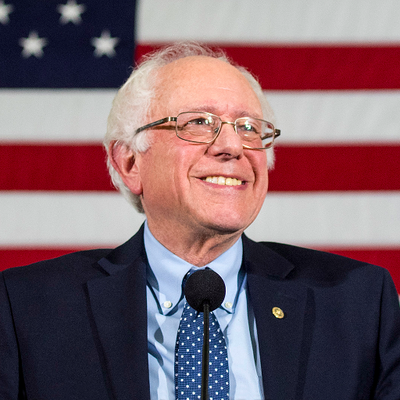
It should come as no great surprise that a Democratic Party which has abandoned working class people would find that the working class has abandoned them.
While the Democratic leadership defends the status quo, the American people are angry and want change.
And they’re right.


Whether you worry about China as a geopolitical threat, or worry about the lack of investment here at home, this is of real concern. The neocons have led us to disaster.

That's by far the craziest part of this report on the global technological race: China now absolutely dominates the U.S. in most defense technologies.
If I were American, the obvious question I'd ask myself is "where does the money go"?
The US spends a crazy amount on defense - by some estimates more than $1 trillion a year which is over 4 times more than China - and they're now trailing China is all key defense technologies of the future, save for one ("small satellites").
It's absolutely insane when you think about it.
Probably part of the answer is that the bulk of the US defense budget goes to financing being the "world's policemen", launching and fighting wars after wars all over the world: 114 military interventions since the end of the Cold War, the last 30-odd years, according to a Tufts University research project (now.tufts.edu/2023/10/16/us-…)!
China of course has been involved in exactly 0 military intervention since the end of the cold war and therefore spend pretty much 100% of their budget at home, precisely for things like innovation and modernization.
Basically the difference between being an overstretched empire and a nation strategically focused on its own development.
101