

building @AirGarageInc.
San Francisco, CA
Joined November 2013
- Tweets878
- Following1.7K
- Followers4.3K
- Likes9.1K







scott fitsimones retweeted
We just raised a $60M Series B at a $1B valuation to build @daytonaio into the Agent Cloud.
@FirstMarkCap led the round, with all key existing investors and angels doubling down.
We're also thrilled to welcome the founders of some generational companies aboard, including @patrickc (Stripe), @tobi (Shopify), @AravSrinivas (Perplexity), @BrendanFoody (Mercor), @oliveur (Datadog), @adamdangelo (Quora) and @ericsyuan (Zoom)
We're a 35-person team. But that's about to change; we're hiring across the board, and we'd love for you to join us.
scott fitsimones retweeted

Big life update: I’ve joined the Product team at @spacexai 🚀
As a founder, Cursor was the first AI coding platform I started using and what onboarded me to the AI revolution.
More recently, I’ve become obsessed with using Grok @bot to automate all the tedious parts of running a business.
I believe AI is truly going to bring superpowers to the next wave of entrepreneurs, and I feel incredibly lucky to be working on such an important and personal problem.
cool concept. cosign.co/lists/scottfits/dr…


Excited to introduce @Cosign: the curated professional network for the startup community: cosign.co
Our goal is to create the following:
- A comprehensive startup directory of investors, companies, and operators, including what they worked on and who they worked on it with.
- Cosign graph: Who shaped your career? Who were you actually in the trenches with? Who would work with you again? Who thinks you’re someone to watch?
- Durable reputation: Great endorsements happen every day on X and disappear into the feed. Cosign attaches those signals permanently to people and companies.
- Discovery: Who are the best fintech angels? Which AI companies should I watch? Who are the best designers?
- Intent network: Privately signal “I’d invest in them,” “I’d hire them,” “I’d work with them,” or eventually even “I’d acquire this company.” Match people when interest exists on both sides.
Imagine if Wikipedia, LinkedIn, and OG AngelList had a baby. Though Cosign is a community, not a business.
In order to join, you need to be cosigned. Or you can apply directly.
David Booth and I started this idea 7 years ago but didn’t have the firepower to make it work. Now we do.
No one has really touched LinkedIn in 20 years. Excited to take a swing.
cosign.co

scott fitsimones retweeted

In 12 weeks, we built a research facility that is run entirely by AI.
AI designs, executes, and observes experiments end-to-end across biology, chemistry, and materials science.
We’re introducing SciUniverse: a benchmark that measures AI’s ability to do real-world scientific research.
YIMBYs won in SF elections, but housing production still fell 70%. Turns out interest rates matter much more for housing construction than the Board of Supervisors.


Noteworthy about this editorial from the San Francisco Chronicle about the urgent need to build housing in San Francisco
Is there isn’t really any solution proposed and it’s already resigned that no new housing is coming to San Francisco during the AI boom
It mentions a few very marginal proposals that have already been shelved for being “giveaways to developers” who aren’t interested in building in San Francisco anyways
Even in an an editorial where you can propose fantasy idea for building housing in San Francisco, there isn’t one

congrats @LukePiette and the @runpod team :)

Big news today - we just announced our $100M raise!
Revenue is accelerating, last month we hit $240M ARR up 2x since Feb.
More than revenue though, we're seeing a lot of devs use the platform these days which is really cool. We just hit 1M users and counting.
Hard to believe that 3 years ago Runpod was a handful of guys working in a discord chat, with $0 raised, and a couple dozen basement GPUs.
Now we're over 100 employees, have offices in SF, Seattle, Philadelphia, and 30+ data centers in our fleet.
Onwards and upwards 🚀🚀🚀

is claude code cooked?
same simple app:
Pi + Cerebras + GLM: 15s
Claude Code + Sonnet: 1m39s
Excited for @cerebras to make GLM 5.2 available.
why did every tech podcast converge on this same background


Our new podcast on evals, with Max Niederman, Ege Erdil, and Stephen Yang.
0:00:00 – What's an eval, and how's it different from an RL environment?
0:19:33 – Why are models bad at building an emulator when the task is fully verifiable?
0:42:00 – How does training on bad data teach models to write terrible code?
1:04:00 – Why is continual learning still so bad?
2:25:24 – Why haven't software engineers been replaced when coding is basically solved?
Listen to the Mechanize Podcast on YouTube, Spotify, etc. Enjoy!


Computer use models still have a long way to go and this is the easiest way to spin up computers of all kinds for training + evaluating models.
This quoted post is unavailable.


scott fitsimones retweeted

Most people I know in AI think the median person is screwed, and they have no idea what to do about it.
I spent the last 3 months talking to dozens of researchers, economists, and policy experts about AI's impact on work; including reps from every frontier lab and several Congressional offices. Unfortunately, I was not reassured.
The AI industry is raising the alarm, but can't change course. These companies' core business model relies on the disruption they are warning about: their faith in full automation only makes them go faster.
Policymakers are waking up, but still paralyzed by data and debates. Econ wonks disagree on plenty, but even the limited scenario looks like a "painful transition" that will disempower millions of workers.
But an "underclass" is not inevitable, but rather a societal choice — and one we can and should stop. Instead of waiting for impact, we should start planning now to support workers through AI disruption. Whether policymakers can assuage concerns about economic security may determine if we get to reap AI's gains at all.
New from me for @NYTOpinion. I put a ton into researching what I think may be the biggest topic of the year, so hope you read it (gift link here!) nytimes.com/2026/04/30/opini…

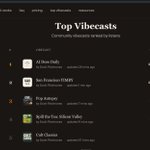
Vibecoding is neat, but today I’m launching Vibecasting — create a fully produced, multi-episode podcast from a prompt. It does Deep Research, scriptwriting, narration with AI voices or your own, cover art, and publishing to Apple Podcasts + Spotify.
For fun, I will give away a free subscription for the rest of 2026 to whoever creates the most-listened-to Vibecast by April 30th at midnight.
vibecasting.fm/
A few fun things you can do:
- Invite your friends to add their voices and host a roundtable podcast with your crew (All In, watch out)
- Publish on a schedule: daily, weekly, or triggered by new blog posts or breaking news


scott fitsimones retweeted
Personal news: I’m joining @TheAtlantic as a contributing writer!
It drives me nuts how wide of an understanding gap there is between SF AI world and everywhere else — especially given the immense public stakes. There's so much AI hype, anxiety, and misinformation; so doing translation and synthesis feels more important than ever. (This role is in addition to Subst*ck, where I’ll keep writing at the same cadence.)
I'm using this excuse to share some rambly media thoughts: namely that tech journalism can & must be great again.
The problem with “old media” is that it often refuses to take tech bros at their word, and the problem with “new media” is that it’s often just advertising, which is boring even for the subjects. There’s a doom loop where some reporters write poorly-informed stories, so insiders won’t talk to them, so sourcing is worse; not to mention that most journalists are not based in the communities they cover. This makes people bad-faith, but it also means a lot of AI reporting is 6-12 months behind. Yes, fantastic blogs/podcasts abound — these are the bulk of my info diet — but they are largely insiders talking to insiders, too niche to recommend to policymakers or smart non-AI friends. These fractures are a disaster for shared public knowledge, and make us less prepared to navigate AI well.
Magazine writing offers the ability to rise above of the hourly play-by-play (squinting at every new model release, every new jobs report) and to the bigger questions. I actually think the most impactful AI writing has *months*, not days of longevity! Rather than over-anchoring to any particular forecast, it offers generalized frames for operating under uncertainty.
A few types of pieces I’m especially keen to write:
1) AI culture: A few people’s idiosyncratic personal beliefs regularly change the world. It thus matters tremendously how AI builders view their work, politics, philosophy, and the future. I think most individuals in the AI industry are good and want their tech to do good. Journalists can portray AI workers’ earnest beliefs while being appropriately skeptical of how that can clash with or be shaped by industry incentives, and how it might diverge from the public. "Smart people confront hard moral/intellectual problem" is one of my favorite genres.
2) AI diffusion: AI discourse disproportionately focuses on its impact on software and writing because those are the jobs the messengers do (obviously I’m guilty of this). That makes me want to do more field reporting on AI in education, manufacturing, healthcare, etc: e.g. can I ride along with a team trying to integrate AI tutors into a school? Diffusion is rarely as smooth as economic models predict, and “how AI will go” depends largely on the speed, and where it hits first. Relatedly: AI in the non-western world.
3) AI superusers: Polls show people are highly anxious about AI’s speculative effects but sanguine about their personal use. I think more people should experiment with AI to feel both the pace of progress *and* its jagged edges. While AI can produce slop/surveillance/etc, it can also extend human ability & creativity. I want to paint portraits of people already “living in the future" so we can ask: is that a life we want? The tech is here, but we can choose how to relate to it.
If you have ideas/feedback/etc my DMs are open, and my Signal is jws.27. For me 1-1 conversations are *not* on the record unless we say so. (I always thought this was a weird norm, and in general am happy to answer people's questions about “how journalism works” from my POV because it can be quite opaque.)
(also I'm replacing my blurry macbook selfie with a b&w portrait profile picture to signify reluctant induction into the label of "capital-j Journalist.” I spent most of last year pretending to be funemployed, but I suppose this is graduation. end of an era!)
Aside from being a crony overreach of power, this also means the government just cut of its own access to the best AI models on the market! As someone who wants America to win, ripping out Claude and putting in xAI is a recipe for disaster


This week, Anthropic delivered a master class in arrogance and betrayal as well as a textbook case of how not to do business with the United States Government or the Pentagon.
Our position has never wavered and will never waver: the Department of War must have full, unrestricted access to Anthropic’s models for every LAWFUL purpose in defense of the Republic.
Instead, @AnthropicAI and its CEO @DarioAmodei, have chosen duplicity. Cloaked in the sanctimonious rhetoric of “effective altruism,” they have attempted to strong-arm the United States military into submission - a cowardly act of corporate virtue-signaling that places Silicon Valley ideology above American lives.
The Terms of Service of Anthropic’s defective altruism will never outweigh the safety, the readiness, or the lives of American troops on the battlefield.
Their true objective is unmistakable: to seize veto power over the operational decisions of the United States military. That is unacceptable.
As President Trump stated on Truth Social, the Commander-in-Chief and the American people alone will determine the destiny of our armed forces, not unelected tech executives.
Anthropic’s stance is fundamentally incompatible with American principles. Their relationship with the United States Armed Forces and the Federal Government has therefore been permanently altered.
In conjunction with the President's directive for the Federal Government to cease all use of Anthropic's technology, I am directing the Department of War to designate Anthropic a Supply-Chain Risk to National Security. Effective immediately, no contractor, supplier, or partner that does business with the United States military may conduct any commercial activity with Anthropic. Anthropic will continue to provide the Department of War its services for a period of no more than six months to allow for a seamless transition to a better and more patriotic service.
America’s warfighters will never be held hostage by the ideological whims of Big Tech. This decision is final.
scott fitsimones retweeted

Extremely excited to show a preview of what we've been working on!

Introducing Pantograph. We're building a preschool for robots: they teach themselves through exploration, failure, and curiosity.
What we're building and why: pantograph.com/blog/building…

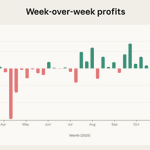
@AnthropicAI's AI-operated vending machine went from losing money to making a profit.
The main changes?
- Sonnet 3.7 -> 4.5
- A new AI CEO agent that set OKRs.
- Adding "bureaucracy" like approvals for discounts.
Turns out OKRs and corporate bureaucracy are all you need.


You might remember Project Vend: an experiment where we (and our partners at @andonlabs) had Claude run a shop in our San Francisco office.
After a rough start, the business is doing better.
Mostly.
I think Anthropic's Project Vend is one of the most interesting things happening in AI right now. Congrats to @logangraham and @lukaspet! red.anthropic.com/2025/proje…
