

I help people reconnect with who they really are, through the practice of mind:body attunement 🌕 work with me 👇
Victoria, British Columbia
Joined June 2021
- Tweets9.1K
- Following362
- Followers11.2K
- Likes10K
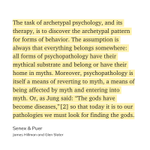
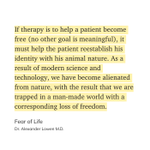
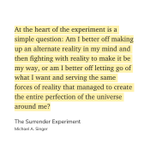
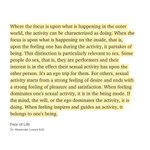






basically you’re still running a mental model of reality you came up with when you were five years old in order to explain why you weren’t getting the love that you deeply craved, and while that mental model allowed you to survive it’s now getting in the way of your thriving, and the only way to move forward is to bring it into conscious awareness, interrogate it, and thus transform it into something both more beautiful & more accurate to how the world really works, so that five year old can finally feel safe & relax
high agency = viewing everything as a solvable problem
this worldview is extremely effective and will take you far… until it doesn’t
the human condition includes unsolvable problems. one of the biggest challenges in life is learning to accept them
the longer you’re able to defer that problem, the harder it is to face - because you have so much practice & evidence of “I should be able to fix this”
the fantasy of being high agency is that it’s a universal good, that would improve everything in your life. not so! still worth pursuing, if you like, but there is no panacea for life
the ego loves to present the false choice of “either I’m disciplined & miserable, or free & happy”
“do a lot of what energizes you” cuts through that. scrolling on your phone for hours is obviously out - but not because it’s “lazy” or “bad” but simply because it’s depleting

I’ve still never posted an AI generated tweet. but I’ve tried, with an LLM trained on my tweets & essays
it’s always a little off. emphasis in the wrong place, glossing over some nuance that feels essential
it’s hard to say if that matters (preserving nuance on here is a Sisyphean task on a good day) but so far it matters to me
though it does sometimes feel like I’m making furniture by hand while other people are setting up manufacturing plants. my furniture isn’t THAT good, so why persist in the craftsman approach?
right now the only strong argument is preference, which leads me to believe there is much, much more AI content on the timeline than most people assume…
scott 🌞 retweeted

the anxious ruminating voice in my head:
one way to know if you’re in anxious rumination or not:
phrase your core concern as a simple question e.g. “what if I’m not good enough to get what I want?” then, take a good hard look at that question and ask a follow-up: “is this an answerable question?”
if the subject of your rumination is “am I working hard enough to get the results I want”, that’s an answerable question, with a testable hypothesis - see if more effort produces more results
if the rumination is more “will I ever be good enough”, that’s an unanswerable question. you could circle that one forever (and many people do!)
in the latter case, I’m not saying “so just snap out of it”. rather, recognize that you’re in a fear state, and what your mind is trying to access is calm, via a sense of safety. that anxious voice in your head thinks you need to answer that unanswerable question in order to feel safe
but you don’t. you can feel safe in the uncertainty. your job then is to get yourself there… which means allowing yourself to let go of the constant questioning
scott 🌞 retweeted

I have work in the LA Times today ! Read “Notes on Pleasure” in full below. This piece will also be in print in LA Times Image magazine for their Pleasure Issue. Enjoy: latimes.com/lifestyle/image/…

one way to know if you’re in anxious rumination or not:
phrase your core concern as a simple question e.g. “what if I’m not good enough to get what I want?” then, take a good hard look at that question and ask a follow-up: “is this an answerable question?”
if the subject of your rumination is “am I working hard enough to get the results I want”, that’s an answerable question, with a testable hypothesis - see if more effort produces more results
if the rumination is more “will I ever be good enough”, that’s an unanswerable question. you could circle that one forever (and many people do!)
in the latter case, I’m not saying “so just snap out of it”. rather, recognize that you’re in a fear state, and what your mind is trying to access is calm, via a sense of safety. that anxious voice in your head thinks you need to answer that unanswerable question in order to feel safe
but you don’t. you can feel safe in the uncertainty. your job then is to get yourself there… which means allowing yourself to let go of the constant questioning
if you think there’s something wrong with you, you will tense around it, and lock the pattern into place
this is how muscular imbalances occur - a certain joint or tendon suffers an injury, and so to compensate for & protect it, the muscles around it start to do more than their fair share
which works great… except when the injury is healed, and the compensatory pattern is still firing. if we don’t train those surrounding muscles to RELAX, they will overworking, to protect something that no longer needs protecting
same for your emotional patterns. if at 5 years old you internalized a lesson of “I shouldn’t be like this”, you will naturally start to try to cover up, repress, or reject that facet of you
without intervention, that pattern will linger on into your 20s, 30s, 60s…
and the tragedy is that in the vast majority of cases, there’s nothing that needs to be hidden! maybe some ordinary human flaws, maybe some lovable quirks…. but you never get to find out, as long as it’s protected
"if I perform well, people will like & respect me, and I'll finally feel the love & belonging I crave"
I see this kind of belief all the time. it's a persistent one, because there is some truth to it - status does help you fit in. but it also creates a feeling of "therefore, I MUST perform well" which leads to anxiety & clenching
a life based on performance can lead to belonging, but it tends to be a conditional belonging - you feel you must keep performing or you'll lose that belonging. so not only is it anxiety-provoking, it's a chronic anxiety
to get out of this knot, we want to ask a cutting question: "is performance actually the best way to access love & belonging?" does that belief actually ring true in your lived experience? or does love & belonging seem to come from something else - from presence, resonance, and authentic expression?
if the "performance hypothesis" is false, then we get to renegotiate our way of being in the world - we can drop the constant performance and thus the constant anxiety, and focus on the things that actually move the needle. we're not giving up our desire for love & belonging; we're just getting honest about what will help us get there, and what's currently getting in the way
rumination = circling the same thoughts over & over
processing = engaging with a sensation or an image
these two look the same from the outside. processing can feel like self-indulgence or wallowing. but the key thing is that we're not repeating the same loop of thoughts (which tends to feed off itself)
we're letting the unconscious speak, and we're listening, and we're being with what's there. highly uncomfortable, difficult to do... and the main thing that produces a shift
stern judgement of the self tends to lead to repression, dishonesty, and shoving things into the shadows
"here's what's wrong with me, here's what I have to fix" is the ego's judgement, which means it's always limited. not 100% *false*, but limited - particularly the "have to fix" part
the ego is scared of losing access to nourishment & belonging. that's where it operates from. useful to notice, but not a place where we want to spend all our time... if we wish to live a soulful, expansive, free life
"depression can't hit a moving target" this is a coping mechanism called sublimation, and it is quite effective - it's one of the most mature coping mechanisms. pour yourself into your work & keep moving
but it does have a cost. a person who practices sublimation tends to double down on what they do well, which means their personality becomes increasingly lopsided. since they're focusing on constant moving and ignoring what doesn't feel so good to confront, there's a big risk of ego inflation, a sense that you are "better than" - less room for humility
also it means you don't build the tools to actually confront the sadness/fear/anger within you... and sometimes life *imposes* a stopping point. this often comes at midlife, which can lead to an intense crisis. "I need to keep running but I can't"
my personal bias is that anything that is fundamentally avoidant is fragile, because what happens when you run out of road? better to have the small crisis now than postpone and let it get bigger. but that's not for everyone - the takeaway here is to be conscious of the tradeoffs you're making
staying in tension means not rushing to answer existential questions
“I don’t know what to do with my life” - good, how long can you hold the “I don’t know” without demanding it be something different?
modern life is so eager to help you “relieve stress” and “release tension” that we often forget to consider that some stress & tension is meant to be inhabited
i.e. playing video games at the end of the long day CAN be a pleasant way to shake off some lingering embodied tension… or it could be the thing making an intolerable life tolerable, by providing the illusion of achievement
if it’s the latter, maybe this life IS supposed to feel intolerable, because that tension is what will build up and eventually produce a seismic shift
we can’t generalize here - it’s impossible to say from the outside. but from the inside, it’s worth considering whether each particular form of stress relief really is nourishing… or whether it’s escapism from a real & abiding tension
Jung was clear about this - it’s the ability to sit in that tension, without needing it to resolve, which produces the emergent resolution. in simpler terms: “the only way out is through”
& important not to make this judgemental - some stress relief is necessary, some of it is helpful, not all escapism is “bad”… but we want to make a conscious decision
the child who feels inferior (because of a lack of praise, warmth, and acceptance) has two options:
1) revolt against the value structure that denies him acceptance
2) create an internal “counterweight” through a sense of superiority
these two paths overlap quite a bit. most people mix rebellion with a sense of better-than… except when it comes to the achievement-oriented child
the achievement-oriented latches onto their “good behaviour” or academic excellence as a way to provide their sense of superiority
in this way, they dodge any outright “rebellion” while still constructing a narrative that tells them they’re worthy. superior, but not rebellious. this feels less risky to the child
however, while they’re set up for conventional success, they are still fundamentally pursuing acceptance in a dynamic that refuses to accept them
it’s that old meme: “all the students that were ‘a delight to have in class’ now have an anxiety disorder”
the rebellious kid has a chance to tear down the old value structure and (hopefully) construct something new. the well-behaved kid is still playing by the old rules; they’ve just found a way to endure them
they feel superior, becuase they’re “smart”, but they recognize at some level that their supposed superiority is meaningless - it’s still not getting them the thing they really want (“if you’re so smart, why aren’t you happy?”)
so the sense of inferiority deepens, which means the air of superiority also increases to try to keep things balanced. “another achievement will fix me”
this can go on for a long time. sometimes a lifetime. or… a crisis arrives that forces them to finally abandon the value system they’ve been trapped in their whole life
(but of course, they’re resistant to abandon it, because with it goes their sense of superiority…)
if they do enter it, the crisis of values is deeply disorienting. this is Jung’s nigredo, the blackening, the dark night of the soul. the inner sense of inferiority must be faced directly, and it’s terrifying
“the cave you fear to enter holds the treasure you seek” - in that darkness, within the crushing weight of inferiority, there’s a small light - the possibility of acceptance OF the inferiority
this is the cure - to meet their own inferiority and desperation and despair with the acceptance they’ve always craved. not to get rid of the inferiority, but to make it irrelevant
and when the inferiority is irrevelant, the superiority is unnecessary. now we have a balanced psyche. now we have a person who feels they belong
even better, now we have a smart person who’s ready to set to work creating exactly what they want to see in the world…