




Gender inequality in the film industry:
Elizabeth Prommer, @bestqualitycrab & @SkadiLoist use Social Network Analysis to give an overview of collaboration networks in the German film industry and detect gender exclusion in production recruitment.
doi.org/10.5771/2192-4007-20…

Examining news coverage on climate movements:
Claudia Thoms, @SchrimpfTobias & Andreas Reich analysed online news articles and reader comments on the climate protest groups Fridays for Future and Last Generation from three major German news sites.
doi.org/10.5771/2192-4007-20…

Freedom of speech among German university students:
Luna Laufer, Franziska Selzer, Julia Stockwald, Annika Schleithoff, Nathalie L. Neuendorf, Anna-Luisa Sacher & Carsten Reinemann examined perceptions of free of speech and willingness to speak out on controversial topics.

German full paper: doi.org/10.5771/2192-4007-20…
English extended abstract: doi.org/10.5771/2192-4007-20…
From classical statistical methods to LLMs:
Tobias Schmidt, @Rieger94, Jörg Rahnenführer, @vicigo & Holger Wormer evaluated the performance of different AI approaches for quality assessment of medical news articles.
doi.org/10.5771/2192-4007-20…

Why do people (not) donate their data?
In a scoping review, @ElliSchmidbauer & Jörg Haßler map research on participation in data donation studies to identify factors that might discourage participation as well as potential strategies to address them.
doi.org/10.5771/2192-4007-20…

Issue 3/2026 of SCM is now available online!🎉
The issue features studies on:
- data donation,
- AI news quality assessment,
- university students’ perceptions of free speech,
- news coverage of climate movements, and
- film production networks.
doi.org/10.5771/2192-4007-20…

Self-effects of #OpinionExpression: In a between‑subjects experiment, @NaabTeresa & @anna_stockmann examined how expressing an opinion in a perceived public versus private setting affects senders’ perceived knowledge, interest, and behavioral intentions. doi.org/10.5771/2192-4007-20…

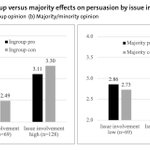
Social influence on #SocialMedia: In an experimental study, @ProfSchweiger examined how minority versus majority and ingroup versus outgroup opinions in the personal newsfeed affect selective attention, evaluation, and opinion formation. doi.org/10.5771/2192-4007-20…

Frames of criminals in German regional newspapers: Using a mixed-methods approach, @brill_janine, @HenriettePohle, Madeleine Schmidt & Lars Guenther identified four frames while also examining whether perpetrators’ origin is mentioned. doi.org/10.5771/2192-4007-20…

Can #Instagram content about physical activity increase adolescents’ physical activity? In a three-wave panel study, Michelle Möri, @LTribe_ch & @th_friemel applied the influence of presumed media influence framework to #SocialMedia and physical activity. doi.org/10.5771/2192-4007-20…

Who dominates the public discourse on #ChatGPT and co? Tabea Lüders, Nikolai Promies, @MLSandmann & @MarkusLehmkuhl propose a conceptual framework for public actors’ expertise on #genAI and apply it to German print media. doi.org/10.5771/2192-4007-20…

🆕Our second issue of 2026 is now online! 🎉 Explore fresh studies ranging from representation in journalistic media to the effects of social media. doi.org/10.5771/2192-4007-20…

📣 Call for Proposals!
Für unser Sonderheft 2027 suchen wir aktuell Vorschläge.
🗓️ Deadline: 30.09.2026
📎 Mehr Infos: nomos.de/wp-content/uploads/…
Psychological professionals on social media: Laura-Marie Altendorfer systematically analyzed how German-based psychologists and psychotherapists present themselves on #Instagram. doi.org/10.5771/2192-4007-20…

Do #empathy and #perspectivetaking influence outgroup support? In an online experiment, Sophie Bruns, @jule_scheper & @TineMalz investigated the effects of positive and negative intergroup contact between the societal majority group and minority groups. doi.org/10.5771/2192-4007-20…

Politicians as opportune witnesses: @JWolleschensky, @maikegranos, Annika Sehl, Henning Eichler, Korbinian Klinghardt, Jonas Schützeneder & @Grasselinho investigated media coverage of #PublicServiceMedia in the context of the rbb scandal. doi.org/10.5771/2192-4007-20…

Adapting #newsmedia to social media logics: In her article, Miriam Klein introduces the concept of social news softening, including the five dimensions emotionality, subjectivity, individualization framing, sensational framing, and audience orientation. doi.org/10.5771/2192-4007-20…

Categorising anti-establishment #Telegram channels: Based on a quantitative content analysis, Lars Rinsdorf, @florianbuhl, York Yannikos & Katarina Bader identified seven types of German-speaking hyperpartisan, alternative & conspiracy Telegram channels. doi.org/10.5771/2192-4007-20…
