

Sano combines genetic testing, recruitment, and long-term engagement in one platform, accelerating enrollment and simplifying operations for precision medicine
Cambridge, England
Joined August 2017
- Tweets2.7K
- Following248
- Followers1.8K
- Likes1.3K




Thousands of AI agents have been set loose on past drug trials to work out why so many of them fail.
A recent episode of The Genetics Podcast with Dr. James Zou (Stanford University) covers a virtual biotech built from AI agents that read trial papers, company reports and news coverage, then tested what separates drugs that reach the market from those that don’t.
Our recap blog covers some of the key takeaways include:
✅ Drug targets backed by single cell evidence were more likely to make it to market
✅ Adding more agents to a project is emerging as a new way to scale AI, alongside building bigger models
✅ The agents only learn from public data, so failed trials that never get published leave a gap
✅ Turning papers into agents also tests whether the science can be reproduced
Read it here: eu1.hubs.ly/H0zbKky0

🫀 Cardiovascular genetic medicine is about to need a different way of finding patients.
Gene editing and Lp(a)-targeted therapies define eligibility by genotype or biomarker level. The people who qualify sit inside populations of millions, and most have never been tested.
Our latest article covers:
✅ How rare disease programs already find people before they reach sites
✅ What the FH and Lp(a) evidence shows about testing gaps
✅ How feasibility, testing and cohort planning change for trial strategy
Sponsors who treat testing as infrastructure and cohorts as reusable assets will start each new protocol with a known population in place.
🔗 Learn more here: eu1.hubs.ly/H0z2Km10

🎙️Tune in to Episode 261 of #TheGeneticsPodcast 🚀
This week, we’re joined by Dr. James Zou, Associate Professor of Biomedical Data Science at Stanford University. Listen in to hear how a virtual biotech of AI agents found that drug targets backed by single cell evidence are more likely to reach the market, how papers can become agents that reproduce their own results, and how one night of sleep can predict risk for over 100 diseases.
Available here👇
🎧 eu1.hubs.ly/H0z6LQx0
📽️ eu1.hubs.ly/H0z6LPG0

The FDA may be about to bring its rare disease flexibilities into one framework, and finding the right patients could become the hardest part of every program.
A notice seeking public input is under review at the Office of Management and Budget, according to Citeline. It has not been published yet, so the detail is still unknown.
✅ FDA appears to be consolidating tools that sponsors already use into a single structure
✅ Several of these tools rely on natural history data and small groups of well-characterized patients
✅ Finding and characterizing those patients remains the sponsor’s job under any framework
✅ Everything so far rests on trade press reporting until the notice is published
Programs built on fewer patients leave less room for any one of them to be missed or poorly characterized. Sponsors who treat identification and genotype confirmation as protocol-stage decisions will be better placed when the framework lands.
🔗 Link to the full blog in the comments below.


About 3–4% of IBD patients carry anti-IL-10 autoantibodies. In that subgroup, the HLA association rises from an odds ratio of about 2 to roughly 20–50.
Jeffrey Barrett calls it a molecular subtype that has been "hiding in plain sight for forty years." 🔎
On the latest episode of The Genetics Podcast, Jeff argues that common chronic diseases likely hold many more subtypes like this. Our new blog recaps his reasoning.
Three points from the recap:
1. Chronic disease lags cancer on stratification. Most cancers now have companion diagnostics, while common chronic disease has almost none.
2. Data access is the main constraint. Federated learning across biobanks could let models learn from a few million people. The barrier is governance, a human, ethical, and legal challenge LLMs won't speed up.
3. Clinical notes record treatment response. In Finland, a secondary-use registry covering up to 7 million people lets LLMs extract why clinicians switched treatments.
The blog also covers how Jeff uses AI without outsourcing his thinking, and what sequencing about 2.5 million SARS-CoV-2 genomes at Sanger taught him about biosecurity.
Read the full recap on the Sano blog: eu1.hubs.ly/H0yZ9vH0
Prefer audio? The full episode is available wherever you get your podcasts.

The sponsors running the most trials aren't necessarily the ones running the most rare disease trials.
Across the 1,571 sponsors behind a 4,565-trial dataset, absolute volume and rare disease concentration turned out to be different signals.
AstraZeneca runs 175 active trials, and 11% target a rare disease. Ionis runs 8, and every one does. argenx runs 14, 11 of them rare. Vertex runs 18, 56% rare.
A team scanning only the largest sponsors by volume will miss where these genetically defined populations are most dense. 61% of sponsors in the dataset run exactly one trial.
See the sponsor-by-sponsor numbers in our industry whitepaper.
🔗 Link in the comments below.


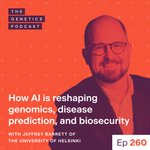
🎙️Tune in to Episode 260 of #TheGeneticsPodcast 🚀
This week, we're joined by Dr. Jeffrey Barrett, Group Leader at the Ellis Institute Finland and the University of Helsinki. Listen in to hear how AI and biobank data could reveal molecular subtypes of common chronic disease, how LLMs can read clinical notes to uncover treatment response, and what the COVID sequencing effort means for biosecurity.
Available here👇
🎧 eu1.hubs.ly/H0yY-jL0
📽️ eu1.hubs.ly/H0yY-fM0

📣 The FDA has approved Emcitate for peripheral thyrotoxicosis in MCT8 deficiency, an ultra-rare genetic condition and the first approved therapy for symptoms of the disease.
In ultra-rare development, the same very small patient population may need to support clinical trials, natural history studies, external controls and long-term follow-up.
In our latest blog, we cover:
✅ How the Emcitate evidence base was assembled
✅ Why delayed diagnosis shrinks the pool of patients available to study
✅ Why earlier genetic identification, longitudinal data and recontact matter across an entire development program
With an approved treatment now available in the US, a late diagnosis can also mean delayed access to therapy. How sponsors find, characterize and follow patients will shape how much evidence can accumulate before and after approval.
🔗 Learn more via the link in comments.


🧬 Most resourcing plans treat genetic eligibility infrastructure as a late-stage problem.
We looked at when that infrastructure actually gets tested, across a 4,565-trial dataset spanning five markets.
51% of combined Phase 1/2 trials involve genetics, roughly double the rate of single-phase studies. Across the 553 trials in that category, the genetic eligibility burden shows up earlier in a program's life than a standard phase-by-phase plan assumes.
Teams that wait for late-phase trials to build genetic recruitment infrastructure are already behind.
📖 Explore the phase-by-phase breakdown here: eu1.hubs.ly/H0yxLhz0

🫀 About half of the Danon disease community supported by The Danon Foundation is female. Around 60% of known members have had a heart transplant, a rate on par with males.
So why are women with Danon disease still being missed?
Our new blog recaps the latest episode of The Genetics Podcast with Jenny Hsieh, Co-Founder and President of the Danon Foundation.
Key takeaways include:
🔹 Why women's cardiac symptoms are often dismissed or misdiagnosed
🔹 How the diagnostic gap can be closed for Danon
🔹 The current therapeutic landscape for Danon and how trials can be made more accessible for rare disease families
Read the full recap here: eu1.hubs.ly/H0yQXcR0
#DanonDisease #RareDisease #GeneticTesting #PrecisionMedicine

🎙️Tune in to Episode 259 of #TheGeneticsPodcast 🚀
This week, we're joined by Jenny Hsieh, Co-Founder and President of the Danon Foundation. Listen in to hear how Danon disease differs between males and females, why it is so often misdiagnosed, and how families can weigh up gene therapy trials.
Available here👇
🎧 eu1.hubs.ly/H0yLJyg0
📽️ eu1.hubs.ly/H0yLJyT0

🎙️Episode 259 of #TheGeneticsPodcast is live! 🚀
This week, Patrick is joined by Jenny Hsieh, Co-Founder and President of the Danon Foundation. Tune in as they discuss:
🧬 How X-linked Danon disease differs between males and females
🔎 Why misdiagnosis is common
💊 The therapy pipeline and where research needs to go next
📝 Informed consent and trial literacy for families weighing gene therapy
Listen by following the link below 👇 or simply search “The Genetics Podcast” on your go-to podcast platform.
🎧 eu1.hubs.ly/H0yLJxT0
📽️ eu1.hubs.ly/H0yLJyG0

🧬 Three gene editing companies reported progress this month correcting the same single mutation in the same rare disease.
YolTech, Beam Therapeutics, and Prime Medicine each announced updates in September on in vivo programs targeting the PiZZ mutation behind alpha-1 antitrypsin deficiency (AATD). Roughly 100,000 to 200,000 people in the US and Europe carry that genotype, and up to 95% of them remain undiagnosed.
Our latest piece looks at what happens when several well-funded programs converge on one small, largely undiagnosed patient population. Editing precision is no longer what separates them, identification and confirmatory testing capacity now set the pace of enrollment.
📖 eu1.hubs.ly/H0yFXGF0

💰 A day of delayed trial launch costs up to $800,000, and a protocol amendment to fix a genetic eligibility miscalculation adds close to three months and up to $1 million in cost.
Our latest piece looks at where that risk comes from. Genetic involvement in the active trial pipeline tracks with modality and phase more closely than therapy area, and it tends to show up earlier in a program than most resourcing plans account for.
We cover how sponsors can scope patient-finding by modality and phase from the start, and treat patient identification as reusable capacity across a portfolio rather than a cost repeated for each trial.
🔗 Full article here: eu1.hubs.ly/H0yCB0-0

🧬 A third of your skin cells carry a cancer-driver mutation by middle age. So why don't most people get cancer?
In the last episode of The Genetics Podcast, Patrick talks with Dr. Inigo Martincorena, Group Leader at the Wellcome Sanger Institute, about what sequencing normal tissue reveals about cancer, aging and autoimmune disease.
Key takeaways include:
💡 Normal clones usually carry one or two drivers, while cancers need five or six
💡 Somatic checkpoint mutations in B cells may help trigger autoimmune thyroid disease
💡 Therapies could delete disease-causing clones or copy protective "somatic rescue" mutations
Read the recap blog or listen in full here: eu1.hubs.ly/H0yCz_-0

🎙️Tune in to Episode 258 of #TheGeneticsPodcast 🚀
This week, we're joined by Dr. Inigo Martincorena, Group Leader at the Wellcome Sanger Institute. Listen in to hear how normal tissues carry widespread cancer-driver mutations (that rarely become cancer), what this reveals about autoimmune disease, and where new sequencing technologies are taking the field next.
Available here👇
🎧 eu1.hubs.ly/H0yzhcq0
📽️ eu1.hubs.ly/H0yzhjS0

The therapeutic modality most teams would flag first for genetic complexity isn't where most of that complexity actually sits.
We analyzed 4,565 actively recruiting clinical trials across the US, UK, EU, Japan, and South Korea to see where genetic and rare disease relevance is concentrated by treatment modality.
Small molecule trials are the largest modality in the pipeline. Gene therapy and RNA therapy get most of the attention on genetic eligibility, and their rates are higher, 94% and 59%. But in raw numbers, small molecule trials alone produce more genetic-flagged trials than gene therapy, RNA therapy, and protein replacement combined.
A pipeline screen that only flags the modalities everyone already associates with genetics will miss most of where the volume actually is.
We broke down all 15 modality categories in our latest whitepaper.
🔗 Link in the comments below.
