

founder @ https://xitter.cf/t.co/VasbYUotie
SF / ATX
Joined April 2022
- Tweets699
- Following251
- Followers100
- Likes2.6K








samuel joseph troyer retweeted

AI products will continue to be deeply unimaginative as long as we treat the model as the final product.
Model should be building block, infra and post training should be accessible to people with crazy ideas
Open source happened to be the best way to solve this
This quoted post is unavailable.
samuel joseph troyer retweeted

from my 2 months in sf
most exceptional ppl that i met checked one of these boxes:
- has adhd
- dropped out of highschool / college
- got humbled (big time) at some point in their life
- is socially dysfunctional
- wears the same 3 fits
- has a cooked sleep schedule


samuel joseph troyer retweeted

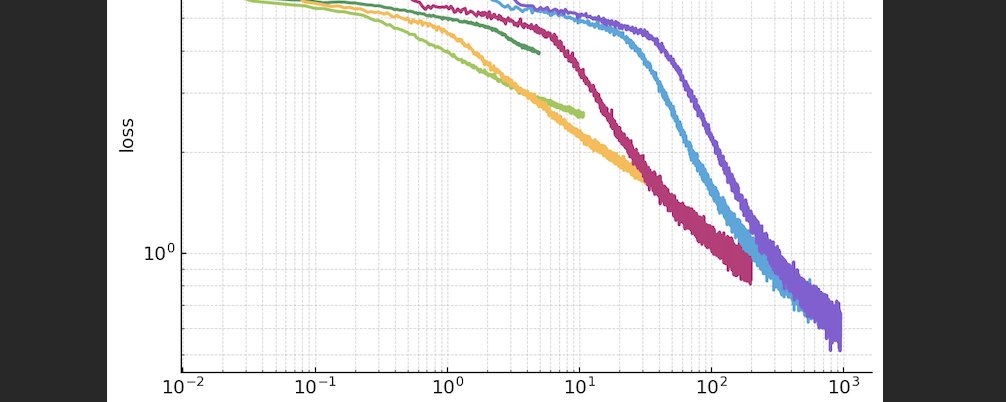
what are the implications of process reward modeling for the political tensions in the balkans? only time will tell


samuel joseph troyer retweeted

practical, modern GRPO tweaks as described in Meta's Code World Models paper

samuel joseph troyer retweeted

The time has come for Agent Engineering.
And if you do this right, you will see how @ylecun is entirely correct about LLMs.
samuel joseph troyer retweeted

We're thrilled to introduce PrediBench, our first production at @presage_labs!
PrediBench a live benchmark that answers the question "could an AI model earn money on Polymarket?"
TL;DR: Some models like Grok-4 or GPT-5 do beat the crowd of human betters, and they turn a profit!

Introducing PrediBench - A live benchmark of AI models betting on prediction markets.
This benchmark answers the question “How well can AI predict the future?”
1 - Each day, 10 top trending real-world events are pulled from Polymarket, with questions like “Who will be the next mayor of NYC?”
2 - Each model browses the web in agentic mode to research the question, then allocates $1 in bets.
3 - As the events resolve in real-time, we score the model’s performance : Average returns, Sharpe ratio, Brier score.
▸ Visit it at predibench.com
🧵[1/N]

samuel joseph troyer retweeted

seems likely the world of One Big Model will end in a year or two
we’ll have families of peft-adapted experts continuously retrained, merged, and reapplied under varying degrees of staleness
the Train/Test split of conventional machine learning held us back for far too long


samuel joseph troyer retweeted

Holy shit they’re doing on-policy RL by just deploying the model to prod lmao that’s so baller.
also 2 hrs for a training step makes our 10 minute steps feel lightning fast @hamishivi
… they probably have a bigger batch size though 😅


🤯 qwen3-next: 80B total, 3B active -- 1:50 MoE, MTP, zero-centered & weight-decayed layernorm, gated att
samuel joseph troyer retweeted

One of the best things npm could do is reject all dependencies that have less than 1,000 lines of code. The brainrot of not copy and pasting and self maintaining these trivial libraries (99% of them) is high and the supply chain attack vector has been compromised repeatedly showcasing the stupidity from that angle as well.
samuel joseph troyer retweeted

Are there any other open source apps we could fork and move the tabs to the side then sell for $610m? 🤔
biggest lesson here is don't use bloated MCP servers -- 3 external servers and all these custom tools, less than a single zen instance 🤣
removing sequentialthinking & memory makes claude code far more hallucinatory over long time horizons, worth ~3k tokens at startup for me


samuel joseph troyer retweeted

A Chinese food delivery company contributes more to advancing AI than US Big Tech thanks to open science and open-source AI 🤯🤯🤯
The US is cooked if AI scientists don't fight their management to get back to our roots of sharing science rather than keeping it secret and just monetizing it to the maximum!
In the long run, open science builds stronger companies, stronger countries, and a stronger world!

The technical report of @Meituan_LongCat LongCat-Flash is crazy good and full of novelty.
The model is a 560B passive ~27B active MoE with adaptive number of active parameters depending on the context thanks to the Zero-Computational expert.
1) New architecture
> Layers have 2 Attention blocks and both FFN and MoE, that way you can overlap the 2 all-to-all coms. (also it's only 28 layers but you have to take into account the 2 attention blocks).
> They add the zero-computational expert that tokens can choose and do nothing, kinda like a "sink" for easy tokens.
> For load balancing, they have a dsv3-like aux loss free to set the average real/fake expert per token. They apply a decay schedule to this bias update. They also do loss balance control.
2) Scaling
> They made changes to MLA/MoE to have variance alignment at init. The gains are pretty impressive in Figure 5, but i don't know to what extent this has impact later on.
> Model growth init is pretty cool, they first train a 2x smaller model and then "when it's trained enough" (a bit unclear here how many B tokens) they init the final model by just stacking the layers of the smaller model.
> They used @_katieeverett @Locchiu and al. paper to have hyperparameter transfer with SP instead of muP for the 2x smaller model ig.
3) Stability
> They track Gradient Norm Ratio and cosine similarity between experts to adjust the weight of the load balancing loss (they recommend Gradient Norm Ratio <0.1).
> To avoid large activations, they apply a z-loss to the hidden state, with a pretty small coef (another alternative to qk-clip/norm).
> They set Adam epsilon to 1e-16 and show that you want it to be lower than the gradient RMS range.
4) Others
> They train on 20T tokens for phase 1, "multiple T of tokens" for mid training on STEM/code data (70% of the mixture), 100B for long context extension without yarn (80B for 32k, 20B for 128k). The long context documents represent 25% of the mixture (not sure if it's % of documents or tokens, which changes a lot here).
> Pre-training data pipeline is context extraction, quality filtering, dedup.
> Nice appendix where they show they compare top_k needed for different benchmarks (higher MMLU with 8.32, lower GSM8K with 7.46). They also compare token allocation in deep/shallow layers.
> They release two new benchmarks Meeseeks (multi-turn IF) and VitaBench (real-world business scenario).
> Lots of details in the infra/inference with info on speculative decoding acceptance, quantization, deployment, kernel optimization, coms overlapping, etc.
> List of the different relevent paper in thread 🧵



samuel joseph troyer retweeted

GPT-5 failed twice.
Scaling laws are coming to an end.
Open-source AI will have the Mandate of Heaven.
for your saturday deep work. lets gtm next week🚀
open.spotify.com/track/0gTzU…