




Sam Goldman retweeted

I am pleased to share that I have accepted a position @Stanford to start as an assistant professor in the department of statistics, with an affiliation in @StanfordData, this fall!
Sam Goldman retweeted

The FLIGHTED preprint is out, with some exciting updates! Co-authored with @boqiangtu, @lindseyguan, and @kesvelt. biorxiv.org/content/10.1101/… 1/


Excited to present the first major project of my PhD: FLIGHTED, a method of generating protein fitness landscapes from noisy high-throughput experimental data! Co-authored with @boqiangtu, @lindseyguan, and @kesvelt.
I'll be presenting a poster at @workshopmlsb at NeurIPS. 1/
Sam Goldman retweeted

Our new preprint describes “CROPseq-multi”: a versatile solution for multiplexed perturbation and decoding in pooled CRISPR screens doi.org/10.1101/2024.03.17.5… Reagents on Addgene: addgene.org/browse/article/2…

Sam Goldman retweeted

Kicking off 2024 by sharing a preprint of my PhD work! We report an engineered cytokine therapy that elicits some of the most profound anti-tumor immunity we have seen in our labs' preclinical work.
Preprint and walk-through below:

Local delivery of cell surface-targeted immunocytokines programs systemic anti-tumor immunity biorxiv.org/cgi/content/shor… #biorxiv_immuno
Sam Goldman retweeted

Excited to share our preprint on metabolic differences in the vaginal #microbiome. We find key differences in fatty acid metabolism among #Lactobacillus species & leverage those findings to identify a potential new therapy for bacterial vaginosis (BV) & #WomensHealth 🧵 (1/n)

Vaginal Lactobacillus fatty acid response mechanisms reveal a novel strategy for bacterial vaginosis treatment biorxiv.org/cgi/content/shor… #bioRxiv
Sam Goldman retweeted

New preprint! In chronic stress, cells must balance their own survival with tissue-level roles. Prior work has emphasized stress-induced drivers of cell death, but what happens to surviving cells? How do they adapt, and how do their changes connect to long-term dysfunction? (1/n)

Sam Goldman retweeted

If last week’s thread on #singlecell foundation models for zero-shot tasks left you asking “what about fine-tuning for few-shot tasks?” -- check out our new preprint! 👇biorxiv.org/content/10.1101/…
ICYMI, here's the zero-shot analysis led by @kzkedzierska 🙂biorxiv.org/content/10.1101/…

1/4 last week, we saw an evaluation of SC foundation models in zero-shot settings; a new study tested fine-tuning and few-shot abilities in cell classification, and results are again similar; some perform on par or underperform vs logistics regression biorxiv.org/content/10.1101/…

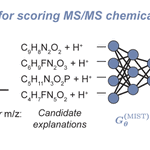
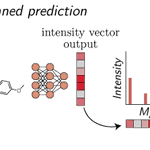
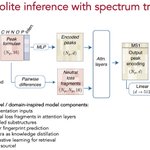
At Metabolomics2023, I outlined our view of untargeted metabolomics tasks to address with AI/ML. Happy to share an extension of our MIST model, MIST-CF, for the prediction of MS1 chemical formula from MS/MS.
Paper: pubs.acs.org/doi/full/10.102…
Code: github.com/samgoldman97/mist…
1/3

MIST-CF learns to score the compatibility b/w a chemical formula (+ adduct) candidate and MS/MS. Especially excited about how we removed dependence on SIRIUS/CSI for subformula labeling. Now updated in MIST v2 code too (github.com/samgoldman97/mist).
2/3

1
5
302
Sam Goldman retweeted

PhD student Constantine Tzouanas studies how processes involving individual cells shape whether pathogens will defeat their hosts — or vice versa. In addition to uncovering leads to new treatments, he seeks to better understand how the body works. mitsha.re/NrtX50PAm7S

ALT Tzouanas wears a Broad Institute lab coat and stands with arms crossed, leaning against a countertop inside a lab. Lots containers, boxes, and lab equipment fill the shelves around the lab.
Sam Goldman retweeted

We are thrilled to announce the launch of ReNAgade Therapeutics with $300M+ in Series A financing. With our comprehensive deliver, code, edit, insert technologies, we’re unlocking the limitless potential for RNA medicines. renagadetx.com/news
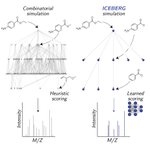
Happy to share our latest MS/MS prediction model, ICEBERG.
Preprint: arxiv.org/abs/2304.13136
Code: github.com/samgoldman97/ms-p…
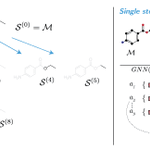
Like our prev. work, ICEBERG is a two step model, but rather than first generating potential subformula, ICEBERG generates chemical substructures. 1/5

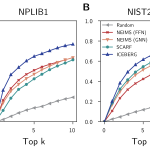
We envision ICEBERG model extensions and use in other pipelines (@GNPS_UCSD integration pending). Feedback on the preprint or predictions welcome-- as always, all open source alongside our other forward prediction model SCARF. 4/5
1
6
578
And last but not least, thanks to co-author Janet Li, a talented undergraduate at Harvard who helped drive this work as part of her senior thesis, my PI @cwcoley, and @mingxunwang for feedback on the manuscript & working with us on GNPS integration! 5/5
8
532
Today we release our new work on mass spectra prediction, SCARF: arxiv.org/abs/2303.06470
SCARF is a two-step generative model to predict spectra from molecules (inverse of our last paper, MIST) at the level of chemical formulae (panel C) using prefix tree data structures. 1/4

Thankful for great coauthors @j__bradshaw @RainaXin @cwcoley! Also to @cs50 for making me implement a prefix tree ("trie") back in 2015 for a spell checker homework.
Code: github.com/samgoldman97/ms-p… 3/4

1
4
582
And one more shoutout to two exciting works with different strategies but the same goal of predicting spectra as formula sets: arxiv.org/abs/2301.11419 (MIT colleagues & @envedabio) and pubs.acs.org/doi/full/10.102… (@richardzhu_ @stochastician)! 4/4

5
477