doing things
Joined March 2011
- Tweets15.5K
- Following990
- Followers1.5K
- Likes18.9K









sam retweeted

We’re sharing a new preprint showing wet lab validation of intrinsic protein design capabilities of the GPT-6 family of models.
Our models can design new protein shapes and sequences using reasoning and code, without calling specialized biology models to generate them.
openai.com/index/gpt-6-model…
Please add something similar to Codex. Gemini is just taking from Claude desktop, which took from Codex to begin with. You guys are playing too nice. @ajambrosino
1
115
testing neon on a bunch of stuff today and it seems great all around.
it’s also become my translator when using gpt models in codex because despite how capable they are, they still can’t speak conversationally.
thank you @GoogleDeepMind

1
27
sam retweeted
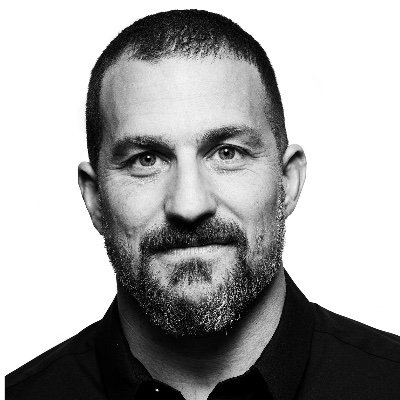
The agitation from errors (that come from genuine attempts to do something new) is what gates rewiring of your brain and learning, especially in adulthood. Full conversation with @joerogan @spotifypodcasts @Spotify now.
sam retweeted

Any pursuit of superintelligence has to be grounded in the core principle that if the AI we build is not helping humanity and under human control, it's not worth pursuing.
We also need to accelerate and spread the benefits of AI, such that they are diffused broadly across countries, communities, and companies. This requires a frontier ecosystem in which both closed and open-source models can thrive.
And for firms, it’s imperative that they retain full control over their unique and tacit knowledge. Every organization should be able to build its own continuous learning loop/hill climbing machine, without becoming dependent on any one model provider, and have the ability to embed its own knowledge into models and weights they control.
So, in this context, we welcome the research, focus, and deliberate pacing needed to get alignment right as the design goal. We also welcome ideas like "embedded evaluators" and the broader efforts to develop the mechanisms to make this more than just talk.
The key is that this cannot be controlled by a handful of entities, but must have broad representation across the ecosystem, countries, and fields, including academia.
This is the approach we are taking: broad access and choice at every layer of the AI stack; enterprise control of learning loops and models; and the “Code of Conduct” that underlies our own first party MAI models that we’ll publish tomorrow for public consultation.
a small part of working in any tech space is getting used to people using the word “bandwidth” every single chance they get
1
106
sam retweeted

OpenAI: “We’ve solved math”
Anthropic: “Our AI is so powerful it’s going to kill you”
Google: “Introducing Gemini 3.9 Flash! It’s 30% faster and 15% worse than the last Gemini”

sam retweeted

It's extremely important to keep your builder skills sharp, even when the tools are evolving and changing rapidly. It was never about the code and only the code and now it's not about prompting or the model. It's a mix of everything. It's never been easier to become lazier.
sam retweeted
“Almost everything will work again if you unplug it for a few minutes, including you.” — Anne Lamott
sam retweeted
You don’t ask an AI to summarize a stand-up special, and a synopsis of a great novel is not a great novel. Voice, taste, and personality may end up being the only durable moats. But “give me the 5 steps to X”? That’s a tough business that’s about to get a lot tougher.

sam retweeted

Stop making everything a big deal.
If you messed up recently, it’s not a value judgement.
It’s not a manifestation of your inner essence.
It isn’t “you”.
It’s just an incident.
A sequence of micro-actions which became an event.
Don’t treat it like anything more than that.
You’re doing fine.

sam retweeted

The worst part about seeing grown ppl turning them themselves into AI cartoons is they want us to be impressed for some reason?