




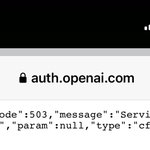

to solve AI alignment, we must solve human alignment

We discovered a sophisticated recording device that was hidden inside one of our offices. We used our models to understand the device and where it had come from, identifying that a specific employee had planted it a few days earlier. We referred the matter to the FBI, and we’re grateful to the agents and prosecutors who moved quickly to make an arrest. The FBI’s investigation is ongoing and we will continue to support their work.
At this time, we have no indications of this individual inappropriately accessing or exfiltrating model weights, source code, or customer data. The employee was terminated.
We take protecting our technology, data, and people seriously, and as a matter of national importance. Our security program is designed to protect against a wide range of threat actors, from insider risks to cybercriminals to nation states, and this case is an example of how AI can help address these sophisticated security threats.
After attending a talk last night with Ben Davis of Illuminate (illuminate.org), and Garry Tan (@garrytan) of YC I walked away with one big takeaway: give more, and give with zero expectations of what will come from it.
So today, I'm open sourcing Zeo, a Ruby ahead-of-time compiler written in Rust and built on Cranelift: github.com/ryanseys/zeo
With Zeo, you can compile whole Ruby programs into portable native binaries that require no external dependencies.
Zeo targets Ruby 4.0.6's behavior, and supports bundler, rubygems, and most Ruby syntax. If it theoretically can support it, but doesn't yet, that's a bug. Contributions are welcome.
I've been fascinated by this problem of compiling Ruby code to native code for a while now. Ruby's a fun programming language, but distributing Ruby programs as portable native binaries has been anything but.
When matz released spinel (github.com/matz/spinel) I immediately started digging into it and contributing. Spinel is a Ruby AOT compiler written in C, parsing and lowering Ruby code to C code, which is then compiled and linked with cc to produce a native binary. It's a fantastic project which I wholeheartedly support and have contributed countless hours into.
Reading spinel's code is not for the faint of heart, so I wanted to see if writing a Ruby AOT compiler in Rust was possible, which first led me to building Zeo as a Rust-based equivalent to Spinel, one that parses Ruby, lowers the AST into Rust code, which is then compiled using rustc. It worked, but the emitted code was large and difficult to optimize.
In a second pass approach, the version released today, Zeo parses Ruby to AST using Prism, lowers that AST to Cranelift IR (.clif), and compiles that .clif + metadata into a native binary using the Cranelift compiler backend (cranelift.dev/)
The performance results are more than I could hope for. In many cases, the resulting binaries are up to 11x faster than CRuby, and on average 1.77× across 61 benchmarks. And most importantly, these binaries are portable and require no external dependencies.
I couldn't have built this without the inspiration of matz, and the perspiration of AI grinding through countless compatibility issues. And to Ben Davis who inspired me to give without expectations.
So today, I give Zeo to the world, to the Ruby community, hoping to inspire others to reimagine what can be built and shared with Ruby as we go into this wonderfully strange future together.


🌉 I built the SF Bay Area ICE Guide → sficeguide.com
A community resource to help Bay Area residents stay safe, informed & prepared during ICE operations.
📞 24/7 hotlines ⚖️ Legal aid 🌐 Guides in 6 languages
Please share to help keep our neighbors safe 💛


setting up my mastodon mastodon.social/@ryanseys/11…
Woke up at 7am this morning to a 3.5M earthquake a few miles away, and received this in my mail today… that’s good marketing!


Problem: Your external Apple Magic Keyboard plugged into your Apple Macbook Pro M1 is not registering the keystrokes on the login screen.
How To Fix:
Step 1: Manually open the lid of the MBP (annoying because its probably under a huge pile of papers and cables on your desk, like mine was)...
Step 2: Manually type in your password with the built-in MBP keyboard to login (because Touch ID most likely expired again for some arbitrary reason)...
Step 3: Click "Allow" on the Year-1999-McAffee-AntiVirus-Software-esque message (see image) because it's literally hardwired a keyboard that the same company, Apple, designed, manufactured and shipped to you.
---
Apple: Nobody wants this. You don't even trust a hardwired Apple-made keyboard? Store a signed key in Secure Enclave on keyboard and verify it with MBP on wired connection.
Bad UX, very not Apple.


sometimes we ship boring things at @Shopify shopify.com/editions/winter2…


Worth the read if you can appreciate large software migrations🍿

We've just finished migrating the @Shopify mobile app to @reactnative 🎉. This is our biggest app and was built over a decade. Here's how it went 🧵